

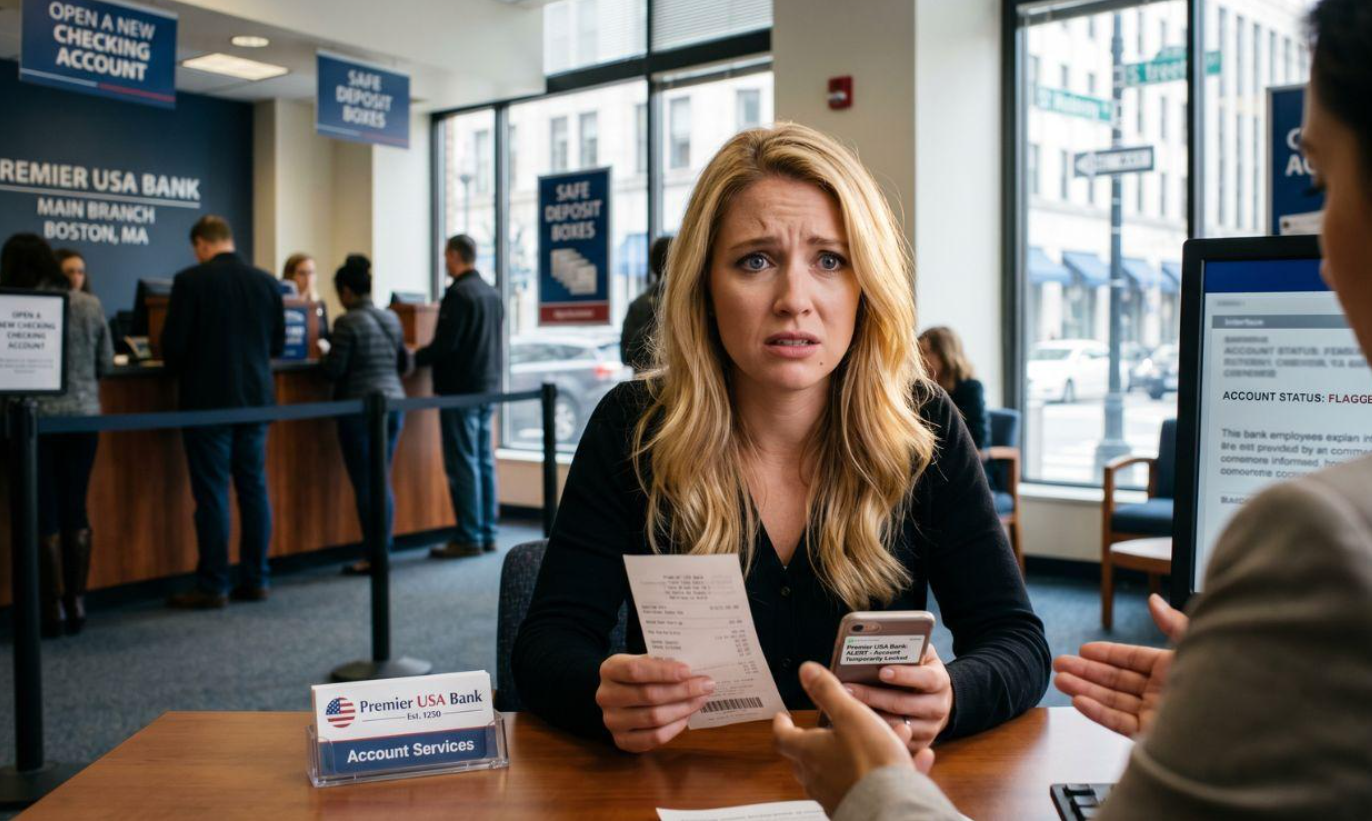
Bank Account Frozen Without Warning in 2026: Why It Happens and What to Do
Imagine opening your banking app to pay rent, buy groceries, or cover an urgent bill, only to discover that your bank account has been frozen. Your debit card may stop working, transfers may fail, and money you thought was readily available may suddenly become inaccessible. Even worse, the bank may provide little information about why the restriction occurred.
For U.S. consumers, a frozen bank account can create serious financial disruption. However, a freeze does not always mean that the money is gone, that the account has been permanently closed, or that the account holder has done something wrong. Banks may restrict access while investigating suspected fraud, verifying identity, reviewing unusual transactions, complying with legal orders, or meeting other regulatory obligations.
Understanding the reason for the restriction is the first step toward resolving it. Your options will depend on whether the bank has placed a temporary hold on a transaction, restricted the entire account, responded to a court order, or decided to terminate the banking relationship.
This guide explains why a bank account may be frozen without warning in 2026, what to do immediately, which consumer protections may apply, and how to protect your finances while working to restore access.
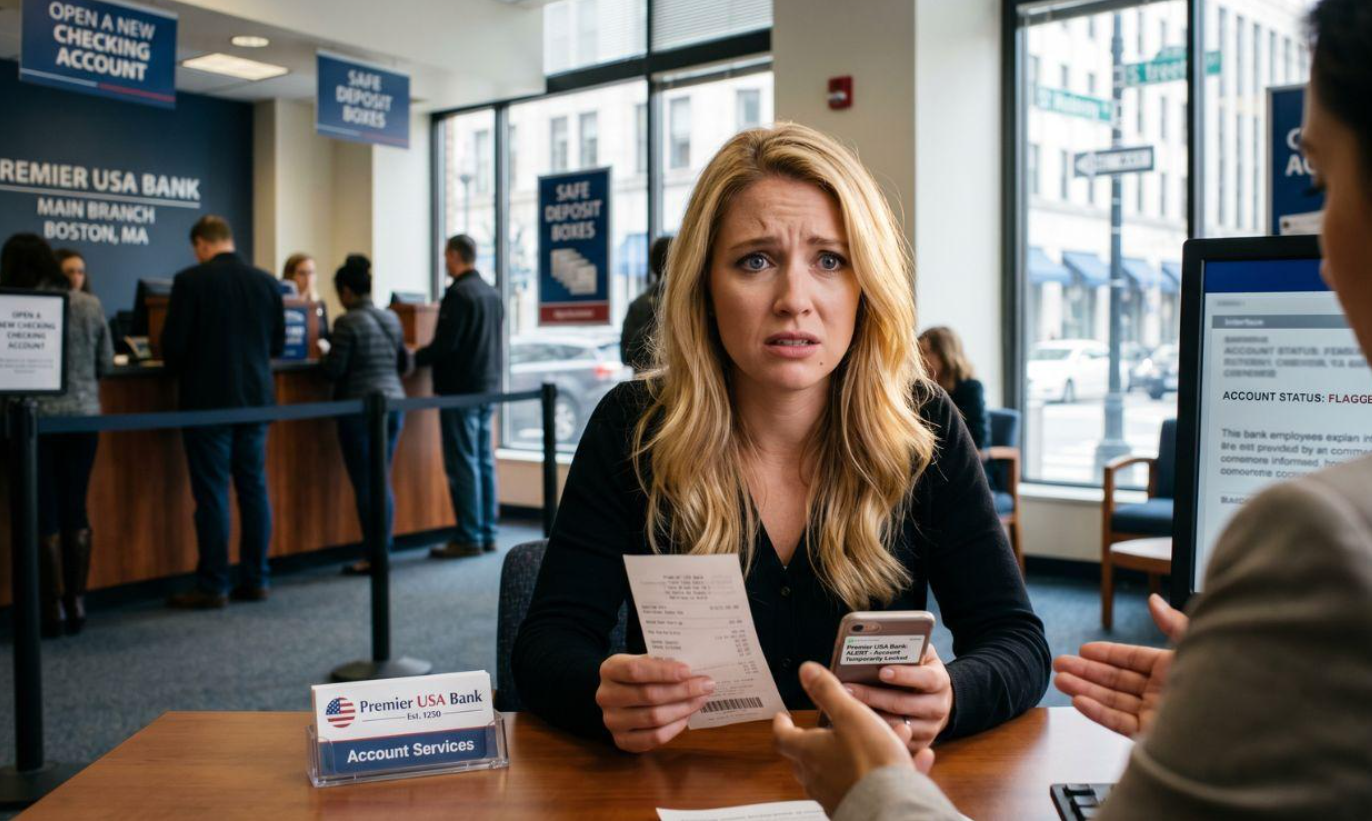
What Does It Mean When a Bank Account Is Frozen?
A frozen bank account is an account in which some or all transactions have been restricted. Depending on the circumstances, you might be unable to withdraw cash, make debit card purchases, transfer money, pay bills, or send electronic payments.
The exact restrictions vary. Some banks may block only a particular transaction, while others may prevent nearly all outgoing activity. Deposits might still be accepted, but that does not necessarily mean you can withdraw or spend the newly deposited funds.
It is important to distinguish between several situations.
A transaction hold affects a particular payment or deposit. For example, a bank may temporarily hold a check while verifying that it will clear.
An account restriction limits access to some or all banking services. The bank might require identity verification or investigate suspicious activity before restoring normal access.
A legal freeze or levy may arise from a court order, garnishment, tax collection action, or another legally authorized process. The bank's obligations depend on the specific order and applicable law.
An account closure means the bank has decided to end the banking relationship. Closure is different from a temporary freeze, although a restricted account may eventually be closed.
These distinctions matter because the steps for resolving a transaction hold are not necessarily the same as the steps for challenging a court-ordered freeze or appealing a bank's decision to close an account.
Why Can a Bank Freeze an Account Without Warning?
Banks may restrict accounts for several reasons. Sometimes the action is triggered by an automated monitoring system. In other situations, the bank receives information from a third party or must comply with a legal requirement.
1. Suspected Fraud or Unusual Transactions
Banks monitor transactions to identify potential fraud, account takeovers, money laundering, and other suspicious activity.
A sudden change in your banking behavior may trigger a review. Examples include receiving an unusually large deposit, making multiple high-value transfers, sending money to unfamiliar recipients, or conducting transactions inconsistent with your normal activity.
This does not automatically mean that you have violated a law or banking policy. A legitimate transaction can resemble suspicious activity, particularly when it differs from your usual pattern.
The bank may temporarily restrict access while confirming that you authorized the transactions and that the funds came from a legitimate source.
If this happens, contact the bank through its official website, verified phone number, or secure mobile application. Be prepared to explain the transactions and provide documentation when requested.
2. Identity Verification Problems
Banks must maintain accurate customer information and comply with applicable identification and anti-money-laundering requirements.
An account may be restricted when the bank cannot verify your identity or needs updated information. This can happen after a change of address, an expired identification document, inconsistent personal details, or a request to update account ownership information.
For example, a bank may ask you to confirm your identity after detecting an attempted login from an unfamiliar device. If you do not complete the required verification, certain services may remain unavailable.
Respond promptly to legitimate requests, but verify that the communication actually comes from your bank. Never disclose your password, one-time verification code, or full login credentials to someone who contacts you unexpectedly.
3. A Check or Deposit Is Being Reviewed
Depositing a check does not always mean the money will be immediately available.
Banks may place holds on deposits while determining whether the payment will clear. The timing depends on the type of deposit, the account's history, the amount involved, applicable exceptions, and federal funds-availability rules.
A deposit hold is not necessarily a full account freeze. You might still be able to use other funds in the account.
If a check deposit triggers a restriction, ask the bank whether the issue concerns the check itself, the availability of the deposited funds, or the account as a whole. Request the expected availability date and any applicable explanation in writing.
4. A Court Order, Garnishment, or Tax Levy
A bank may be legally required to restrict funds after receiving a valid court order, garnishment, levy, or similar legal process.
Depending on the circumstances, the action may involve a creditor pursuing a judgment, a government agency collecting a debt, or another legally authorized party seeking funds.
The bank may have limited discretion when complying with a valid order. However, the person whose account is affected may have rights to challenge the underlying action, assert an exemption, or request a hearing, depending on the law and the type of proceeding.
Do not assume that every freeze is related to unpaid debt. Ask the bank whether the restriction results from a legal order and, if permitted, request the issuing authority, case number, and relevant documentation.
If you believe the order is incorrect or affects protected funds, seek legal assistance quickly. Deadlines to challenge a levy or claim an exemption may be short.
5. Possible Account Takeover
If someone obtains your login credentials or otherwise gains unauthorized access to your account, your bank may restrict transactions to protect your money.
Warning signs include unfamiliar transfers, password-reset notifications you did not request, unexpected changes to contact information, or alerts about new devices accessing your account.
A bank may temporarily block online banking, debit card transactions, or outgoing transfers while investigating.
If you suspect an account takeover, contact the bank immediately using a trusted phone number. Change your password through a secure device, review recent transactions, and ask the bank to secure your account and investigate unauthorized transfers.
Report suspicious electronic transfers promptly. Federal protections under the Electronic Fund Transfer Act and Regulation E may apply to certain unauthorized transactions involving consumer accounts, subject to the relevant rules and circumstances.
6. Anti-Money-Laundering or Compliance Reviews
Financial institutions must comply with laws designed to prevent money laundering, sanctions violations, and other financial crimes.
Transactions involving unusual patterns, unexplained funding sources, or certain high-risk activities may trigger additional review. A bank might request invoices, contracts, payment records, tax documents, or other information to understand the source and purpose of funds.
An ordinary customer can be caught up in a review without having committed wrongdoing. For example, a freelancer receiving an unusually large international payment or a small business experiencing a sudden increase in deposits might be asked to provide additional documentation.
Provide accurate information and preserve copies of your records. Do not attempt to evade a review by splitting transactions into smaller amounts or routing funds through unrelated accounts. Such behavior can create additional concerns.
7. Dormant Accounts or Unresolved Administrative Issues
Some restrictions arise from account maintenance rather than suspected fraud.
A bank may need to resolve discrepancies in account ownership, missing documentation, an inactive account, or an unresolved administrative issue. State laws and bank policies can affect how inactive accounts are handled.
In certain circumstances, unclaimed property laws may eventually require funds to be transferred to a state after an applicable dormancy period. That process is different from an ordinary fraud-related account freeze.
Ask the bank to identify the precise issue and explain which documents or steps are needed to resolve it.
8. Bank Account Closure or Debanking
A bank may decide to end a customer relationship under the account agreement and applicable law. Depending on the circumstances, this may follow a compliance review, a business decision, concerns about transaction activity, or other reasons.
A closure can be especially confusing when a customer has not received a clear explanation.
This issue received renewed attention in October 2026 when the Office of the Comptroller of the Currency released findings from a review of debanking practices at nine large national banks. The review examined whether policies or practices had influenced access to financial services based on political or religious beliefs or lawful business activities.
The broader debate does not mean that every account closure is unlawful or discriminatory. Banks may have legitimate legal and risk-management obligations, and the details of an individual case matter.
If you believe your account was restricted or closed for an improper reason, preserve all communications, request a written explanation where available, and consider filing a complaint with the appropriate regulator.
What Should You Do Immediately After Discovering a Freeze?
When your account suddenly becomes inaccessible, the most useful response is a calm, documented investigation. Avoid making assumptions before you know what kind of restriction has occurred.
Step 1: Confirm the Restriction
Log in through your bank's official app or website, if available, and look for account alerts, secure messages, or transaction notices.
If the account is inaccessible, contact the bank using the phone number printed on your debit card, an official statement, or its verified website.
Do not click unexpected links in emails or text messages claiming that you must urgently unlock your account. Fraudsters often exploit account restrictions to steal login credentials.
Step 2: Ask Specific Questions
A vague request to unlock your account may not provide enough information to move the issue forward.
Ask the bank:
- Is the entire account restricted, or is only a transaction or deposit on hold?
- What category of restriction applies?
- Is identity verification or additional documentation required?
- Is the restriction connected to a legal order?
- Are deposits still accepted, and which transactions remain available?
- What steps must I complete to request a review?
- Is there an estimated date for the next update?
The bank may be unable to disclose certain investigative details or information restricted by law. Even so, ask what it can explain about the process and your available options.
Step 3: Gather Supporting Documents
Prepare documents relevant to the reason for the restriction. These might include government-issued identification, recent account statements, deposit receipts, invoices, contracts, proof of address, or records showing the source of a payment.
Only submit documents through verified bank channels. Keep copies of everything you send, together with dates, confirmation numbers, and the names or identification details of representatives you speak with when available.
Step 4: Request a Formal Review
If the initial representative cannot resolve the problem, ask for escalation to the bank's fraud department, account-restrictions team, compliance department, or formal complaints unit, as appropriate.
Explain the problem clearly and provide relevant evidence. Avoid sending unnecessary personal information or repeatedly opening new cases without referencing earlier communications.
Request a case number and a written record of the bank's response whenever possible.
Step 5: Protect Your Essential Payments
A frozen account can disrupt rent, utility bills, insurance premiums, subscriptions, loan payments, and other recurring expenses.
Review upcoming payment dates and contact affected providers before a payment is missed, if possible. Ask about alternative payment methods or temporary arrangements.
If you have another legitimate account available, you may use it for essential expenses. However, do not attempt to circumvent a court order or transfer restricted funds in violation of legal instructions.
Step 6: Keep a Detailed Record
Create a simple timeline showing when the restriction began, what the bank told you, which documents you submitted, and when you followed up.
Save emails, letters, secure messages, transaction records, and complaint confirmations. If the issue later becomes a formal dispute, this documentation may help establish what happened and whether you followed the required process.
Can You Get Your Money Back if Your Account Is Frozen?
In many cases, the money remains in the account even though access has been restricted. A freeze does not automatically mean the bank has taken ownership of your balance.
However, the outcome depends on the reason for the restriction.
If the bank is investigating a suspicious transaction, it may restore access after completing its review. If a deposit is subject to a hold, the funds may become available according to the applicable schedule. If a legal order applies, some or all of the affected money may remain restricted until the order is resolved or modified.
An account closure also does not automatically eliminate a customer's claim to the remaining balance. Nevertheless, the bank may need to resolve outstanding transactions, legal obligations, fees, or other issues before releasing funds.
Ask the bank what happens to your remaining balance if the account is closed. Request written instructions about how eligible funds can be returned and whether any portion remains subject to a hold or legal restriction.
If the bank refuses to explain the status of your funds, consider using its formal complaint procedure and contacting the appropriate regulator or a qualified attorney.
What Consumer Protections May Apply?
There is no single federal rule that guarantees immediate access to every frozen bank account. The protections available depend on the type of account, the reason for the restriction, the governing law, and the facts of the case.
Electronic Fund Transfer Protections
The Electronic Fund Transfer Act and Regulation E provide a framework for certain consumer electronic transfers, including rules concerning unauthorized transfers and error resolution.
If your account was restricted after someone made unauthorized electronic transactions, report the issue promptly and follow the bank's dispute process. Applicable notice requirements and deadlines can affect your rights.
These protections do not automatically require a bank to remove every fraud-related restriction immediately. The bank may still need to investigate the account or secure it against further unauthorized activity.
Deposit Insurance
The Federal Deposit Insurance Corporation, or FDIC, insures eligible deposits at FDIC-insured banks up to applicable limits and subject to its rules.
Deposit insurance is primarily designed to protect covered deposits if an insured bank fails. It is not a general mechanism for obtaining immediate access to an account frozen because of a fraud review, legal order, or compliance investigation.
If your bank is still operating but has restricted your account, FDIC insurance generally does not resolve the restriction itself.
Protected Benefits and Exempt Funds
Certain federal benefits, including qualifying Social Security and Supplemental Security Income payments, may receive protection from certain garnishment actions. Federal rules can require banks to review qualifying direct deposits and protect specified amounts in covered circumstances.
Other funds may be exempt under federal or state law, depending on their source and the type of legal process involved.
Do not assume that all money in an account is protected simply because some of it comes from benefits. Commingled funds, the type of order, and applicable exemptions can affect the analysis.
If you believe protected funds have been improperly restricted, tell the bank and seek legal advice promptly. You may need to file a formal exemption claim or take another action within a deadline.
Complaints to Banking Regulators
If the bank does not resolve your concern, you may be able to file a complaint with the appropriate regulator.
The relevant agency depends on the institution and the nature of the problem. The Consumer Financial Protection Bureau may be a starting point for certain consumer financial complaints. The OCC supervises national banks and federal savings associations, while other banks may be supervised by different federal or state authorities.
A complaint can help bring the matter to the attention of the relevant agency, but it does not guarantee that the account will be unfrozen or that the regulator will decide in your favor.
How Long Can a Bank Freeze an Account?
There is no universal time limit that applies to every account restriction.
A straightforward identity-verification issue may be resolved relatively quickly after the customer provides the requested information. A complicated fraud investigation, disputed deposit, sanctions review, or legal proceeding may take substantially longer.
The timeline may also depend on whether the bank needs information from another financial institution, a payment processor, a government agency, or a court.
Ask the bank what stage the review has reached, whether any action is required from you, and when you should expect another update. If the representative cannot provide a firm completion date, request a realistic follow-up schedule.
If the restriction involves a court order, tax levy, or garnishment, contacting the bank alone may not be sufficient. You may need to communicate with the court, creditor, government agency, or attorney involved.
Avoid relying on online claims that a bank must automatically unfreeze an account after a fixed number of days. The applicable deadlines and obligations depend on the specific situation.
What Happens if the Bank Closes Your Account?
Sometimes a bank restriction ends with the bank terminating the relationship rather than restoring ordinary access.
If this occurs, ask for the effective closure date, the status of your remaining balance, and the procedure for receiving any eligible funds. Also ask how pending deposits, outstanding checks, recurring payments, and linked services will be handled.
You may need to move direct deposits and automatic payments to another account. Contact your employer, benefit administrator, utility providers, lenders, and other relevant organizations to update payment details.
Do not assume that every transaction will automatically transfer to a new bank. Pending payments may be rejected or returned, potentially resulting in missed-payment fees or other consequences.
If you believe the closure was based on inaccurate information or an unlawful reason, request an explanation and preserve the relevant records. You can then determine whether a formal complaint, legal consultation, or other remedy is appropriate.
How to Reduce the Risk of a Future Account Freeze
You cannot prevent every bank restriction, particularly when a legal order or genuine security concern is involved. However, sensible account-management practices can reduce avoidable problems.
Keep your personal information current. Update your address, contact information, and identification documents when necessary.
Maintain records for unusual transactions. Keep invoices, contracts, receipts, and other documentation for large deposits, business payments, and transfers that differ from your normal activity.
Respond to legitimate bank requests. If the bank requests verification, use its official channels and provide accurate information.
Protect your banking credentials. Use strong, unique passwords, enable multifactor authentication when available, and review alerts about unfamiliar devices or transactions.
Avoid using your personal account in ways that violate its terms. If you regularly receive business revenue or third-party payments, review whether a business account is more appropriate.
Review your account activity regularly. Early detection of unauthorized transactions can help you notify the bank promptly.
Keep an emergency payment option. Where practical, maintain a lawful backup payment method or another account for essential expenses. This is not a way to bypass a restriction; it is a way to reduce disruption if one account becomes temporarily unavailable.
Understand your account agreement. Review the bank's rules on holds, verification, closures, fees, and dispute procedures so you know what to expect.
When Should You Seek Legal Help?
Consider speaking with a qualified attorney when the restriction involves a court order, tax levy, disputed garnishment, potentially exempt funds, substantial financial losses, or a bank that appears unwilling to resolve a documented error.
Legal assistance may also be appropriate if you believe the bank has acted unlawfully, discriminated against you, or failed to comply with a legal obligation.
Bring your account statements, bank correspondence, transaction records, legal notices, and complaint history to the consultation. A clear timeline can help an attorney assess the situation more efficiently.
If you receive court papers or a notice containing a deadline, do not ignore it while waiting for the bank to respond. Missing a legal deadline can limit your options, even when you believe the underlying action is wrong.
Conclusions
A bank account frozen without warning in 2026 can create immediate financial stress, but the restriction does not necessarily mean your money has disappeared or that you have lost your rights. The key is to determine whether the problem involves a transaction hold, a fraud investigation, an identity-verification request, a legal order, or an account closure.
Contact the bank through verified channels, ask specific questions, provide relevant documentation, and keep a written record of every important interaction. If essential payments are at risk, communicate with affected providers and explore legitimate alternatives while the issue is being resolved.
Consumer protections may apply to unauthorized transfers, exempt funds, or improper banking practices, but they differ according to the circumstances. When a legal order or substantial amount of money is involved, prompt professional advice may be especially valuable.
Staying informed about personal finance, consumer rights, and practical money-management strategies can help you respond more confidently when unexpected banking problems arise. You can explore additional financial guidance at Finiuo, consumer and legal information at Jurnza, and nutrition and food-related resources at Dryzen Royal.
A frozen account can interrupt your plans, but a clear record, a focused response, and an understanding of your options can help you take the next step.