

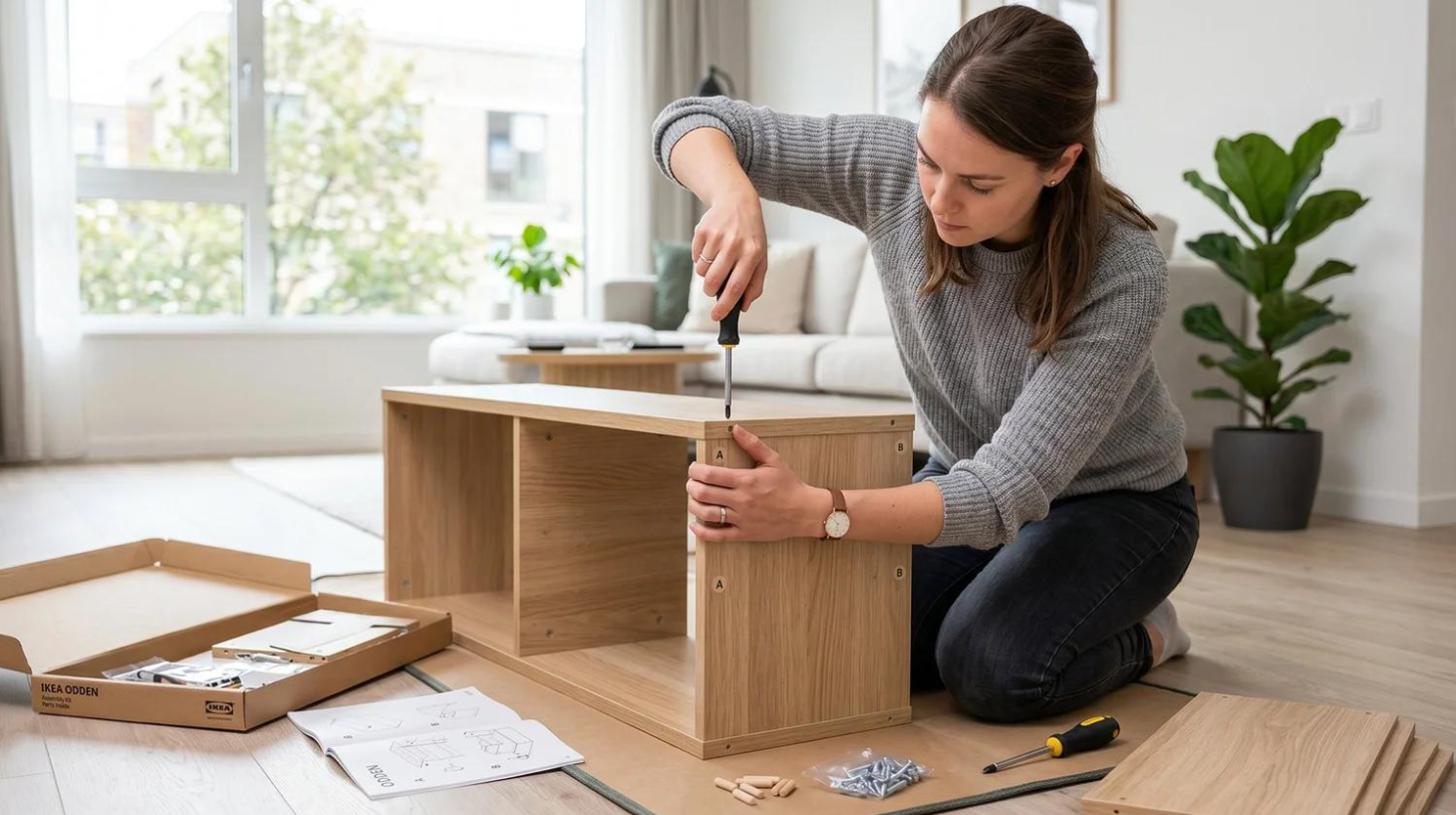
Buy Cheap, Replace Twice: The Hidden Cost of Budget Furniture
A low price can make a furniture purchase feel like an easy financial win. A $180 desk instead of a $350 desk leaves $170 in your pocket. A $400 sofa instead of a $900 sofa can make furnishing an entire apartment feel much more affordable. When you're trying to stretch a paycheck, those savings matter.
But there is another side to the calculation: What happens when the cheaper desk starts wobbling, the sofa cushions flatten, or a bed frame breaks after only a few years?
Buying inexpensive furniture is not automatically a mistake. Plenty of affordable pieces offer excellent value, and expensive furniture can be overpriced, poorly designed, or unsuitable for your needs. The problem begins when shoppers compare products only by their price tags instead of considering how long each piece is likely to remain useful.
A bargain that needs replacing twice can quietly become more expensive than a better-built alternative. Add delivery fees, assembly costs, repair bills, disposal expenses, and the time spent shopping again, and the original savings may disappear.
For American households managing rent, groceries, insurance, transportation, and other rising expenses, understanding the real cost of furniture can make a meaningful difference. You do not need to buy premium furniture for every room. You need to know where spending less makes sense, where durability matters most, and how to recognize value before paying.
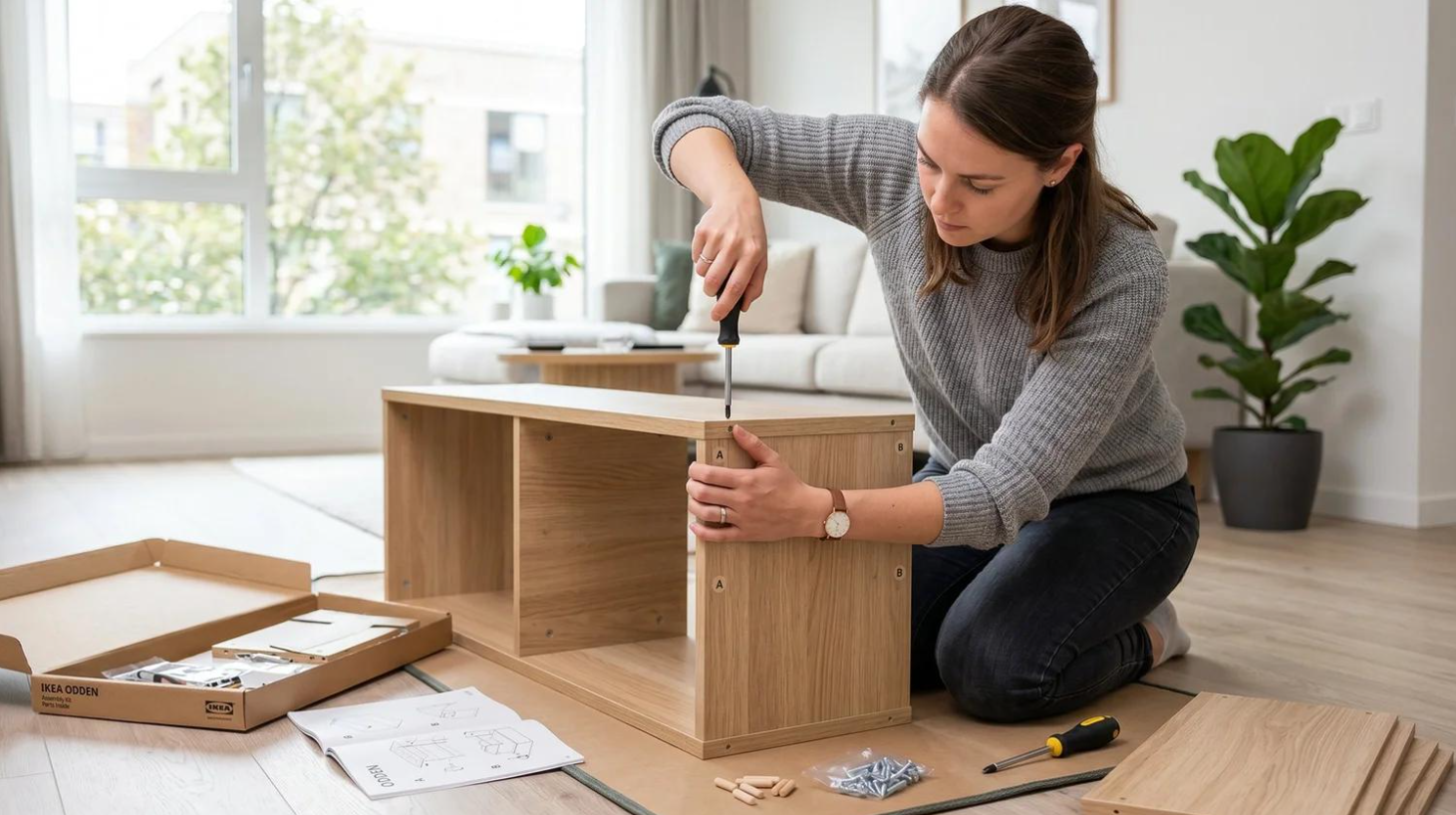
The Real Problem With Cheap Furniture
The phrase "cheap furniture" can mean several different things. It might describe a simple piece with minimal decoration, a discounted item from a reputable manufacturer, a secondhand table, or a newly manufactured product made with inexpensive materials and basic construction.
Those categories should not be treated as interchangeable.
A plain, affordable dining table can be a smart purchase if its structure is sturdy and its finish suits your household. A discounted solid-wood dresser might offer better long-term value than a fashionable alternative sold at a much higher price. Meanwhile, an expensive item can still disappoint if its construction is weak or its materials are unsuitable for daily use.
The real concern is not a low price by itself. It is a mismatch between the product's durability and the demands placed on it.
Furniture used every day experiences repeated pressure, movement, spills, friction, and changes in temperature or humidity. A desk supports equipment and repeated leaning. A bed frame carries weight and absorbs movement. Dining chairs are pulled across floors, leaned back on, and used several times a day.
A decorative side table in a guest room faces very different demands.
If a piece is designed or constructed for lighter use but becomes a household workhorse, its weaknesses may appear quickly. Loose joints, sagging supports, damaged edges, failing drawer runners, and worn upholstery can turn an initially affordable purchase into an ongoing expense.
The smartest buying decision starts with a simple question: How much useful life am I getting for the money I spend?
The Cost-Per-Year Calculation That Changes the Decision
One of the easiest ways to compare furniture is to divide its purchase price by the number of years you realistically expect it to last.
The result is its approximate cost per year of use.
Consider two desks:
Cost comparison | Budget desk | Better-built desk |
|---|---|---|
Purchase price | $180 | $350 |
Estimated useful life | 3 years | 8 years |
Approximate cost per year | $60 | $43.75 |
These figures are illustrative estimates, not claims about the typical lifespan of every desk in either price category.
The budget desk costs less on purchase day. However, if it lasts three years while the $350 desk lasts eight, the more expensive desk delivers a lower annual purchase cost over its useful life.
Now consider what happens over eight years. If the $180 desk must be replaced after every three years, the household may buy three desks to cover most of that period. That would cost $540 before delivery, assembly, repairs, or disposal. The $350 desk would cost $350 if it remained serviceable throughout the same period.
The apparent $170 upfront saving could become a $190 disadvantage.
But there is an important catch: this comparison works only if the lifespan estimates are reasonable. If the $350 desk lasts just four years, its annual purchase cost is $87.50. In that scenario, the cheaper desk could be the better deal.
That is why shoppers should not automatically choose the most expensive product. They should compare construction, materials, warranties, reviews, repair options, and expected use.
Add the costs beyond the sticker price
Purchase price is only one part of furniture ownership. A more complete comparison includes:
- Delivery: Large furniture may require paid shipping or local delivery.
- Assembly: Some purchases require tools, professional help, or several hours of your time.
- Repairs: Replacement hardware, upholstery work, new drawer slides, or structural repairs may add up.
- Maintenance: Certain finishes and materials require more care than others.
- Disposal: Broken furniture may require a paid haul-away service or special collection arrangements.
- Replacement shopping: Repeating the buying process takes time and can create additional transportation costs.
You do not need to assign a dollar value to every inconvenience. Start by including expenses you can reasonably estimate.
For example, imagine a $200 bookcase requires $40 delivery and $30 in repairs before being replaced. Its total cost has reached $270. A $300 alternative with included delivery and no repair expense would cost only $30 more, assuming both options meet your storage needs and the second lasts longer.
The lesson is straightforward: compare the full expected cost, not just the number printed beside the product.
Why Furniture Often Fails Earlier Than Expected
Furniture rarely comes with a guaranteed lifespan that applies to every household. Construction, materials, frequency of use, maintenance, moving, moisture, and accidental damage all influence how long a piece remains useful.
Still, several common weaknesses are worth checking before buying.
Weak joints and unstable frames
A piece can look attractive in a showroom or product photograph while hiding a weak structural design.
Pay attention to how the frame is assembled, whether the joints feel secure, and whether the product moves excessively under normal pressure. A chair that wobbles when tested or a bed frame that creaks during a simple stability check deserves closer inspection.
Screws, brackets, and other fasteners are not automatically signs of good or bad quality. Their effectiveness depends on the materials, design, placement, and assembly. What matters is whether the construction can withstand the intended use and whether loose components can be tightened or replaced.
For frequently used furniture, stability is more important than decorative details.
Low-quality panels and vulnerable edges
Engineered wood products, including particleboard and medium-density fiberboard (MDF), are not inherently bad. They can be practical materials for affordable furniture, especially when appropriately manufactured and protected.
Problems arise when panels are too thin for the job, fasteners do not hold securely, or exposed edges allow moisture to enter.
A spilled drink left on a poorly protected surface may cause swelling or deterioration. Repeatedly moving a heavy bookcase can place stress on joints and mounting points. Once a panel's structure has deteriorated, repairing it may be difficult or uneconomical.
When considering a bookcase, cabinet, wardrobe, or desk, inspect the thickness of the panels, the quality of the edge treatment, the fastening system, and the manufacturer's stated weight limits.
Cushions that lose support
An inexpensive sofa may look inviting when new but feel noticeably different after sustained daily use.
Foam quality, cushion construction, support systems, upholstery, and the underlying frame all affect performance. A cushion that loses its shape can make an otherwise attractive sofa uncomfortable long before the frame fails.
That does not mean affordable upholstery is always inferior. Fabric blends can offer durability and easier cleaning at a reasonable price, and replaceable cushions can extend a sofa's useful life.
Ask whether the cushions can be replaced, whether the covers are removable, and whether the manufacturer provides care instructions. Those details may matter more than a premium-looking fabric sample.
Hardware that is difficult to replace
Drawer slides, hinges, handles, brackets, and bed-frame fasteners are small components, but their failure can make an entire piece frustrating to use.
Furniture that uses standard, accessible hardware may be easier and less expensive to repair. Proprietary components can also be perfectly serviceable, but replacement may depend on the manufacturer continuing to stock them.
Before buying a large cabinet or wardrobe, find out whether common moving parts can be replaced separately. A damaged drawer runner should not necessarily mean discarding an otherwise useful piece of furniture.
Materials that do not suit the environment
Furniture also needs to suit the conditions in which it will be used.
Moisture can damage poorly protected wood-based panels. Direct sunlight may fade upholstery or affect certain finishes. Heavy daily use can wear delicate surfaces faster than expected, while pets and children may increase the importance of stain resistance and durable construction.
A product that performs well in a dry guest room might be less suitable beside a frequently used kitchen sink or in a sunny room.
Think about the actual environment rather than relying solely on a material's reputation. Good design, appropriate finishing, and reasonable maintenance all influence performance.
Where Paying More Can Make Financial Sense
Not every furniture item deserves the same share of your budget. The goal is to spend according to how much a piece is used, how costly failure would be, and how difficult it would be to repair or replace.
Beds and bed frames
A bed frame needs to support regular use without developing persistent instability. Look closely at its center support, slats, joints, fasteners, and weight limits.
A simple frame with solid construction may offer better value than an ornate model with weak support. If you move frequently, a design that can be disassembled and reassembled without damaging its joints may be especially useful.
A higher price is justified only when it buys meaningful improvements, such as stronger construction, useful support features, or repairable components.
Sofas and frequently used seating
Sofas receive repeated pressure and are often among the most frequently used pieces in a home. The frame, suspension, cushions, and upholstery all influence comfort and durability.
Test the seating rather than judging it from photographs alone whenever possible. Sit in your usual position, check whether the support feels even, and examine the seams and frame. Ask about cushion replacement and upholstery repair.
If a sofa is used every evening by several people, investing in better construction may make more sense than spending the same money on decorative furniture that rarely gets touched.
Desks and office chairs
A desk or office chair used for hours each day has a different role from a temporary table used occasionally.
For a desk, look for stability, adequate surface area, suitable load capacity, and a finish that can handle everyday work. For a chair, prioritize fit, support, adjustability, and the availability of replacement parts.
A cheaper chair may be perfectly reasonable for occasional use. For a full workday, discomfort or failing adjustment mechanisms can make a low upfront price less attractive.
Dining chairs and tables
Daily dining furniture faces repeated movement, spills, and pressure. Check that chairs feel stable and that their joints do not shift under normal use. Table legs should be secure, and the surface should suit the way your household eats and works.
A durable mid-priced set may be better value than an expensive set chosen mainly for its appearance. Alternatively, secondhand solid-wood furniture may offer a sturdy option if it is inspected carefully.
Where Buying Cheap Can Be the Smarter Choice
Spending more upfront is not always financially wise. Sometimes the cheaper option is exactly the right purchase.
Temporary furniture for a short stay
If you expect to move within a year or two, you may not need furniture designed to last decades. A basic desk, simple shelving unit, or inexpensive side table can serve its purpose without consuming money needed for moving expenses, deposits, or other priorities.
The important point is to avoid paying for durability you are unlikely to benefit from, while still ensuring the item is safe and suitable for its intended use.
Decorative and lightly used pieces
Accent tables, occasional guest-room furniture, and decorative shelving may not experience the same strain as a bed or main sofa.
If a piece is easy to replace, lightly used, and inexpensive to maintain, there may be little reason to pay a premium for heavy-duty construction.
Spend according to function, not status.
Furniture that meets a changing need
A growing family, temporary home office, changing living arrangement, or new hobby can create short-term furniture needs.
A low-cost folding table may be sensible if you need it for occasional projects. A basic storage unit may be enough while you determine how much space you actually need.
Buying an expensive permanent solution before understanding your needs can be just as wasteful as repeatedly replacing poorly made furniture.
Secondhand and refurbished furniture
Used furniture can deliver excellent value because the original owner has already absorbed the initial purchase cost. Solid construction, replaceable hardware, and surfaces that can be refinished may make secondhand pieces especially attractive.
However, inspect condition carefully. Look for structural damage, persistent odors, signs of pests, moisture damage, missing hardware, and repairs that may cost more than expected. Upholstered items deserve particular scrutiny because some problems are difficult to identify from the outside.
For upholstered furniture, be especially cautious about bedbugs and other pests. A bargain is not a bargain if it introduces an expensive problem into your home.
The Five-Minute Furniture Inspection
You do not need to be a carpenter to ask better questions or spot obvious warning signs. When shopping in person, spend a few minutes evaluating the item beyond its appearance.
1. Test stability. Gently apply normal pressure to the frame. Check for excessive wobbling, unusual creaking, or visibly loose joints. Do not test beyond the product's intended use.
2. Inspect the underside and back. Where possible, look at areas hidden from normal view. Check whether panels are finished appropriately, support structures are present, and fasteners appear secure.
3. Open moving parts. Slide drawers, open doors, and operate hinges. They should move smoothly without requiring excessive force. Ask whether replacement hardware is available.
4. Check materials and dimensions. Do not rely on vague phrases such as "wood finish" or "premium look." Ask what the frame, panels, upholstery, and surface are actually made from. Confirm the dimensions and weight limits.
5. Examine repair options. Find out whether cushions, legs, handles, drawer runners, shelves, or other components can be replaced individually.
For online purchases, use the same principles through product specifications, detailed photographs, assembly instructions, warranty terms, and reviews from customers who have owned the item for some time.
Recent reviews can be useful for identifying defects that appear after assembly or regular use. Look for repeated, specific complaints rather than treating one unusually positive or negative review as definitive proof.
The Warranty Question Most Shoppers Forget
A warranty can provide useful protection, but it should not be treated as proof that furniture is durable.
Before purchasing, read the written terms and check:
- How long the coverage lasts.
- Which components and defects are covered.
- Whether normal wear, upholstery, cushions, or finishes are excluded.
- Whether labor, transportation, or replacement parts cost extra.
- Whether you must assemble, maintain, or register the item in a particular way.
- How repairs, replacements, or refunds are handled.
The U.S. Federal Trade Commission explains that warranty coverage varies and that shoppers should review the written terms, including exclusions and the process for obtaining service. Keep the receipt and a copy of the warranty after purchase.
A five-year warranty on one component does not necessarily mean the entire piece is covered for five years. A frame warranty, for example, may not cover cushion deterioration or surface damage.
Also consider the seller's after-sales service. A warranty is less useful in practice if making a claim is confusing, expensive, or difficult.
Compare the actual protection offered rather than choosing a product based on a large warranty number printed in an advertisement.
How to Calculate Whether a Furniture Upgrade Is Worth It
A useful comparison combines the purchase price, expected lifespan, and foreseeable additional costs.
Imagine you are choosing between two dining tables.
Expense | Budget option | Longer-lasting option |
|---|---|---|
Purchase price | $240 | $420 |
Delivery and assembly | $60 | $40 |
Expected useful life | 4 years | 10 years |
Estimated total initial cost | $300 | $460 |
Approximate cost per year | $75 | $46 |
These numbers are examples for comparing purchasing decisions, not predictions for a particular product.
The budget table costs $300 initially, compared with $460 for the other option. If the budget table lasts only four years and must then be replaced with a similar item at the same price, the household would spend another $300, assuming delivery and assembly costs remain unchanged.
Across eight years, that would amount to $600. The $460 table would still be within its estimated useful life.
However, the result could change if the budget table lasts much longer than expected, the more expensive table fails early, or the household moves and no longer needs the same furniture.
You can improve the calculation by including likely repair costs and realistic replacement prices. You can also account for resale value when there is a reasonable basis for estimating it, although resale proceeds are never guaranteed.
For a quick comparison, use this formula:
Estimated annual cost = (purchase price + expected delivery, assembly, and repair costs − realistic resale proceeds) ÷ expected years of useful use
Keep the inputs conservative. Do not assume that a premium product will last forever or that an inexpensive product will fail immediately. Compare plausible scenarios and ask whether the potential savings justify the additional upfront cost.
The Hidden Financial Cost of Replacing Furniture
Repeated furniture purchases affect more than the household budget line labeled "home goods."
Replacement spending can disrupt other priorities
Suppose you plan to spend $500 on a piece of furniture. If it fails early and you must replace it unexpectedly, the new expense may compete with groceries, car maintenance, savings, or other bills.
The replacement itself may be manageable, but an unplanned expense can force you to delay another purchase or draw down money intended for something else.
Durable furniture cannot eliminate every unexpected cost. It can, however, reduce avoidable replacement spending when a better-built alternative is genuinely more reliable.
Delivery and disposal add friction
Large furniture is not always easy to transport. Replacement may require another delivery appointment, assembly session, or trip to a disposal facility.
Some retailers charge for delivery, assembly, returns, or removal of old furniture. Others include some services or offer them only under specific conditions.
Check these charges before you order. A product that appears cheaper online may not remain cheaper after shipping, assembly, and return costs are added.
Frequent replacements can increase waste
Furniture that is difficult to repair may be discarded even when only one component has failed. Replacing whole items repeatedly can also consume more materials and resources than maintaining a serviceable piece.
Repair is not always the right answer. A severely damaged, unsafe, pest-infested, or uneconomical item may need to be replaced. But if a loose screw, broken drawer runner, or worn cushion is the only problem, checking repair options before buying something new can be worthwhile.
The financial and environmental benefits depend on the repair's cost, the item's condition, and how much additional useful life the repair provides.
A Practical Furniture Budget for People Who Cannot Buy Everything at Once
If money is tight, the answer is not to replace every inexpensive item with a premium model. A more realistic strategy is to prioritize.
Start by separating essential furniture from optional purchases. A safe bed, a functional place to eat, and a suitable work surface may matter more than decorative storage or matching accessories.
Next, rank each item by how often it is used and what happens if it fails. Furniture used daily by several people generally deserves more attention than a rarely used accent piece.
Then compare three categories: affordable new furniture, better-built midrange furniture, and carefully inspected secondhand options. You may find that a used solid-wood table is a better deal than either new alternative, or that an inexpensive modular shelf is perfectly adequate for your needs.
Consider buying pieces gradually instead of purchasing a complete matching set immediately. A coordinated room can look appealing, but a bundle may include items you do not need or pieces that sacrifice construction quality for a uniform appearance.
Finally, leave some room in your budget for delivery and assembly. A furniture purchase that uses every available dollar can become stressful if installation requires an additional payment.
The broader lesson applies to other household decisions, too. Readers comparing long-term expenses and everyday savings can explore practical financial guidance at https://www.finiuo.com. For related legal information on consumer matters, https://jurnza.com offers a separate resource, while https://dryzenroyal.com focuses on dry fruits and nutrition. Each serves a different purpose, but the underlying principle is similar: understand what you are paying for before making a decision.
Common Furniture-Buying Mistakes That Make Bargains Expensive
Even careful shoppers can overlook details when a product looks attractive or a discount seems urgent.
Buying based on photographs alone. A well-lit product image cannot tell you whether a chair wobbles, a cushion feels supportive, or a desk is difficult to assemble. Use specifications and detailed reviews to fill the gaps.
Assuming a high price guarantees quality. Price can reflect branding, design, retail overhead, materials, or construction. It does not independently prove durability. Check the actual product.
Ignoring dimensions. Furniture that does not fit through a doorway, work in a room, or provide the required storage can become a costly mistake. Measure the space, entryways, and available clearance before ordering.
Forgetting assembly and delivery. Compare the delivered, usable cost rather than the advertised price. Ask whether assembly is included and whether returns involve collection fees.
Choosing trendy designs over practical use. A fashionable finish may be appealing, but a more adaptable design can remain useful through changes in décor and living arrangements.
Overlooking maintenance. Some materials need more careful cleaning, protection from moisture, or periodic attention. A product is a poor fit if its upkeep is unrealistic for your household.
Replacing an item without checking repair options. Before discarding a piece with a loose joint or damaged hardware, find out whether a simple repair could safely restore its function.
Avoiding these mistakes does not require spending more on everything. It requires asking a few better questions before committing your money.
Conclusions
Cheap furniture is not necessarily bad furniture, and expensive furniture is not automatically a smart investment. The difference comes down to what you receive for your money, how long the item remains useful, and whether its construction suits your household's needs.
A $180 desk that lasts three years may be a worse deal than a $350 desk that lasts eight. But if both products perform equally well, or the more expensive option fails early, the calculation changes. That is why realistic lifespan estimates, construction quality, repairability, delivery charges, and warranty terms matter more than price alone.
Start with the furniture you use most. Inspect frames, joints, panels, cushions, and hardware. Check whether damaged components can be replaced. Compare total ownership costs, and do not pay for premium features that do not improve your experience.
If your budget is limited, buy strategically: choose reliable essentials, consider secondhand options, postpone decorative purchases, and spend less where heavy-duty construction provides little practical benefit.
The best furniture purchase is not necessarily the cheapest item or the most expensive one. It is the piece that does its job reliably at a cost you can justify.
Before buying, ask yourself one final question: Am I saving money today, or am I simply postponing a larger expense? A few minutes spent answering that question could help keep more of your money where it belongs—in your budget, rather than in a cycle of repeated replacements.