

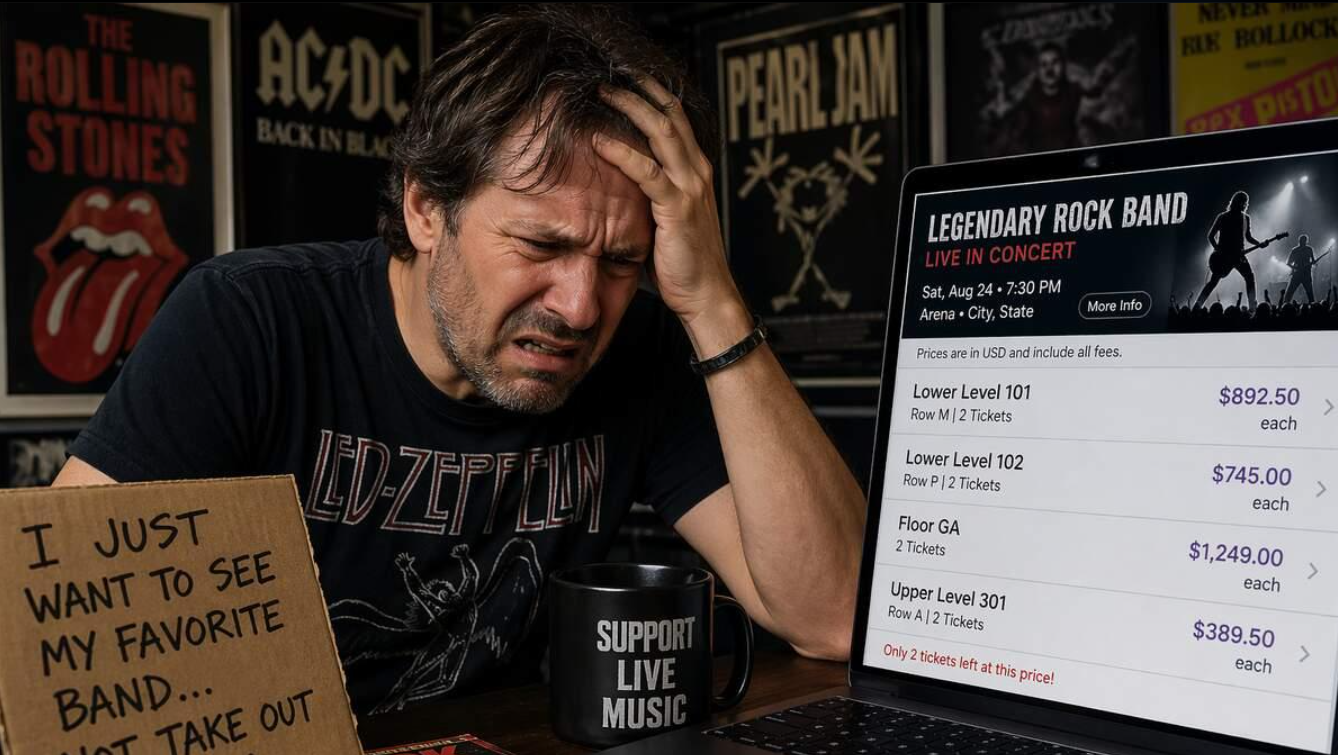
The Concert Ticket Resale Trap: Why a $150 Ticket Can Turn Into a $500 Purchase
Introduction: When a Night Out Starts Looking Like a Luxury Purchase
You find tickets to see your favorite artist. The original price was around $150, but the show sold out before you could secure a seat. You search online and discover that resale tickets are available. One listing looks promising, so you click through, compare seats, and start imagining the night. Then reality hits: the ticket costs several times its original price, the checkout total is higher than expected, and you are suddenly deciding whether one evening of entertainment deserves a $500 hole in your budget.
That is the concert ticket resale trap. It combines scarcity, emotional spending, market demand, and the fear of missing out into a purchase that can become much more expensive than fans originally planned.
The issue is not that every resale ticket is a bad deal. People sometimes need to sell tickets because their plans change, and legitimate resale marketplaces can help buyers find seats for sold-out events. The problem begins when buyers treat an inflated listing as their only option, overlook the total cost, or rush into a transaction without checking the seller and ticket restrictions.
In 2026, concertgoers have another reason to pay attention: U.S. federal rules require covered ticket sellers to disclose mandatory fees in the advertised total price, rather than hiding those charges until checkout. However, price transparency does not automatically make a ticket affordable, eliminate resale markups, or guarantee that a seller is trustworthy.
The smartest approach is to look beyond the advertised price and ask a more important question: What is this concert actually worth to me, after every cost and risk is considered?
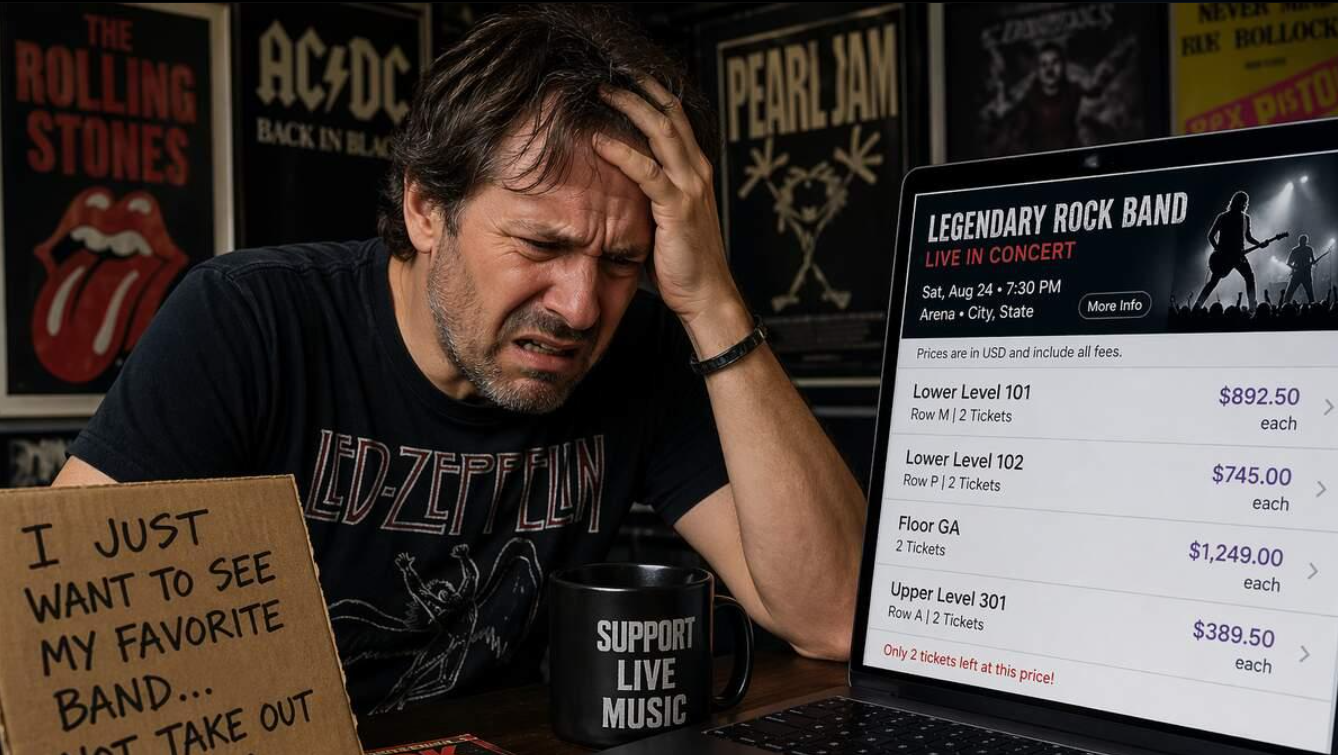
How a $150 Ticket Becomes a $500 Decision
A ticket’s original price and its resale price are two different things.
The original, or primary, sale generally takes place through a ticket seller working with an artist, promoter, venue, or event organizer. The secondary market is where previously purchased tickets are offered for resale. Sellers can include ordinary fans who can no longer attend, professional ticket brokers, or people hoping to profit from limited availability.
When demand exceeds the available supply, resale prices can rise dramatically. A popular artist, a final tour date, a small venue, or a performance with unusually high demand can create conditions in which buyers compete for a limited number of seats.
Consider this illustrative example:
Cost component | Amount |
|---|---|
Original ticket price | $150 |
Resale markup above original price | $250 |
Resale ticket price | $400 |
Other trip expenses, such as transport and parking | $50 |
Total cost of the evening | $450 |
If mandatory charges or other expenses apply, the final amount could be higher. This example is not a quote from a particular ticket seller; it simply demonstrates how quickly a purchase can move beyond its original budget.
There is also an important distinction between a ticket that costs $400 on resale and a ticket that costs $150 but gains $250 in mandatory fees at checkout. The first reflects a resale price increase; the second reflects a pricing-transparency problem if those mandatory fees were omitted from the advertised total.
Both can leave a buyer paying far more than expected, but they are not the same problem.
A ticket's price should therefore be evaluated in three layers:
- The advertised total: What the seller says the ticket costs, including mandatory charges where required.
- The complete outing cost: The ticket plus transportation, parking, food, accommodation if needed, and other related expenses.
- The personal value: How much the experience is worth to you compared with the other things that money could buy.
That last layer is easy to ignore when tickets are selling quickly. It is also the one that can save you from a purchase you regret.
Why Concert Ticket Resale Prices Can Get So High
1. Scarcity creates pricing power
Resale prices are heavily influenced by the relationship between supply and demand. A venue has a limited number of seats, and an artist cannot perform every night in every city.
When thousands of people want tickets for a limited number of dates, buyers may compete for whatever remains available. Sellers recognize that some fans are willing to pay substantially more than the original price.
Not every price increase is evidence of fraud or manipulation. Some reflect genuine demand. But a legitimate market price can still be financially unreasonable for an individual buyer.
A seat is not automatically worth $500 simply because someone lists it for that amount.
2. The original price may not reflect demand
Some events have original ticket prices that are lower than the amount many buyers would willingly pay. When that happens, the difference creates an opportunity for resale.
Imagine an original ticket sold for $150, while a large group of fans would be willing to pay $300. A reseller may try to capture some of that difference.
The resale market can therefore reveal how much buyers are willing to spend, but it does not tell you what you should spend. Willingness to pay is personal, and it can change sharply when excitement takes over.
3. Fans pay for certainty
A sold-out show creates a special kind of pressure. Buyers may believe that a resale ticket is their final opportunity to attend.
That sense of certainty has value. Someone who has followed an artist for years may be prepared to pay more than a casual listener. Someone celebrating a birthday or traveling to see a performance may also attach extra importance to the event.
The danger is paying a premium for emotional relief rather than making a deliberate financial decision. The thought of finally securing a ticket can feel so satisfying that buyers stop asking whether the price is reasonable.
4. Group plans multiply the expense
A $100 increase on one ticket is expensive. An extra $100 on four tickets means another $400 before anyone buys dinner or arranges transportation.
Group purchases also create social pressure. If friends have already agreed to attend, one person may feel responsible for finding tickets at almost any price. Nobody wants to be the person who ruins the plan.
Before searching, agree on a maximum price per person and a total budget for the group. If the available tickets exceed that limit, everyone should know in advance whether the group is willing to walk away.
5. Urgency makes comparison harder
Ticket listings can make a purchase feel like a race. Buyers may see limited availability messages, rapidly changing listings, or prices that appear to be rising.
Some urgency is real: another buyer can purchase a ticket before you do. But the possibility of losing one listing does not mean every alternative will disappear, nor does it prove that the listing is a good deal.
A rushed purchase often prevents buyers from checking comparable seats, transfer rules, the seller's reputation, and the final total. That is exactly when a costly mistake becomes more likely.
The Difference Between Resale Markups and Hidden Fees
Ticket pricing has faced scrutiny in the United States because the advertised price has not always reflected what buyers ultimately had to pay.
The Federal Trade Commission's Rule on Unfair or Deceptive Fees took effect on May 12, 2025. It covers businesses selling live-event tickets, including covered third-party sellers and resellers, and requires upfront disclosure of the total price with mandatory fees included. Certain charges, such as applicable taxes and shipping, may be disclosed separately before payment under the rule.
The rule does not ban ticket sellers from charging fees, set a universal maximum ticket price, or guarantee that a resale ticket will be inexpensive. It addresses how covered businesses present prices and fees.
That distinction matters in 2026. Buyers should still compare prices and review the checkout screen, but they should not assume that a high price is unlawful simply because it is high. A resale markup and a misleading fee presentation are different issues.
If a platform displays a ticket's total price, you may still dislike the amount. At least, however, you have a clearer basis for comparing offers.
The FTC also took action in April 2026 against StubHub over allegations involving advertised ticket prices that did not clearly disclose all mandatory fees upfront. The announced settlement included a $10 million refund commitment. The case illustrates why price transparency remains a live consumer issue; it does not mean that every ticket listing on every platform is deceptive.
For buyers, the practical lesson is simple: compare the actual total, not just the most eye-catching number in a search result.
The Psychology Behind Overpaying for a Concert
Fear of missing out
Fear of missing out, often shortened to FOMO, can make a purchase feel more urgent than it really is. Fans see social posts, tour announcements, sold-out notices, and friends sharing their plans. Suddenly, missing one event feels like missing a cultural moment.
That emotion can be powerful, particularly when the artist is a personal favorite. But a concert is still one experience, not a financial obligation.
Ask yourself: if the ticket cost this much from the beginning, before I knew it was sold out, would I still buy it?
If the answer is no, pause before allowing scarcity to change your decision.
The sunk-cost effect
Buyers sometimes spend money on related plans before securing tickets. They might book a hotel, arrange transport, or promise friends they will attend. Once those commitments exist, paying more for the ticket can seem like the only way to avoid wasting the earlier expense.
This is the sunk-cost effect: previous spending influences a new decision even when the earlier money cannot be recovered.
The better approach is to compare the additional cost of buying the ticket with the realistic alternatives. If canceling or changing the other arrangements costs less than paying an extreme resale premium, walking away may be the financially smarter choice.
Emotional spending disguised as a once-in-a-lifetime opportunity
Some events genuinely are rare. An artist may be retiring, a band may be reuniting, or a tour may never return to a particular city. Paying extra can be a reasonable personal choice if the experience matters enough and the money is available.
The problem is assuming that every sold-out show is a once-in-a-lifetime opportunity. Resale listings are not proof that the experience is worth any price.
Decide what the event means to you before you begin bidding against your own emotions.
Is Buying Resale Concert Tickets Worth It?
Sometimes. The answer depends on the price, the reliability of the seller, the ticket's conditions, and your own financial situation.
Resale may be reasonable when the event is genuinely important to you, the ticket comes from a legitimate marketplace, the transfer method is accepted by the venue, and the total fits comfortably within your entertainment budget.
It becomes harder to justify when the ticket costs several times the original price, the purchase requires borrowing money, the seller cannot explain how the ticket will be transferred, or the listing has unclear restrictions.
Use this quick decision test before buying:
Question | What a sensible answer looks like |
|---|---|
Do I genuinely want to attend? | Yes, even without social pressure |
Is the full price clear? | I know the total before paying |
Can I afford it? | It does not disrupt essential bills or planned savings |
Is the seller trustworthy? | The marketplace and transfer process are verifiable |
Have I compared alternatives? | I checked official options and comparable listings |
Would I still buy it tomorrow? | The decision survives a cooling-off period |
You do not need every answer to be perfect. But if several answers raise concerns, the purchase deserves another look.
A useful rule is to set your maximum price before opening resale sites. For example, you might decide that a ticket is worth up to $200 to you, including mandatory ticket fees. If the only available option is $390, you have a clear decision instead of a moving target.
That limit can be different for every person. The point is to establish it while you are calm, rather than while a countdown or sold-out notice is staring at you.
How to Avoid Overpaying for Concert Tickets in 2026
Start with the artist or venue's official ticket information
Search for the event through the artist's official website, venue website, or event organizer. These sources can direct you toward authorized sellers and explain whether an official resale or ticket-transfer option exists.
Do not assume the first search result is the official seller. Search advertisements and third-party listings can appear above an event's authorized ticket page.
Starting with official information gives you a baseline for ticket categories, original prices when available, sale dates, and any resale restrictions.
Compare the same type of seat
A floor ticket, a front-row seat, a standard lower-bowl seat, and a restricted-view seat are not interchangeable.
Compare tickets with similar locations and conditions. Check whether the price applies to one ticket or a pair, whether adjacent seats are guaranteed, and whether the listing clearly identifies the section and row.
A cheaper ticket can be a worse purchase if the location is different from what you expected. Equally, a more expensive ticket may not provide enough additional value to justify the difference.
Check the final total before committing
Mandatory ticket fees for covered transactions should be included in the advertised total under the FTC's rule. Certain charges, including taxes or shipping, can be presented separately under the rule, provided the relevant disclosure requirements are met before payment.
Review the amount you will actually pay and look for optional add-ons that you may not need. Keep a record of the listing and the final checkout amount if something appears inconsistent.
If a seller's pricing seems misleading, consult the FTC's consumer guidance or report a suspected violation through the agency's official channels.
Use payment methods with appropriate protections
Whenever possible, purchase through a reputable marketplace with clear buyer-protection terms. Review what happens if the ticket is invalid, never delivered, canceled, or materially different from the listing.
Avoid paying an unfamiliar individual through an irreversible transfer simply because they claim to have an extra ticket. A screenshot of a ticket or an image of a confirmation email is not sufficient proof that the seller can legitimately transfer it to you.
Keep receipts, order confirmations, seller messages, and the original listing details. If something goes wrong, these records may help when contacting the platform or your payment provider.
Read the transfer and entry conditions
Some tickets are subject to restrictions on transfer, resale, identity verification, or entry. Rules vary by event, venue, ticket type, and location.
Before purchasing, verify that the ticket can be transferred to you through the required system and that the venue accepts the ticket type being sold. A listing that looks convincing is not useful if the ticket cannot be used at the door.
Watch for social media scams
Scammers often exploit sold-out events because they know fans are searching urgently. Warning signs include pressure to pay immediately, refusal to use a recognized ticketing platform, inconsistent seller details, unusual payment requests, and prices that seem suspiciously attractive.
Do not send extra money to a seller who suddenly invents a transfer charge or claims that a ticket will be released only after another payment. Verify any problem directly with the official marketplace rather than relying on a stranger's explanation.
Compare other dates and nearby venues
If the artist has several tour dates, compare them before accepting a large markup. A weekday show, a different city, or another venue may offer a lower total cost.
Of course, travel can erase the savings. Compare the complete trip—including transport, accommodation, meals, and time off work—not just the ticket price.
A cheaper seat in another city is not automatically a better deal if reaching it costs another $300.
Build a Concert Budget That Includes the Whole Night
One of the easiest ways to underestimate a concert's cost is to focus exclusively on admission. The ticket may be the largest expense, but it is not necessarily the only one.
Imagine two possible plans:
Expense | Plan A: Local show | Plan B: Nearby city |
|---|---|---|
Ticket | $250 | $170 |
Transport | $25 | $90 |
Parking or local travel | $20 | $15 |
Food and drinks | $35 | $40 |
Accommodation | $0 | $100 |
Estimated total | $330 | $415 |
These figures are illustrative, not actual event prices. They show why a lower ticket price can still lead to a more expensive outing.
Set a total budget before you purchase. Include tickets for everyone attending, transportation, meals, accommodation if needed, and a small allowance for unexpected expenses.
Then decide which part of the experience matters most. If seeing the artist live is the priority, a less expensive seat may be enough. If you mainly want to enjoy a night with friends, a local event with cheaper admission could deliver similar value.
It can also help to create a separate entertainment allowance. Money allocated for concerts and events is easier to spend confidently because it has already been set aside for that purpose. If the purchase exceeds the allowance, you can decide whether to adjust the plan without touching money intended for necessities.
This is part of a broader consumer-finance habit: consider the opportunity cost. Spending an extra $300 on one show means not spending that money on something else. It might cover several other outings, a short trip, a hobby, or savings toward a larger goal.
That does not mean entertainment is wasteful. Enjoyment matters. The goal is to spend intentionally rather than letting a seller's price determine your priorities.
What to Do If Ticket Prices Keep Rising
A rising resale price can create the illusion that waiting is always a mistake. In reality, prices may rise or fall depending on demand, new ticket releases, seller behavior, and how close the event is. There is no reliable rule that resale prices will always become cheaper—or always become more expensive—as showtime approaches.
Avoid trying to predict the market perfectly. Instead, make a plan that works under uncertainty.
First, decide the maximum total you are prepared to pay. Second, identify acceptable seats and dates. Third, check official sources periodically for legitimate ticket releases or authorized resale options. Finally, stop searching when prices exceed your limit.
You may miss a particular show. That is disappointing, especially when you have been looking forward to it. But avoiding an unaffordable purchase is not a financial failure.
You can also consider alternative experiences: another tour date, a different city if the total cost works, a future performance, or a different event entirely. None of these is guaranteed to feel identical to seeing your favorite artist on a specific night, but alternatives can reduce the pressure to accept any price.
A sensible budget is not a promise that you will never spend more on entertainment. It is a tool that helps you choose when spending more is genuinely worthwhile.
The Bigger Consumer Lesson: Price Is Not the Same as Value
The concert resale market is a useful example of a much wider consumer problem: a price can be technically available, emotionally persuasive, and still be a poor fit for your finances.
The same principle applies when comparing travel options, luxury purchases, event experiences, or everyday spending decisions. Before paying a premium, consider what you receive in return, whether the seller's claims are clear, and what else the money could do for you.
Readers looking for other consumer and money-related perspectives can explore Finiuo, while Jurnza offers legal information and Dryzen Royal covers dry fruits and nutrition. Across very different subjects, the useful habit remains the same: look past the headline and understand the details before making a decision.
For concert tickets, that means separating three things: the artist's value to you, the market price someone is asking, and the amount you can reasonably afford. Those figures do not have to match.
A fan may decide that a rare performance is worth a significant premium. Another may conclude that the same ticket is simply too expensive. Neither decision is automatically wrong. What matters is that the buyer understands the full cost and makes the choice freely, rather than being pushed into it by panic, confusing pricing, or fear of missing out.
Conclusions
The concert ticket resale trap begins when a sold-out event turns a planned entertainment purchase into an emotional bidding war. A ticket that originally cost $150 can become a $400 or $500 decision when resale markups and the rest of the outing are considered.
Resale is not inherently bad. It can help fans find tickets when their plans change or an event sells out. But a listing's price does not prove that the ticket is worth the money, and a legitimate marketplace does not remove the need to check transfer rules, seller reliability, and the full cost.
In 2026, U.S. consumers have additional protection against misleading upfront ticket pricing through the FTC's rule requiring covered sellers to disclose total prices, including mandatory fees. That is an important step toward transparency, but it does not cap resale prices or guarantee that a ticket is affordable.
The strongest defense is still a clear spending limit. Start with official ticket information, compare similar seats, check the total, use trustworthy purchasing channels, and account for transport and other expenses. If the price exceeds your limit, give yourself permission to walk away.
A great concert can create memories that last for years. A regrettable purchase can follow you long after the final song. The goal is not to avoid spending money on experiences; it is to make sure the experience is worth what you choose to pay.