

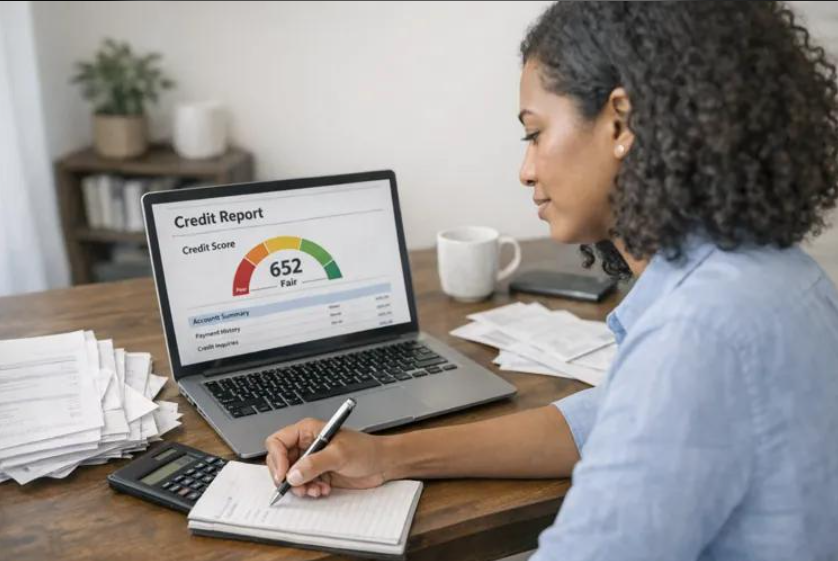
Your Credit Score Dropped Without Warning in 2026: 7 Reasons It Happens and How to Recover
Seeing your credit score drop unexpectedly can be frustrating, especially when you believe you have been managing your money responsibly. You may have paid every bill on time, avoided taking out new loans, and kept your credit card spending under control. Yet your latest credit score may be lower than it was last month.
The good news is that a credit score decrease does not automatically mean you have done something wrong. Credit scores change as information on your credit reports changes, and even seemingly minor updates can affect the results. A higher reported credit card balance, a reduced credit limit, a newly reported account, or a correction to your credit history may explain the difference.
However, an unexpected drop can sometimes indicate a more serious problem, such as an inaccurately reported late payment, an unfamiliar account, or identity theft. Ignoring the change could make it harder to identify and correct the underlying issue.
In 2026, understanding how credit reporting works remains essential for Americans who want to qualify for mortgages, auto loans, credit cards, rental housing, and other financial products. Your credit score can influence the interest rates and terms lenders offer, although individual lenders use different scoring models and approval criteria.
This guide explains seven common reasons your credit score may have dropped without warning, how to investigate the change, and the practical steps you can take to rebuild your credit.
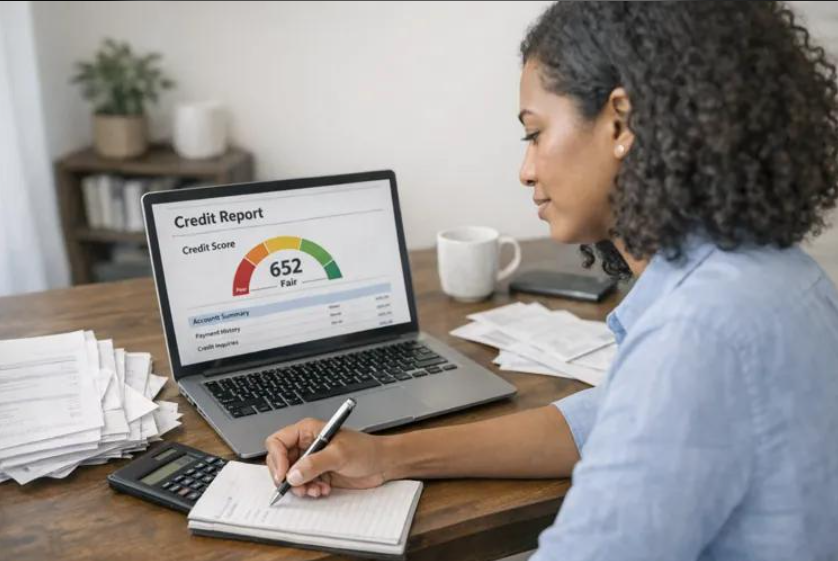
Why Did Your Credit Score Drop Suddenly?
A credit score is calculated using information in your credit report. That information can include payment history, outstanding balances, credit limits, account age, and applications for new credit.
When the underlying information changes, the score calculated from it may change as well. Different scoring models can respond differently to the same information, which is why you might see different numbers from separate credit monitoring services.
The Consumer Financial Protection Bureau explains that credit reports and credit scores are not the same thing. A credit report contains information about your credit activity, while a scoring model uses information from that report to calculate a score. <Cite refs={["turn693823search5"]}/>
If your score falls unexpectedly, do not immediately assume that you missed a payment or damaged your credit permanently. Start by checking which score changed, which credit bureau supplied the underlying report, and what information was updated.
1. Your Credit Card Utilization Increased
One of the most common reasons for a sudden credit score decrease is an increase in credit utilization.
Credit utilization measures how much of your available revolving credit you are using. It is particularly relevant to credit cards because the balances and limits reported by your card issuers can affect how much available credit you appear to have.
To calculate your overall utilization rate, divide your total reported credit card balances by your total credit limits, then multiply the result by 100.
For example, suppose you have two credit cards with a combined limit of $10,000 and reported balances totaling $2,000. Your overall utilization rate is 20%.
If your reported balances rise to $4,000 while your total credit limit remains unchanged, your utilization rate increases to 40%.
That increase can negatively affect your credit score, even if you have never missed a payment.
Why can utilization rise if you pay your bills on time?
Credit card issuers commonly report account information to the credit bureaus periodically. The balance appearing on your credit report may not be the same as the balance you see after making a payment.
For example, you might charge $2,000 to a credit card during the month, pay the bill in full before its due date, and still have a higher balance reported if the issuer reported the account before receiving your payment.
This does not necessarily mean you are carrying debt from month to month. It means the balance captured by the reporting process may influence your score at that particular time.
A large purchase, holiday spending, medical expense, or temporary cash-flow problem can all increase reported utilization.
How to reduce the impact
- Review the balances and credit limits listed on your credit reports.
- Pay down revolving balances when financially practical.
- Keep credit card payments on time.
- Monitor both overall utilization and the utilization of individual cards.
- Avoid making unnecessary purchases simply to earn rewards if doing so strains your budget.
Keeping utilization low can help, but there is no universal percentage that guarantees a particular score. Lower utilization is generally preferable, and the impact depends on the scoring model and the rest of your credit profile.
2. Your Credit Card Issuer Reduced Your Credit Limit
Your credit score can fall even when your credit card balance has not increased.
This can happen if a card issuer lowers your credit limit. Because utilization is calculated using both balances and available credit, a smaller limit can make your existing debt represent a larger share of your available credit.
Consider this example:
Credit information | Before limit reduction | After limit reduction |
|---|---|---|
Credit card balance | $2,000 | $2,000 |
Credit limit | $8,000 | $4,000 |
Utilization rate | 25% | 50% |
Your debt has not increased, but your utilization rate has doubled.
Card issuers may change credit limits for various reasons, including changes in account activity, risk assessments, or their lending policies. The exact reason depends on the issuer and your circumstances.
What should you do?
Check your latest card statement, issuer notifications, and credit reports to confirm whether a limit changed.
If the reduction creates a financial problem, you can contact the issuer and ask why it happened. You may also ask whether the original limit can be restored, although approval is not guaranteed.
Avoid immediately applying for several new credit cards to compensate for a reduced limit. Multiple applications can create hard inquiries and additional financial obligations.
Instead, focus on reducing balances where possible, maintaining on-time payments, and understanding the reason for the change.
3. A Late or Missed Payment Appeared on Your Report
Payment history is an important factor in many widely used credit scoring models. Consequently, a newly reported late payment can cause a substantial score decrease.
Sometimes the reason is straightforward: a payment was missed, a bill was overlooked, or a bank transaction failed.
In other cases, a consumer may believe a payment was made on time, only to discover that the creditor reported it incorrectly or that a payment was applied to the wrong account.
What counts as a reported late payment?
A payment being a few days late does not automatically mean it will appear as a 30-day delinquency on a standard credit report. Creditors generally report payment delinquencies according to their reporting practices, and a payment that becomes at least 30 days past due may be reported as late.
However, a late payment can still trigger fees or other consequences before it reaches that reporting threshold. You should therefore make payments by their due dates rather than relying on the reporting timeline.
How to investigate a possible late payment
Review your credit reports and compare them with your bank statements, payment confirmations, and creditor records.
Check whether the account was actually past due, whether the payment was processed correctly, and whether the reported dates match your records.
If the information is inaccurate, dispute it with the relevant credit bureau and the company that supplied the information. The CFPB provides guidance on disputing credit report errors and recommends keeping documentation of your dispute. <Cite refs={["turn693823search1"]}/>
If the late payment is accurate, the best response is to bring the account current, avoid further missed payments, and build a consistent record of responsible credit management.
Accurate negative information generally cannot be removed simply because it lowers your score. Be cautious of companies that promise to erase legitimate late payments for a fee.
4. You Applied for New Credit or Opened an Account
Applying for a credit card, auto loan, personal loan, or mortgage can affect your credit score.
When you apply, a lender may conduct a hard inquiry to assess your creditworthiness. A hard inquiry can cause a small, temporary decrease in some scoring models.
Opening a new account can also affect other aspects of your credit profile. For example, it may reduce the average age of your accounts or change your total debt and available credit.
These effects vary according to your credit history and the scoring model being used.
Why several applications can become a problem
Applying for multiple credit cards over a short period can generate several hard inquiries and may signal increased demand for credit.
That does not mean every credit application is harmful. Consumers sometimes need to apply for new credit for legitimate reasons, and responsible use of new accounts can support their financial goals.
Certain scoring models also treat multiple inquiries for specific types of loans differently when consumers shop for the best rate within an applicable period. However, the treatment depends on the scoring model and type of credit.
Do not assume that all credit applications will be grouped together.
How to manage applications responsibly
Before applying, compare fees, interest rates, repayment terms, and eligibility requirements. Use prequalification tools when available, understanding that prequalification is not a guarantee of approval.
If you have recently opened several accounts, consider pausing unnecessary applications while you review your budget and manage your existing obligations.
You do not need to avoid all new credit indefinitely. The goal is to apply intentionally rather than opening accounts without considering their cost or potential impact.
5. An Account Was Closed or Your Credit History Changed
Closing a credit account can change your credit profile, but the effect is not always immediate or negative.
For example, closing a credit card reduces your total available revolving credit. If you still have balances on other cards, your overall utilization rate may increase.
Suppose you have three cards with a combined limit of $15,000 and total balances of $3,000. Your utilization rate is 20%.
If you close a card with a $5,000 limit while your balances remain unchanged, your available limit falls to $10,000 and your utilization rate rises to 30%.
That change could contribute to a score decrease.
Account closures can also affect the composition of your credit profile over time. However, closed accounts in good standing may remain on credit reports for years, so closing an account does not necessarily erase its payment history or immediately shorten the age of your credit history.
The effect depends on the information reported and the scoring model.
Should you keep every credit card open?
Not necessarily. An account with an expensive annual fee, security concerns, or a product that no longer suits your needs may be worth closing.
Before doing so, consider whether closing it would increase your utilization rate or affect your broader financial plans.
If you decide to keep an account open, manage it safely, monitor statements, and understand any fees or inactivity policies. Never keep a card you cannot manage responsibly simply to protect your credit score.
The right decision should balance credit considerations with your financial well-being.
6. Your Credit Report Contains an Error or Fraudulent Account
An unexpected credit score decrease deserves particular attention when you cannot explain it through your own financial activity.
Credit reports can contain inaccurate information. An account may be mistakenly associated with the wrong consumer, a paid debt may be reported incorrectly, or an account balance may not reflect recent payments.
In other cases, unfamiliar activity may indicate identity theft.
The CFPB identifies several types of credit report errors, including incorrect account status, inaccurate balances or credit limits, duplicate debts, and accounts that belong to another person. <Cite refs={["turn693823search0"]}/>
Warning signs to look for
When reviewing your reports, pay attention to:
- Accounts you do not recognize.
- Credit inquiries you did not authorize.
- Payments incorrectly marked late.
- Balances that do not match your records.
- Accounts listed as open when they were closed.
- Duplicate collection accounts.
- Incorrect personal information or another person's accounts appearing on your file.
Not every unfamiliar entry proves fraud. Some entries may reflect a lender's legal name, a collection agency, or an account you opened under a different brand. Investigate before drawing conclusions.
How to dispute inaccurate information
If you find an error, take these steps:
- Obtain your credit reports and identify the specific entry.
- Gather supporting documents, such as statements, receipts, payment confirmations, or account closure letters.
- Submit a dispute to the credit reporting company displaying the error.
- Contact the creditor or other company that supplied the inaccurate information.
- Keep copies of your correspondence and monitor the dispute's outcome.
In the United States, consumers can access their federally authorized credit reports through AnnualCreditReport.com.
If you suspect identity theft, visit IdentityTheft.gov for official guidance on reporting the incident and taking recovery steps.
Disputes should identify genuine inaccuracies. Correct information is not generally eligible for removal merely because it negatively affects your score.
7. Your Score Changed Because of the Scoring Model or Report Data
Sometimes the apparent mystery is not a missed payment or a new debt. It is a difference in the score being displayed.
Consumers do not have just one universal credit score. Different credit bureaus may have different information, and different scoring models may interpret the same report differently.
For example, a bank might provide a FICO score, while a free credit monitoring service displays a VantageScore. Even when both services use information from a major credit bureau, their scores may differ because their calculation methods are not identical.
The score can also change when the underlying report is updated. A new balance, a change in an account's reported status, or the addition of previously unavailable information can produce a different result.
Why this matters when tracking your credit
Comparing two scores without checking their sources can create unnecessary confusion.
A score of 720 from one model is not necessarily directly comparable with a score of 720 from another. Lenders may also use different versions of scoring models depending on the product and their underwriting policies.
If you notice a drop, check:
- Which credit bureau supplied the information.
- Which scoring model was used.
- The date the score was calculated.
- Whether the report changed since the previous calculation.
- Whether the service is showing a new score or simply refreshing an existing display.
A change between different scoring models does not necessarily mean that your financial behavior suddenly worsened.
How to Recover After a Credit Score Drop
Once you identify the likely cause, focus on the steps most relevant to your situation. There is no universal recovery timeline because the effect depends on the type of change, the information in your report, and the scoring model.
Step 1: Review all three credit reports
Start by checking reports from Equifax, Experian, and TransUnion. Information may differ between bureaus because creditors do not necessarily report every account to all three.
Look for new accounts, unfamiliar inquiries, balance changes, late-payment records, and incorrect personal information.
You can obtain reports through AnnualCreditReport.com, the federally authorized source for free credit reports.
Remember that checking your own credit report is different from applying for a loan. A consumer's own review generally does not create the type of hard inquiry associated with a credit application.
Step 2: Bring any overdue accounts current
If you have missed a payment, contact the creditor and determine the amount needed to bring the account current.
If you cannot afford the full amount, explain your circumstances and ask about available hardship options. Confirm any arrangement in writing and understand the fees or interest that may continue accumulating.
Preventing further delinquencies is an important step toward stabilizing your credit profile.
Step 3: Reduce high credit card balances
If increased utilization caused the drop, pay down balances where practical.
You do not necessarily need to carry a balance or pay credit card interest to build credit. Paying your statement balance in full by the due date, when possible, can help you avoid interest on purchases under the card's applicable terms.
If you cannot pay in full, prioritize making at least the required minimum payment on time and create a realistic plan to reduce the outstanding balance.
Avoid taking out a new loan solely to improve your score without comparing the costs and risks.
Step 4: Dispute genuine reporting errors
If the score dropped because of inaccurate information, submit a clear dispute and include supporting documentation.
Contact both the relevant credit bureau and the company that furnished the information when appropriate. Keep records of your submission and review the results carefully.
If the error involves suspected identity theft, take the additional protective steps recommended by IdentityTheft.gov.
Step 5: Avoid unnecessary applications
While investigating a score decrease, postpone credit applications that are not necessary.
This can help you avoid additional hard inquiries and prevent new financial obligations from making your budget harder to manage.
If you genuinely need a mortgage, auto loan, or another credit product, compare offers carefully rather than delaying solely because your score changed by a few points.
Step 6: Keep older accounts and payment habits under review
Maintain on-time payments, monitor account activity, and avoid closing accounts without considering the consequences.
You do not have to keep every account forever. Instead, evaluate fees, security, utilization, and your ability to manage the account responsibly.
Consistency is more useful than making several drastic financial changes in response to one score update.
Step 7: Monitor the results
After making corrections or reducing balances, check your reports periodically to see whether the relevant information has been updated.
A score may not recover immediately. Some changes take time to appear in reported data, and legitimate negative information may continue to affect a score for a considerable period.
The objective is to correct errors, manage debt responsibly, and build a stronger long-term credit history rather than chase a particular score overnight.
How Long Does It Take for a Credit Score to Recover?
The recovery period depends on what caused the decline.
A utilization-related drop may improve after lower balances are reported, although the timing depends on when the issuer updates the account and how the scoring model evaluates the new information.
A hard inquiry may have a smaller and more temporary effect. An inaccurate negative item may be corrected after a successful dispute and the required reporting updates.
An accurate late payment can be more difficult to overcome because payment history remains relevant to many scoring models for years. In the United States, most negative payment information can generally be reported for up to seven years, although specific rules and exceptions apply. <Cite refs={["turn693823search2","turn693823search3"]}/>
That does not mean you must wait seven years before your score can improve. Other positive changes to your credit profile can help over time, but no legitimate adviser can guarantee an exact recovery date.
Be patient, keep payments current, and concentrate on the factors you can control.
Credit Repair Scams: What to Avoid in 2026
A sudden credit score drop can make consumers vulnerable to companies promising fast results.
Some businesses advertise guaranteed score increases, claim they can remove every negative entry, or demand upfront payment to repair a credit report.
Be cautious of these promises.
Legitimate credit reporting errors can be disputed, but accurate negative information generally cannot be erased simply because a consumer pays a company. The CFPB advises consumers not to pay fees to repair an accurate credit history. <Cite refs={["turn693823search2","turn693823search6"]}/>
Watch out for services that:
- Guarantee a specific score increase.
- Promise to remove accurate late payments or legitimate debts.
- Encourage you to dispute information you know is correct.
- Tell you to create a new identity or use a false credit profile.
- Demand payment without clearly explaining the services and terms.
You can dispute credit report errors yourself without paying a credit repair company. If you need professional assistance, research the provider carefully and understand your legal rights before signing an agreement.
A Monthly Credit Score Protection Checklist
A simple routine can help you catch problems early and reduce the chance of being surprised by a credit score change.
Every month:
- Review credit card statements and account balances.
- Make payments by their due dates.
- Check for unfamiliar transactions or account notifications.
- Monitor reported credit limits and balances.
- Avoid applying for credit without a clear reason.
- Review your budget before taking on additional debt.
Periodically:
- Review credit reports from all three major bureaus.
- Verify that closed and paid accounts are reported accurately.
- Check for unfamiliar inquiries or accounts.
- Update your contact details with financial institutions.
- Review subscriptions and recurring payments that could cause missed bills.
- Reassess your debt-repayment strategy and emergency savings.
A few minutes of regular monitoring can make it easier to identify an issue before it affects a future loan application.
Conclusions
A credit score drop without warning can be alarming, but it does not always indicate a serious financial problem. Higher reported credit card balances, reduced credit limits, late payments, new applications, account changes, reporting errors, and differences between scoring models can all explain why your score changed.
The first step is to identify the cause rather than immediately applying for new credit or paying a company that promises instant repairs. Review your credit reports, verify the information, and compare it with your own financial records.
If utilization increased, work toward reducing balances. If a payment was missed, bring the account current and establish reliable payment habits. If information is inaccurate, dispute it with the appropriate credit bureau and information provider. If you suspect identity theft, take the necessary protective steps promptly.
Most importantly, remember that one score is only a snapshot of your credit profile. Your long-term goal should be to manage debt responsibly, make payments on time, maintain accurate reports, and protect your overall financial stability.
A lower score may require attention, but understanding the reason behind it gives you a practical starting point for recovery. With consistent habits and accurate information, you can work toward a healthier credit profile without falling for costly shortcuts.