

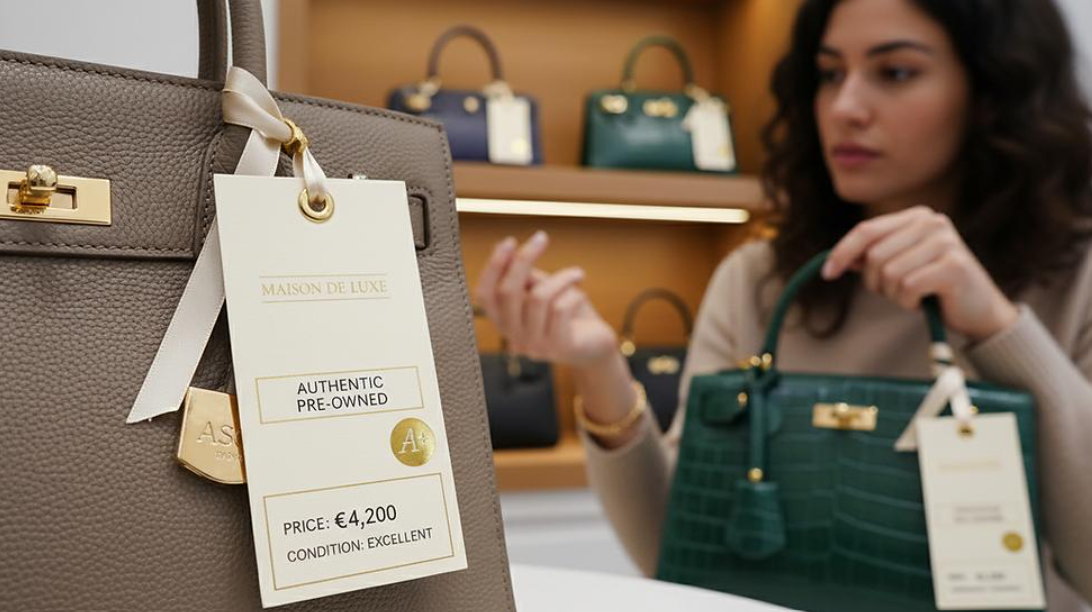
Your Designer Bag Is Not Automatically an Investment: The Truth About Luxury Resale Values in 2026
Introduction
A designer hand bag costs $3,000. A luxury watch sells for $8,000. A limited-edition pair of sneakers costs several hundred dollars, and collectors are willing to pay even more for certain rare releases.
It is easy to see why people start thinking about these purchases differently from ordinary shopping. Instead of viewing them as expenses, they begin to describe them as investments. The argument sounds convincing: buy something from a prestigious brand, take good care of it, and sell it later when its value increases.
Sometimes, that strategy works.
The problem is that a few exceptional success stories can make luxury purchases look far more reliable financially than they really are.
Some sought-after hand bag and jewelry pieces have sold for more than their original retail prices. Others have lost value, attracted little buyer interest, or required substantial discounts to sell. Even when a product retains its market value, the owner may receive considerably less after selling fees, shipping, authentication, maintenance, and other expenses.
In other words, an expensive item can retain value without being a profitable investment.
The luxury resale market in 2026 offers an interesting case study. Demand for certain heritage designs remains strong, while vintage revivals and changing fashion preferences create new opportunities for selected products. But market performance varies dramatically between brands, models, materials, and individual pieces.
For consumers, the important question is not simply whether a designer bag can appreciate. It is whether buying that bag makes financial sense once the risks, costs, and alternatives are considered.
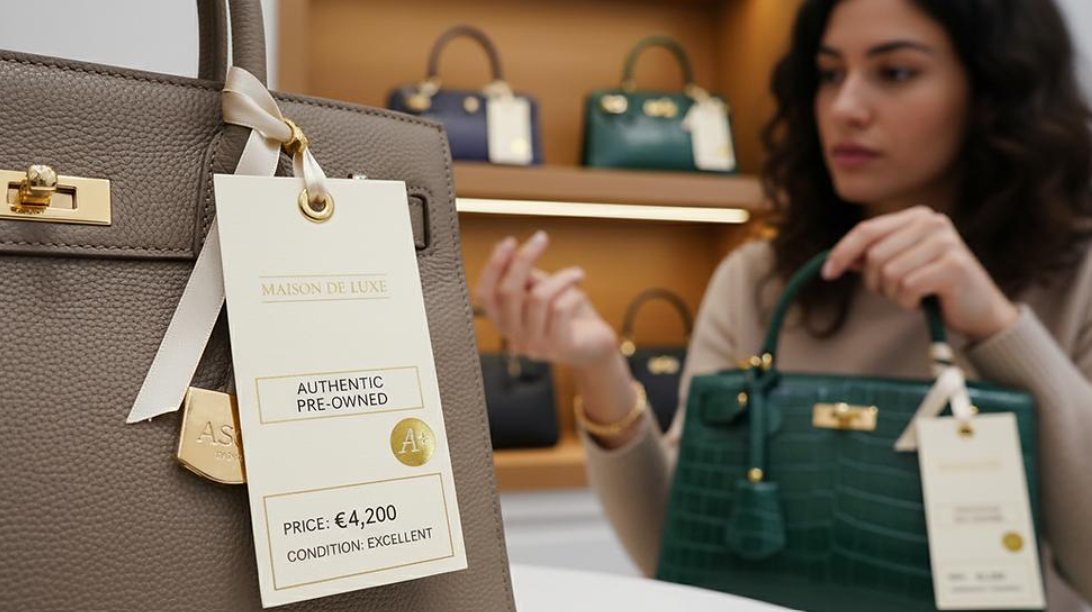
Why People Believe Luxury Goods Are Investments
Luxury brands have spent decades building reputations around craftsmanship, exclusivity, heritage, and desirability. Their products are often associated with status and long-term quality, which can make them seem financially safer than ordinary consumer purchases.
Several factors reinforce this perception.
Limited availability creates an impression of scarcity
Some luxury products are difficult to obtain because production is limited, demand is high, or access to certain models is restricted.
When buyers compete for a product that is difficult to find at retail, the secondhand price can rise above the original selling price.
However, scarcity alone does not guarantee value. A product must also attract enough buyers who are willing and able to pay the asking price.
A limited-edition product that nobody wants is still difficult to sell.
Famous brands have established resale markets
Products from well-known luxury houses can attract buyers even after their original owners stop using them.
Established resale platforms, specialist dealers, collectors, and authentication services make it easier to buy and sell pre-owned items.
This infrastructure can support liquidity for popular models, but it does not mean every item from a prestigious brand will sell quickly or at a favorable price.
Retail price increases influence resale expectations
When a luxury brand increases the price of a product, owners may assume their existing item has become more valuable.
Retail price increases can support resale prices, particularly for desirable designs with limited availability. But the relationship is not automatic.
A buyer in the secondhand market can compare pre-owned alternatives, different models, and competing brands. If demand does not support the higher price, sellers may have to accept a discount.
Social media highlights the winners
A handbag purchased years ago and resold at a substantial profit makes an attractive story. A product that depreciates quietly receives much less attention.
This creates a distorted picture of the market.
People hear about rare bag selling above retail or collectible watches increasing in price. They may not hear about the ordinary purchases that failed to appreciate, remained unsold, or lost money after transaction costs.
Anecdotes can show what is possible. They cannot establish what a typical buyer should expect.
What the 2026 Luxury Resale Market Tells Us
The luxury resale market is not uniform. Certain pieces perform remarkably well, while other products from the same brands can produce very different results.
Rebag's 2025 Clair Report, for example, reported value retention of 138% for Hermès overall under its methodology. It also highlighted selected products from brands such as The Row and Louis Vuitton that performed strongly in resale. <Cite refs={["turn427059search3"]}/>
Those figures are noteworthy, but they require careful interpretation.
A reported retention figure above 100% suggests that a measured resale value exceeds the relevant original retail price under the report's calculation. It does not mean every item from that brand appreciates, that every owner can sell at that price, or that the owner earns a net profit after expenses.
Similarly, FASHIONPHILE's 2026 Ultra-Luxury Resale Report identified strong demand for selected classic and revived handbag designs, including the Louis Vuitton Speedy. Its data also showed that popularity differs across models and categories. <Cite refs={["turn427059search0"]}/>
These findings support a more nuanced conclusion: luxury resale can create opportunities, but performance is selective.
The brand name is only one part of the equation. The precise model, size, color, condition, production period, hardware, authenticity, and current consumer preferences can all influence the amount a buyer is willing to pay.
A popular classic in excellent condition may attract strong offers. A less desirable model from the same brand may require a discount.
This is why blanket claims such as "designer bag always hold their value" are misleading.
The Difference Between Resale Value and Profit
One of the biggest mistakes luxury shoppers make is confusing value retention with investment returns.
Suppose you buy a designer bag for $2,500 and later sell it for $2,000.
The bag retained 80% of its original purchase price before selling expenses. That may be a relatively strong result compared with some consumer goods, but you still received $500 less than you paid.
Now consider the costs associated with selling it.
Transaction | Amount |
|---|---|
Original purchase price | $2,500 |
Resale proceeds before selling expenses | $2,000 |
Marketplace and payment costs, assumed | $200 |
Shipping, cleaning, or other selling costs | $50 |
Net amount received | $1,750 |
Net loss before ownership costs | $750 |
These figures are hypothetical and do not represent a market average or the fee schedule of a particular platform.
The example demonstrates the distinction between the resale price and the amount the owner ultimately receives.
Even when an item sells for a relatively high percentage of its original price, selling costs can widen the financial loss.
If you paid for repairs, storage, insurance, or specialist authentication, your total ownership cost could be higher still.
Conversely, a product purchased at a substantial discount may generate a profit even if it resells below its full retail price.
The relevant comparison is therefore not simply today's resale price against a brand's current retail price. It is the actual amount you paid compared with the net amount you can realistically recover.
Which Luxury Items Tend to Hold Value Better?
There is no guaranteed ranking of luxury products by future investment performance. Still, certain characteristics can make a product more attractive in the resale market.
Classic handbag
Well-established designs can benefit from long-term brand recognition and a broad secondhand audience.
Classic silhouettes may appeal to buyers who want a recognizable style without paying the full price for a new item. Some highly sought-after models have also benefited from limited availability and repeated retail price increases.
However, a classic design is not automatically a winning investment. Condition, purchase price, authenticity, model-specific demand, and selling costs still matter.
Luxury watches
The watch resale market includes everything from widely available models to rare, collectible pieces.
Some watches attract strong demand because of brand reputation, mechanical characteristics, historical significance, or limited supply. Others depreciate after purchase.
Buyers should also account for servicing, maintenance, authenticity checks, and the possibility that a watch needs expensive repairs.
A watch advertised for more than its original retail price does not necessarily have a completed sale at that amount. Actual transaction evidence is more useful than optimistic asking prices.
Fine jewelry
Certain established jewelry collections retain meaningful resale demand, particularly when brand recognition, material value, and design desirability support buyer interest.
Nevertheless, the retail price of branded jewelry may include substantial design, marketing, and brand premiums beyond the underlying material value.
A gold item's resale value is not necessarily equal to the amount originally paid, and branded jewelry is not automatically a substitute for investing directly in financial assets.
Sneakers and limited-edition collectibles
Limited releases can attract intense demand, particularly when a product becomes culturally significant.
But collectible markets are vulnerable to changing trends. Prices may rise quickly and then fall when excitement fades, supply changes, or buyers move to a new release.
A purchase that looks profitable during a period of intense demand can become much harder to sell once the trend cools.
The common thread is that resale potential depends on the particular item and the market in which it trades, not simply on whether the product is expensive or exclusive.
The Hidden Costs of Owning Luxury Goods
A luxury purchase can create expenses long after the original transaction.
These costs are easy to overlook when someone calculates potential profit using only the purchase and resale prices.
Maintenance and repairs
Leather can stain, scratch, fade, or deteriorate. Watch movements may require servicing. Jewelry may need cleaning or repairs.
Some buyers can maintain products at modest cost, while others may face significant expenses depending on the item and its condition.
A damaged product may also sell for less than an equivalent item in excellent condition.
Authentication
Buyers and sellers may pay for authentication services or use resale platforms that incorporate authentication into their processes.
These costs can be worthwhile, especially in markets where counterfeit products are a concern. But they can reduce the seller's net proceeds.
Documentation, original packaging, and purchase records may help establish provenance, although none of these alone guarantees authenticity or a particular resale price.
Storage and insurance
High-value products may require secure storage or additional insurance.
For an occasional luxury purchase, these costs might be negligible. For someone holding several expensive items, they can become more meaningful.
Insurance premiums also do not guarantee that every type of loss will be covered. Policy terms, exclusions, valuation rules, and documentation requirements matter.
Time spent selling
Selling a luxury item can require photographs, descriptions, buyer communication, price negotiation, authentication, shipping, and dispute resolution.
If the item does not sell immediately, the owner may need to reduce the price or list it on another platform.
Time is difficult to assign an exact dollar value, but it still matters when assessing whether an alleged investment return is worthwhile.
A purchase that requires considerable effort to generate a small net gain may be less attractive than it first appears.
Why Asking Prices Can Be Misleading
Online marketplaces make it easy to find luxury products listed for impressive amounts. The problem is that an asking price represents what a seller hopes to receive, not necessarily what a buyer has actually paid.
Imagine three identical hand bag listed for $2,400, $2,600, and $2,800. Those listings do not prove that the market value is $2,600.
If comparable bag are consistently selling for $1,900, the active listings may simply be overpriced.
A more useful valuation process looks at completed sales for genuinely comparable items.
Consider the following factors:
- Exact model and size.
- Color and material.
- Hardware and production variation.
- Condition and evidence of repairs.
- Included accessories and documentation.
- Date of sale and prevailing demand.
- Whether the transaction price includes shipping or other charges.
Even completed sales need context. A rare transaction may not represent the price an ordinary seller can expect, and a sale from several years ago may be irrelevant to current demand.
For luxury items, recent completed sales are generally more informative than the highest visible listing.
The Risk of Buying Luxury Because It Might Appreciate
Imagine that you are choosing between two purchases.
The first is a designer bag that costs $3,000. You love the design and expect to use it regularly, but you also hope that it will increase in value.
The second is a less expensive bag that meets the same practical needs.
If the expensive bag's resale price falls, the financial consequence may be disappointing. If you bought it primarily because you believed it would appreciate, the purchase may no longer seem justified.
This is where the investment narrative becomes risky.
An expected future resale price can influence a consumer to spend more than they otherwise would. The buyer may rationalize the purchase by treating a speculative possibility as though it were a dependable return.
A healthier approach is to separate two questions:
- Would I still want this item if I could never resell it?
- Can I comfortably afford the purchase without relying on future resale proceeds?
If the answer to both questions is yes, the item may be a reasonable discretionary purchase.
If the purchase only makes sense when the resale price rises, the decision depends on a market outcome you cannot control.
Luxury can provide enjoyment, personal expression, and practical use. Those benefits can be valuable, but they are different from financial returns.
How to Evaluate a Luxury Purchase Before Buying
You do not need to become a professional reseller to make a more informed decision. A few practical checks can help you understand the financial risk.
Step 1: Research the exact model
Do not rely only on a brand's overall reputation.
Look for completed sales involving the same model, size, color, and condition. Compare the product's current retail price with realistic secondhand transactions.
If reliable comparable sales are scarce, acknowledge that uncertainty instead of assuming the item will be valuable later.
Step 2: Calculate the maximum amount you can afford to lose
Start with the amount you would pay today.
Then estimate a conservative resale scenario, including selling fees and likely maintenance costs. Ask whether you would still be comfortable with the purchase if the item sold for considerably less than expected.
This is particularly important for limited releases and products whose popularity appears to be driven by short-term excitement.
Step 3: Check demand, not just brand prestige
A famous logo cannot guarantee demand for every design.
Examine whether buyers are actually purchasing the model, how frequently comparable items sell, and whether current interest appears broad or dependent on a temporary trend.
An item with many listings but few completed sales may be harder to sell than expected.
Step 4: Verify authenticity and condition
Counterfeit products can create significant financial losses. Condition can also affect resale prices substantially.
Use reputable sellers and established authentication processes where appropriate. Review return policies and understand what protection is available if the item turns out to be misrepresented.
For secondhand purchases, inspect the item's condition carefully and make sure photographs and descriptions accurately represent it.
Step 5: Include all transaction costs
Estimate the actual amount you would receive after marketplace fees, payment processing, shipping, authentication, repairs, and other relevant expenses.
Do not treat the difference between the retail price and a resale listing as profit.
Step 6: Compare the purchase with other uses of the money
A $3,000 luxury purchase has an opportunity cost. The same money could be used for savings, debt reduction, education, travel, or diversified investments, depending on your financial situation.
This does not mean discretionary spending is wrong. It means the purchase should be evaluated alongside the other things that money could accomplish.
A sound financial plan makes room for enjoyment without relying on speculative resale values to justify every expensive item.
Can Designer Bags Beat Traditional Investments?
Selected luxury products have appreciated significantly over particular periods. That fact does not establish that designer bags are generally better investments than stocks, bonds, or other financial assets.
The comparison is difficult because luxury products do not have the same characteristics as conventional financial investments.
A handbag produces no dividend or interest payment. Its value depends on future buyer demand, and selling it may involve considerable transaction costs.
Prices can also be difficult to verify. Different products have different conditions, and the market for a particular design may be relatively thin.
A publicly traded investment may also lose value, of course. Financial assets carry risks of their own. The point is not that traditional investments are guaranteed to perform well, but that the risks, costs, liquidity, and potential returns are different.
A luxury product can be worth buying for personal enjoyment. It can even become a profitable collectible. But that does not make it a reliable replacement for a diversified financial plan.
Consumers interested in building wealth should distinguish between assets purchased primarily for financial return and possessions purchased primarily for use or enjoyment.
That distinction makes it easier to enjoy luxury without confusing a lifestyle choice with a wealth-building strategy.
A Simple Example: The Real Return on a Designer Bag
Suppose a shopper buys a designer handbag for $2,800. Three years later, the shopper sells it for $3,100.
At first glance, the purchase appears to have generated a $300 gain.
But assume the seller pays $310 in selling and payment costs and spends another $90 on maintenance during ownership.
The result changes:
Item | Amount |
|---|---|
Original purchase price | $2,800 |
Resale proceeds | $3,100 |
Selling costs | −$310 |
Maintenance costs | −$90 |
Net proceeds after selling and maintenance costs | $2,700 |
Net result | $100 loss |
This is a hypothetical example, not an estimate of typical handbag returns. It excludes any additional costs such as insurance or storage.
It also does not assign a dollar value to the enjoyment the owner received during those three years.
That distinction matters. If the owner loved using the bag, the purchase might still have been worthwhile as a luxury expense. But the transaction would not have generated a financial profit under these assumptions.
If the bag had sold for significantly more, the outcome could have been different. The important lesson is that a resale gain on paper is not the same as a net investment return.
What the Luxury Resale Market Means for Everyday Consumers
The resale market can be useful even if you never intend to invest in luxury products.
Buying pre-owned goods can give consumers access to products at lower prices, while selling unused possessions can help recover part of their original cost.
However, the same principles apply to everyday purchases: condition, demand, transaction costs, and realistic buyer expectations influence the amount you can recover.
For consumers comparing the cost of premium goods, https://www.finiuo.com can serve as a resource for broader personal-finance and value-focused buying discussions.
For legal and consumer-rights questions involving purchases, disputes, or misleading representations, https://jurnza.com provides a place to explore U.S. legal topics. The applicable rules depend on the transaction and jurisdiction.
And for readers thinking about how discretionary purchases fit into everyday food and nutrition spending, https://dryzenroyal.com covers dry fruits and nutrition-related topics that connect to another part of household consumption.
The point is not that luxury goods, financial planning, legal rights, and nutrition are the same subject. It is that every purchase competes for a limited budget, and consumers benefit from understanding the actual value they receive.
Conclusions
Designer handbags, luxury watches, jewelry, and collectibles can retain value or appreciate under the right conditions. Selected products have achieved impressive resale results, and the 2026 luxury resale market continues to show strong demand for certain established and revived designs.
But those successes should not be mistaken for a guarantee.
Resale value varies by model, condition, authenticity, scarcity, and consumer demand. Selling fees, maintenance, storage, and other costs can reduce or eliminate an apparent gain. Even a product that sells above its original retail price may deliver a disappointing net return.
The smartest approach is to buy luxury for reasons you understand and can afford. Research actual completed sales, calculate the costs of ownership, and avoid relying on a future resale price to make an otherwise unaffordable purchase seem reasonable.
If an item appreciates, that can be a welcome bonus. If it does not, you should not be left depending on its resale value to protect your finances.
A luxury purchase can be worth the money without being an investment. Knowing the difference is what makes it a smarter purchase.