

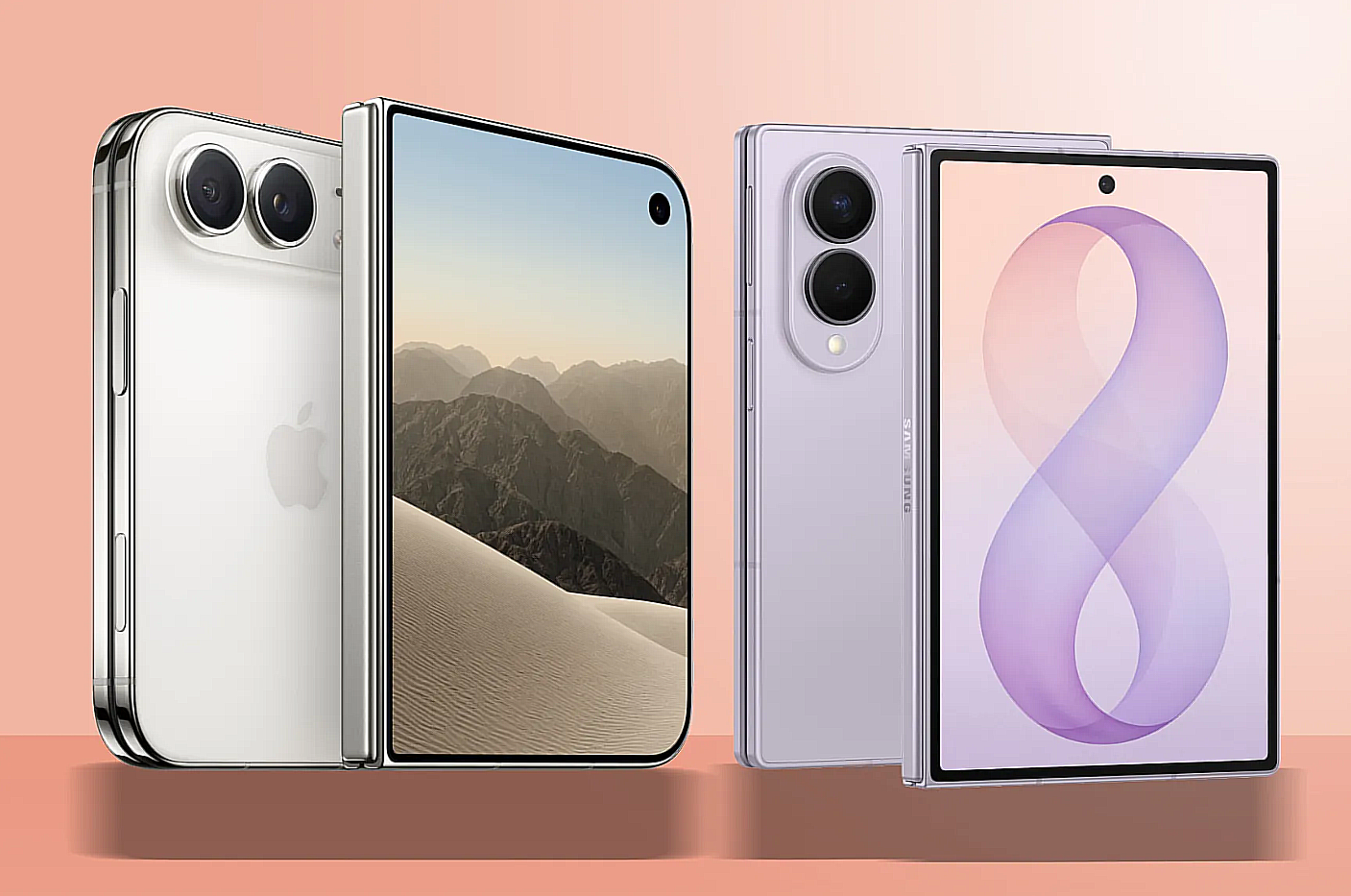
Samsung Galaxy Z Fold 8 Ultra vs. iPhone Duo: Which Foldable Is Worth Your Money in 2026?
The premium smartphone market has reached a point where buying a new phone can feel like purchasing a laptop, tablet, and camera in one expensive package. That is especially true in 2026, when Samsung's Galaxy Z Fold 8 Ultra and Apple's first foldable iPhone, the iPhone Duo, are competing for buyers who want more than an ordinary smartphone.
Both devices promise a large screen that folds into a pocketable design. Both target consumers willing to pay a premium for advanced hardware. And both attempt to answer the same question: can one device comfortably handle the jobs that once required several different gadgets?
But their approaches are not identical.
Samsung has spent years refining the Galaxy Z Fold experience, and the Galaxy Z Fold 8 Ultra builds on that experience with an expansive 8-inch inner display, a powerful triple-camera system, flexible multitasking, and features designed for people who want to work and create on their phones. Apple brings its familiar software ecosystem, a polished folding design, and the appeal of a first-generation foldable iPhone.
The price difference is relatively small at launch. Samsung's Galaxy Z Fold 8 Ultra starts at approximately $2,099.99 in the United States, while Apple's iPhone Duo starts at $1,999 for its 256GB configuration. That means the Samsung costs around $100 more before taxes, discounts, trade-ins, or regional pricing differences.
So, is Apple's first foldable the smarter purchase simply because it costs less, or does Samsung justify its premium with a more versatile device?
For buyers who prioritize productivity, camera flexibility, and a mature foldable-phone experience, the Samsung Galaxy Z Fold 8 Ultra makes the stronger overall case. The iPhone Duo remains attractive for Apple loyalists, but Samsung's larger workspace and more developed multitasking experience make it the more compelling choice for users who want to get the most out of a folding phone.
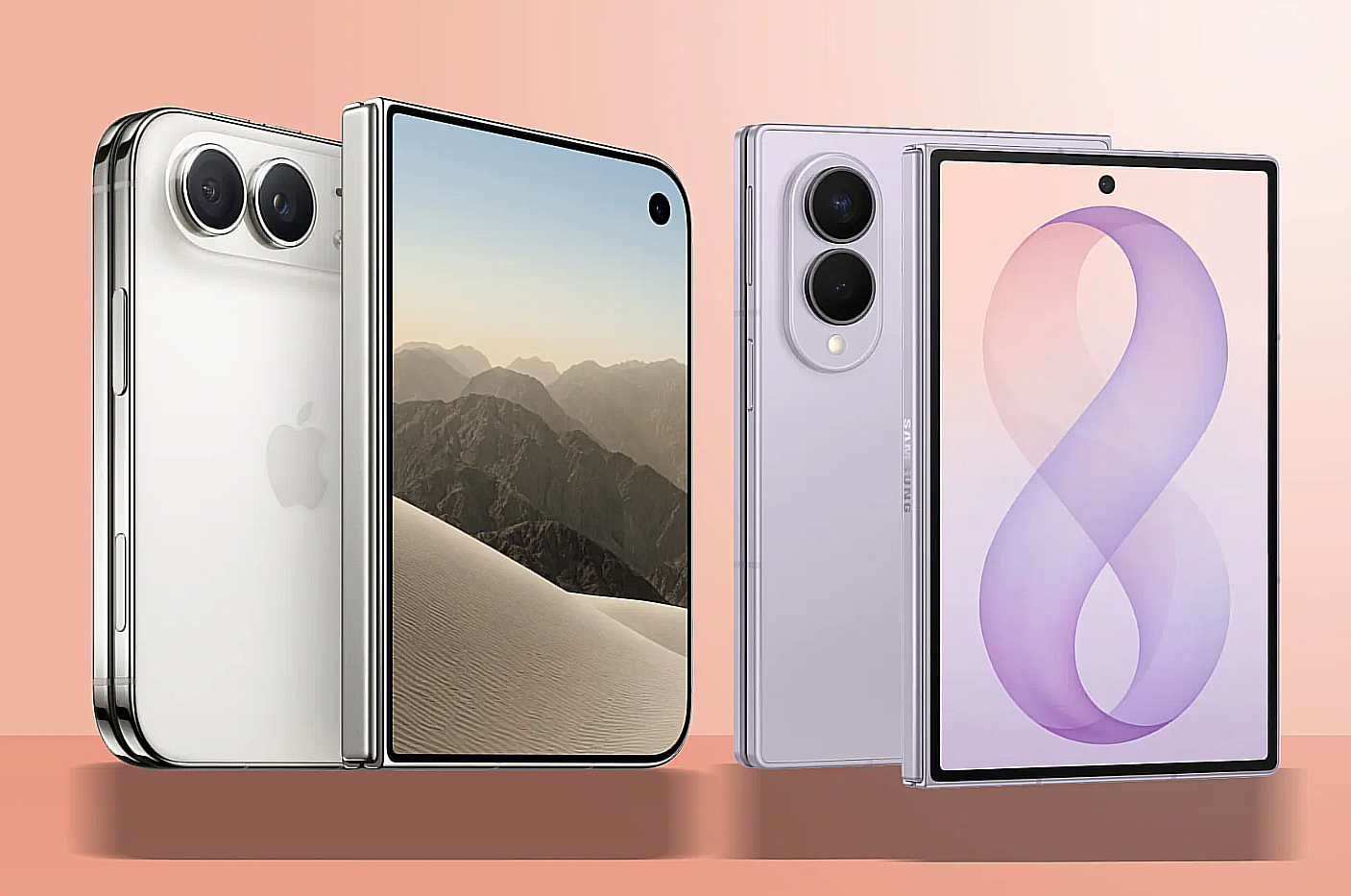
Samsung Galaxy Z Fold 8 Ultra vs. iPhone Duo: At a Glance
Feature | Samsung Galaxy Z Fold 8 Ultra | Apple iPhone Duo |
|---|---|---|
Starting U.S. price | $2,099-$2,699 | $1,999-$3,199 |
Main folding display | 8-inch Dynamic AMOLED 2X | 7.6-inch Super Retina XDR OLED |
Outer display | 6.5-inch AMOLED | 5.4-inch OLED |
Processor | Snapdragon 8 Elite Gen 5 for Galaxy | Apple A20 Pro |
Rear cameras | 200MP main, 50MP ultrawide, 10MP 3x telephoto | 48MP main, 48MP ultrawide |
Battery | 5,000mAh | Dual-battery architecture; capacity varies by published reporting |
Wired charging | 45W | Up to 60W |
Water and dust protection | IP48 | IP68 |
Software | Android 17 with One UI 9 | iOS 27 |
Standout advantage | Multitasking and camera versatility | Apple ecosystem and water resistance |
Best suited for | Productivity-focused users and power users | Existing Apple users who prefer iOS |
Specifications and prices reflect launch information available in October 2026. Prices, configurations, and availability may vary by country and retailer.
1. Design and Displays: Samsung Gives You More Room to Work
A foldable phone is only as useful as the screen you get when you open it. The entire point of paying extra for a folding device is to have more usable space without carrying a separate tablet everywhere.
On this front, Samsung has a meaningful advantage.
The Galaxy Z Fold 8 Ultra features an 8-inch inner display, compared with the iPhone Duo's 7.6-inch folding screen. That difference might sound small on paper, but the larger Samsung display gives users additional room for documents, spreadsheets, browser windows, creative applications, and side-by-side tasks.
Samsung's outer display is also larger at 6.5 inches, compared with Apple's 5.4-inch external screen. That makes a difference when you want to reply to messages, browse websites, check directions, or use an app without unfolding the device.
The iPhone Duo takes a different approach. Its compact, passport-like folded design is intended to make the device comfortable for quick interactions and easier one-handed use. Apple also uses a nano-texture finish on the inner display to reduce glare and reflections.
That is a legitimate advantage for users who frequently read or watch content in challenging lighting conditions. Both phones support adaptive refresh rates up to 120Hz, so scrolling, animations, and supported games can look smooth on either device.
However, Samsung's combination of a larger inner display and a more spacious outer screen makes the Fold 8 Ultra the more flexible option for people who regularly switch between ordinary phone use and tablet-style activities.
Imagine checking a message while reviewing a presentation, comparing two documents, or keeping a video call open while taking notes. The Samsung's additional screen space makes those tasks feel more natural.
Display verdict: Samsung Galaxy Z Fold 8 Ultra wins for versatility. Apple's nano-texture treatment is appealing, but Samsung offers more room for people who want a folding phone to function as a compact productivity workstation.
2. Performance: Both Are Flagships, but Samsung's Power Has a Practical Purpose
The Galaxy Z Fold 8 Ultra uses Qualcomm's Snapdragon 8 Elite Gen 5 for Galaxy, while the iPhone Duo runs Apple's A20 Pro chip.
Both processors sit at the premium end of the smartphone market. They are designed to handle demanding applications, high-quality games, image processing, AI-assisted features, and everyday multitasking.
It would be misleading to declare Samsung the winner simply because its processor has a particular benchmark score. Chip performance varies depending on the test, application, thermal conditions, and software optimization.
Apple's A20 Pro is a serious competitor, and the iPhone Duo can deliver excellent performance. Users who mainly browse, message, photograph, stream, and play games are unlikely to choose between these devices based on processor names alone.
Where Samsung makes a particularly strong case is how its hardware works with its software.
A powerful chip is useful, but a powerful chip paired with a flexible interface can make a bigger difference to productivity. The Fold 8 Ultra is built around the idea that users may want to run several applications, move between different workspaces, and treat the phone as more than a conventional handset.
That matters for professionals who regularly work with documents, spreadsheets, emails, video calls, research tabs, and messaging applications.
Samsung's expanded cooling structure is also designed to support demanding workloads. As with any compact device, sustained performance will depend on the application and conditions, but the Fold 8 Ultra's design clearly emphasizes high-end use.
The iPhone Duo remains an excellent option for people who value Apple's processor performance and tightly integrated hardware and software. Yet raw speed is not the only measure of a useful flagship.
Performance verdict: Both are powerful, but Samsung has the stronger productivity argument. For buyers who want performance that supports a flexible, multi-window workflow, the Fold 8 Ultra is the more convincing package.
3. Multitasking and Software: Samsung's Biggest Advantage
This is where the Galaxy Z Fold 8 Ultra begins to justify its position as the more versatile foldable.
Samsung has spent several generations developing software for devices that open into larger screens. That experience matters because folding hardware creates opportunities that traditional smartphone interfaces were never designed to handle.
The Fold 8 Ultra's Android 17 and One UI 9 software provide a flexible environment for running multiple applications, resizing windows, and organizing a workspace around the user's needs.
Depending on the supported apps and configuration, users can arrange three applications in split-screen layouts and keep additional applications in floating windows. This can make it possible to reference a document while composing an email, compare information from different websites, or keep a messaging app available while working in another application.
Samsung also offers DeX desktop functionality, which can provide a more desktop-like experience when connected to a compatible display and supported accessories.
For people who frequently travel, work remotely, or prefer carrying fewer devices, this flexibility can be genuinely valuable.
The iPhone Duo has its own multitasking features, and Apple has adapted iOS 27 for the larger folding screen. Its familiar interface, integrated services, and straightforward interaction model will appeal to users who prefer Apple's approach.
However, Apple's first foldable enters a market in which developers have already had years to adapt major Android applications to Samsung's folding devices. Early reviews of the iPhone Duo have identified inconsistencies in how some applications use the expanded display, although software updates and developer changes may improve the experience over time.
This is not a permanent limitation for Apple. Its developer ecosystem is extensive, and the company has strong incentives to improve the foldable experience.
But a buyer paying more than $2,000 today should consider how useful the larger screen is with the applications they actually use.
A folding display that mainly enlarges ordinary phone applications may not justify its price. A folding display that lets you work with several applications simultaneously has a clearer practical purpose.
Software verdict: Samsung Galaxy Z Fold 8 Ultra wins. Its mature multitasking tools, customization options, and DeX support make it the more compelling device for productivity-focused buyers.
4. Cameras: Samsung Offers the More Versatile Setup
A premium phone should be able to do more than display documents and run applications. Photography remains one of the most important reasons people upgrade, especially when the device costs as much as the Fold 8 Ultra or iPhone Duo.
Samsung equips the Fold 8 Ultra with three rear cameras:
- A 200MP main camera.
- A 50MP ultrawide camera.
- A 10MP telephoto camera with 3x optical zoom.
Apple takes a different approach with the iPhone Duo, combining a 48MP main camera with a 48MP ultrawide camera and optical-quality 2x magnification from the main camera.
Both systems offer useful creative options. Apple emphasizes computational photography and its familiar image-processing pipeline, while Samsung provides a dedicated telephoto camera and a very high-resolution main sensor.
Why the Fold 8 Ultra's camera hardware matters
The 200MP main camera gives Samsung considerable resolution flexibility, particularly for detailed scenes and cropping. A high megapixel count does not automatically guarantee better photographs, but it can provide useful flexibility when the sensor, optics, processing, and lighting work together.
The dedicated 3x telephoto camera is another meaningful advantage. It gives users a separate optical zoom option for portraits, travel photography, and subjects that are too far away for a standard lens.
The iPhone Duo's main camera offers optical-quality 2x magnification, which can be useful for portraits and everyday photography. Its ultrawide camera also provides flexibility for landscapes, architecture, and group photographs.
However, a dedicated telephoto camera gives the Samsung a more versatile set of focal lengths. That can matter to people who frequently photograph events, buildings, distant subjects, or details that are difficult to approach.
Samsung also supports creative features such as Dual Recording, which can capture the action and the user's reaction, and My FanCam, which automatically tracks and reframes a selected subject.
These tools are not essential for everyone, but they add value for people who create videos or want more flexibility from a single device.
Apple's image processing may still appeal more to certain photographers, particularly those who prefer its color rendering and established video workflows. Actual image quality depends on lighting, motion, subject distance, and personal preference, so the camera winner should not be decided by megapixels alone.
Camera verdict: Samsung Galaxy Z Fold 8 Ultra wins on hardware versatility. Its dedicated telephoto camera and high-resolution main sensor give it a stronger overall setup for users who want a broad range of photographic options.
5. Battery Life and Charging: Apple's Strongest Counterargument
Battery life deserves careful attention because a foldable phone's large display can encourage heavier use.
Samsung equips the Galaxy Z Fold 8 Ultra with a 5,000mAh battery and 45W wired fast charging. Apple uses a dual-battery architecture in the iPhone Duo and advertises all-day battery life, with wired charging support up to 60W under compatible conditions.
Those figures do not tell the whole story.
Battery capacity alone cannot predict real-world endurance. Processor efficiency, display brightness, cellular signal, background applications, camera use, and the amount of time spent on the inner screen all influence how long a phone lasts.
Apple claims impressive battery performance for the iPhone Duo, and its efficient hardware-software integration may be attractive to users who prioritize endurance.
Samsung's larger battery is a positive feature, but it does not automatically prove that the Fold 8 Ultra lasts longer in every situation. Independent testing under comparable conditions is more useful than comparing battery capacities in isolation.
Charging speed also deserves context. Apple advertises faster peak wired charging, but the actual time required to recharge depends on the adapter, cable, temperature, battery level, and charging curve.
For Samsung, 45W charging offers a practical balance between speed and convenience, particularly for people who top up their phones during breaks.
For either phone, buyers should check whether a suitable charging adapter is included in their regional package or needs to be purchased separately.
Battery verdict: A close contest. Apple has a strong charging specification and a credible battery-life case, while Samsung offers a substantial battery capacity. Buyers who spend long days away from a charger should consult comparable independent endurance tests before deciding.
6. Durability: Samsung Has Experience, Apple Has a Strong Rating
Foldable phones involve moving parts and flexible displays, so durability is more complicated than it is for conventional smartphones.
Samsung's Galaxy Z Fold series has evolved over several generations. That experience has helped the company refine the hinge, display structure, and software behavior associated with folding devices.
The Fold 8 Ultra uses Samsung's latest folding design and is rated IP48 for protection against certain solid particles and water exposure under defined test conditions. This rating should not be interpreted as complete dustproofing or protection against every kind of debris.
Apple's iPhone Duo features a titanium construction, Ceramic Shield protection, and an IP68 rating. That provides a stronger stated level of dust and water resistance than the Samsung's IP48 rating.
This is an area where Apple deserves credit. Water and dust resistance can be especially relevant for a device that costs around $2,000.
However, an IP rating does not make a folding display immune to scratches, impacts, or hinge damage. It also does not guarantee protection against every liquid or every real-world situation.
Samsung's longer experience with foldable devices is reassuring, but it should not replace sensible precautions. Buyers should review warranty exclusions, repair pricing, accidental-damage coverage, and local service availability before making a purchase.
The same advice applies to Apple. A titanium frame and strong ingress-protection rating do not make the iPhone Duo indestructible.
Durability verdict: Apple wins on the published IP rating, while Samsung benefits from a longer foldable track record. For either device, the quality and cost of after-sales support may be just as important as the hardware rating.
7. AI Features and Productivity Tools
Artificial intelligence has become a major part of premium smartphone marketing, but the most useful features are those that save time or improve a task you already perform.
Samsung's Galaxy Z Fold 8 Ultra integrates Galaxy AI features and Now Nudge, which can suggest relevant next steps across supported applications. Its larger display also gives users more space to review information, compare results, and work with content produced by AI tools.
The iPhone Duo brings Apple Intelligence and Siri AI into Apple's familiar environment. Its camera and software integration can make AI-assisted tasks feel natural for people who already use Apple services.
Neither company can claim an automatic advantage simply by having an AI assistant. The quality of results depends on the specific feature, supported language, region, permissions, and software version.
For practical use, Samsung's advantage is the way AI fits into a broader multitasking environment. Someone researching a subject may want to consult a browser, collect notes, review documents, and communicate with colleagues without repeatedly abandoning one application for another.
The Fold 8 Ultra's larger workspace and flexible windows make that kind of workflow easier to organize.
Apple's strength is its familiar and tightly integrated ecosystem. People who already use compatible Apple devices and services may find its approach more convenient.
For buyers who want AI features to complement a productive workspace rather than exist as a separate novelty, Samsung's combination of Galaxy AI and multitasking gives the Fold 8 Ultra a practical edge.
8. Price and Value: Is Samsung Worth the Extra $100?
At launch, the Galaxy Z Fold 8 Ultra starts at approximately $2,099.99 in the United States, compared with $1,999 for the iPhone Duo.
That puts Samsung about $100 ahead in price. Neither phone is an inexpensive purchase, and neither should be judged solely by its launch price.
The more useful question is what you receive for the additional money.
The Fold 8 Ultra offers a larger main display, a larger outer display, a dedicated telephoto camera, extensive multitasking tools, and DeX functionality. Those are tangible advantages for people who intend to use the folding format regularly.
The iPhone Duo costs less at its entry configuration, but buyers should compare storage options carefully. Samsung and Apple offer different storage tiers, and the price difference can change depending on the configuration, retailer, and promotion.
Trade-in offers can also alter the equation. An Apple customer trading in an older iPhone may receive a compelling offer, while a Samsung owner may find a better deal through a Galaxy promotion. Regional taxes, carrier agreements, warranty coverage, and repair costs can have a meaningful effect on total ownership cost.
There is also the question of whether a foldable phone is the right category for you.
If you rarely open the inner screen, a premium conventional smartphone may deliver better value. But if you regularly read, write, create, compare information, or work across several applications, the Fold 8 Ultra's additional screen space and software flexibility may justify the premium.
Value verdict: Samsung is the better buy for users who will use its productivity features. Apple is the less expensive entry point, but Samsung provides more tools for buyers who want a foldable to replace some tablet and laptop tasks.
9. Which Phone Should You Buy?
The right choice depends on how you use your phone, but the differences between these two devices point toward a clear recommendation for several types of buyers.
Buy the Samsung Galaxy Z Fold 8 Ultra if:
- You want the largest screen and more room for work.
- You frequently run multiple applications at the same time.
- You value Android customization and DeX desktop functionality.
- You want a dedicated telephoto camera alongside a high-resolution main camera.
- You create content, manage documents, or work while traveling.
- You want a foldable phone built on Samsung's established experience in the category.
Buy the iPhone Duo if:
- You already rely heavily on Apple's ecosystem.
- You prefer iOS and want to keep using Apple's services.
- A compact folded design is more important than a larger outer screen.
- You prioritize its published IP68 rating.
- You prefer Apple's photography style and camera workflow.
- You are comfortable paying a premium for Apple's particular hardware and software experience.
What about long-term ownership?
A phone at this price should ideally serve you well for several years. Before buying, check the manufacturer's software-support commitments, local repair options, warranty conditions, battery-service pricing, and availability of replacement parts.
Foldables can be more expensive to repair than conventional phones, especially when damage involves the inner display or hinge. A protective case and appropriate accidental-damage coverage may be worthwhile if they fit your budget.
Resale value also depends on demand, storage configuration, physical condition, and the arrival of newer models. Neither brand guarantees a better resale outcome in every market.
For buyers in markets where one brand has a stronger authorized service network, that local advantage may matter more than a small specification difference. Verify regional warranty coverage and network compatibility rather than assuming that a U.S. model will receive the same support everywhere.
Conclusions
The Samsung Galaxy Z Fold 8 Ultra and Apple iPhone Duo represent two different ideas about what a premium foldable phone should be.
Apple's first foldable offers a polished design, a familiar iOS environment, a strong published water-resistance rating, and hardware that will appeal to existing iPhone users. It is a serious competitor, not merely an experiment.
But Samsung has the stronger overall case for buyers who want their foldable to do more.
The Galaxy Z Fold 8 Ultra combines an 8-inch inner display, a more spacious outer screen, a versatile triple-camera system, advanced multitasking, and DeX desktop functionality. Those features give it a practical advantage for people who want to read, create, communicate, and work from a single device.
Its higher starting price is worth considering, and Apple has real advantages in areas such as its IP68 rating and advertised charging speed. Still, the $100 launch-price difference is relatively small when compared with the potential value of Samsung's larger workspace and broader productivity features.
For the average buyer who wants a premium foldable primarily for everyday phone use, either device may be more than enough. For the power user who intends to make full use of the folding screen, however, the Samsung Galaxy Z Fold 8 Ultra is the more compelling recommendation.
Our pick: Samsung Galaxy Z Fold 8 Ultra. It is not the universal winner in every category, but it makes a stronger case for what a premium foldable should deliver: more useful screen space, more flexible multitasking, and a camera system designed to cover a wider range of situations.
At more than $2,000, the best purchase is the phone whose features you will actually use. For buyers who want a pocketable productivity device rather than simply an expensive iPhone that folds, Samsung deserves the edge.