

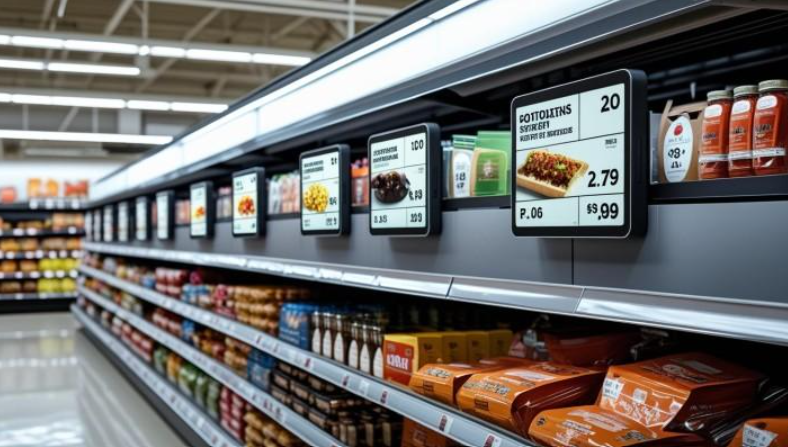
Why Does the Same Grocery Item Cost More at Different Times? The Rise of Dynamic Pricing
Imagine walking into a grocery store on Monday and buying a carton of eggs for $3.49. You return a few days later, pick up the same brand and size, and discover that the price has changed. Nothing about the product appears different, but your grocery bill is a little higher.
Price changes like this are not new. Grocery stores have long adjusted prices because of promotions, seasonal demand, supplier costs, and competition. What is changing is the technology retailers can use to manage prices, including digital shelf labels and software that helps businesses analyze market conditions.
That shift has raised an important question for American shoppers: could the price of everyday groceries change more frequently—and could personal information eventually influence what consumers pay?
The debate has become especially relevant in 2026. Maryland enacted the Protection From Predatory Pricing Act, a law addressing dynamic pricing and the use of consumer data in grocery pricing. The law took effect on October 1, 2026, placing new restrictions on certain pricing practices in the state.
For households already watching every dollar at the checkout, the issue goes beyond technology. It concerns price transparency, shopping budgets, privacy, and the ability to compare products confidently.
Understanding how dynamic pricing works can help consumers separate genuine risks from exaggerated claims, recognize pricing changes, and make more informed purchasing decisions.
What Is Dynamic Pricing?
Dynamic pricing is a strategy in which a business changes the price of a product or service in response to factors such as demand, supply, competition, operating costs, or other market conditions.
The practice is common in several industries. Airline ticket prices may change as seats sell. Hotels can adjust room rates according to demand and availability. Ride-hailing services may charge more during busy periods. Online retailers can also change listed prices as market conditions shift.
Grocery stores have traditionally used price changes too, although many shoppers are more accustomed to weekly promotions, clearance discounts, and seasonal sales than to frequent price adjustments.
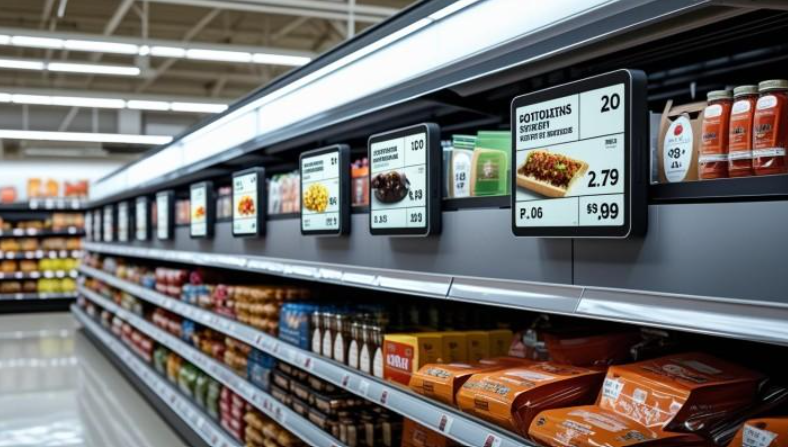
Technology can make managing prices faster. Instead of printing new paper labels for every product, a retailer using electronic shelf labels may be able to update displayed prices through a central system. Pricing software can also help retailers review inventory, costs, sales patterns, and competitors’ prices.
However, it is important to understand what this technology does—and what it does not automatically mean.
A digital shelf label is a way to display a price. It does not, by itself, prove that a store is changing prices constantly or charging individual shoppers different amounts. A retailer could use digital labels simply to update weekly specials, correct errors, or make sure shelf prices match the checkout system.
The key issue is the pricing decision behind the technology. How often are prices changed? What information is used to determine them? Is the same posted price available to every shopper purchasing the same product under the same conditions?
Those questions matter much more than whether a store uses electronic labels instead of paper ones.
Why Grocery Prices May Change More Frequently
There are several reasons a grocery item's price might change between shopping trips. Some are familiar, while others have become easier to manage with modern pricing systems.
1. Supplier and transportation costs
Grocery stores buy products from manufacturers, farms, distributors, and wholesalers. When the cost of purchasing or transporting those goods changes, retailers may adjust their prices.
Fuel expenses, packaging costs, labor, weather disruptions, and shortages can all influence what it costs to bring food to a store. A retailer might absorb some of the increase, negotiate with suppliers, reduce promotions, or pass some of the added cost to shoppers.
Technology can make it easier to identify cost changes and update prices across many locations. That may improve operational efficiency, but it can also mean that price adjustments happen faster than consumers are used to seeing.
2. Demand and seasonal patterns
Demand for some grocery products changes throughout the year. Barbecue supplies may attract more shoppers in summer, baking ingredients can become popular during holidays, and certain fresh foods may experience seasonal supply changes.
A retailer may adjust promotions or prices in response to these patterns. This does not necessarily mean prices change every hour. It means demand can be one of several factors businesses consider when deciding how to price goods.
3. Inventory and product availability
Stores must manage products that are perishable, seasonal, or in limited supply. They may discount items approaching their expiration dates, lower prices to clear excess inventory, or reduce promotions when stock is limited.
These adjustments can benefit shoppers when they create discounts. But consumers should not assume that every price change is designed to save them money. A store's pricing decision may reflect its own inventory needs, costs, and commercial goals.
4. Competition between retailers
Grocery stores compete for customers, especially on frequently purchased items such as milk, eggs, bread, cereal, and packaged foods.
Retailers may monitor competitors' advertised prices and adjust their own offers. Pricing software can help businesses process this information more quickly than a manual review.
For consumers, competition can create opportunities to save. But comparing prices becomes harder when promotions differ, package sizes are not identical, or one store changes its price after another has advertised a deal.
5. Digital pricing systems
Electronic shelf labels and centralized pricing software can reduce the time and labor needed to update prices. A retailer may be able to change many labels without replacing paper tags individually.
This capability can make price management more efficient. It can also intensify concerns about how frequently prices might change and whether customers will have enough information to make purchasing decisions.
The existence of a system capable of changing prices quickly, however, is not proof that a retailer is using it to raise prices unpredictably. Consumers should look for documented practices rather than assuming that every digital label represents a price increase.
Dynamic Pricing vs. Personalized Pricing: What's the Difference?
The distinction between dynamic pricing and personalized pricing is central to the current debate.
Dynamic pricing generally means a business adjusts a price according to market or business conditions. A retailer might change the posted price of a product for all shoppers because of inventory, demand, supplier costs, or a promotional schedule.
Personalized pricing, sometimes called surveillance pricing when it relies on extensive personal data, involves using information about an individual or group of consumers to determine the price offered to them. Depending on the system, that information might include shopping history, location, browsing behavior, or other personal data.
Consider two hypothetical examples.
In the first, a grocery store changes the posted price of a particular cereal from $4.00 to $4.25. Every shopper purchasing that cereal under the same conditions sees the same posted price. This is a general price adjustment.
In the second, a system uses personal information to decide that one shopper should be shown a higher price for the same product than another shopper. That is a different and more sensitive practice because personal information is influencing the price offered.
These examples illustrate the distinction; they are not claims that a particular grocery chain is using either method in a specific way.
It is also important not to confuse personalized discounts with personalized price increases. A retailer may use loyalty-program information to provide coupons or targeted promotions. Whether that practice is fair, transparent, or legally permissible depends on the circumstances and applicable law.
The broader concern is whether consumers understand why they are seeing a particular offer, what data is being used, and whether the system disadvantages people based on sensitive or protected information.
Are Grocery Stores Already Charging Different Prices to Different People?
This is where consumers need to be careful about separating technological capability from documented behavior.
Retailers can use software to analyze sales, manage promotions, and update prices. Electronic shelf labels make it easier to change the price displayed on a shelf. But neither fact, by itself, establishes that a grocery store is identifying individual shoppers and charging each person a different price.
The National Retail Federation has argued that digital shelf labels are primarily display tools and that their use should not automatically be equated with surveillance pricing. Retailers have also emphasized operational benefits such as improving pricing accuracy and reducing the work involved in replacing paper tags.
At the same time, consumer advocates and policymakers have raised concerns about the possibility of personal data being used to determine prices. The Federal Trade Commission has examined surveillance pricing practices and how businesses may use detailed consumer information in pricing decisions.
The distinction matters because consumers deserve accurate information, not fear based on assumptions. It is reasonable to ask how retailers use personal data and whether pricing practices are transparent. It is not reasonable to conclude that every store using digital labels is charging shoppers different prices based on their identity.
For shoppers, the practical approach is to pay attention to the posted price, compare offers, check receipts, and review the privacy policies of loyalty programs and shopping apps when deciding how much personal information to share.
Maryland's New Grocery Pricing Law: What Shoppers Should Know
Maryland has become an important part of the national conversation about grocery pricing technology.
In 2026, the state enacted the Protection From Predatory Pricing Act, House Bill 895. The law addresses dynamic pricing by food retailers and third-party food delivery service providers, as well as the use of consumer personal data to set prices for consumer goods and services. It also addresses certain uses of protected-class data in offering, advertising, or selling goods and services.
The legislation was approved by the governor on April 28, 2026, and took effect on October 1, 2026.
The law reflects concerns that technology could allow businesses to change prices in ways consumers may find unpredictable or unfair, particularly when personal data influences pricing decisions. It also places the issue within Maryland's consumer-protection framework.
For Maryland shoppers, the law is relevant because it establishes restrictions that go beyond simply asking retailers to explain their pricing choices. Its exact application depends on the statutory language, the type of business, the pricing practice involved, and the circumstances of a particular case.
Consumers should not assume that the law prohibits every ordinary price change. Grocery prices can still be affected by supplier costs, promotions, inventory, and other legitimate commercial factors. Nor should shoppers in other states assume that Maryland's law automatically applies to their purchases.
The law is one example of how policymakers are responding to questions about technology, personal information, and pricing fairness. Other states may take different approaches, and consumer protections can vary by location.
If a Maryland shopper believes a grocery retailer is using a prohibited pricing practice, the appropriate response is to preserve relevant evidence and consult the Maryland Attorney General's consumer-protection resources or another qualified source of legal guidance.
How Dynamic Pricing Could Affect Your Grocery Budget
Even when prices are the same for every shopper, more frequent price changes can make budgeting less predictable.
Your usual grocery list may cost different amounts
Many households rely on a familiar list of weekly essentials. If prices change between shopping trips, the same basket of goods may no longer cost the same amount.
A small difference on one product may seem unimportant. Several changes across produce, dairy, packaged foods, and household staples can add up over time.
For example, imagine that five items on your regular list each become 20 cents more expensive. That adds $1 to the cost of the basket. If similar changes affect several shopping trips, the additional spending can become noticeable.
This is an illustration, not a prediction of how much dynamic pricing will increase grocery bills. Actual results depend on the products, the retailer, the direction of price changes, and the shopper's purchasing habits.
Sale prices may be harder to evaluate
A discount label does not automatically mean a product is the cheapest available option. The regular price may have changed, a competing store may offer a lower price, or the promotion may apply only to certain sizes or loyalty-program members.
Consumers can avoid being misled by comparing the final price and the amount of product they receive. Unit pricing—such as price per ounce, pound, or count—can make comparisons more useful than looking at the large promotional number alone.
Shopping habits may need to become more flexible
A fixed grocery list is convenient, but it can leave little room to respond to changing prices. Consumers may save money by comparing brands, choosing seasonal produce, or switching between equivalent products when a familiar option becomes expensive.
Flexibility does not mean buying the cheapest product regardless of quality or dietary needs. It means identifying which purchases are essential and where a reasonable substitute could reduce costs.
Frequent price changes may make planning harder
A household may estimate its grocery expenses using recent receipts. If prices change frequently, those estimates can become less reliable.
A practical solution is to review actual spending over several weeks rather than building a budget around one shopping trip. A range may be more realistic than expecting every grocery run to cost exactly the same amount.
For additional personal-finance guidance, consumers can explore resources at https://www.finiuo.com and apply the same budgeting discipline to everyday spending decisions.
Seven Practical Ways to Protect Your Grocery Budget
Consumers do not need to predict every pricing change to shop more confidently. A few simple habits can help make grocery spending easier to manage.
1. Compare the unit price
When comparing two similar products, look at the price per ounce, pound, liter, or item. A larger package is not always cheaper per unit, and a sale sticker can distract from the actual cost.
Unit pricing is particularly helpful when comparing different brands, package sizes, or multipack offers.
2. Keep a short price record
Track the prices of a handful of products you buy regularly. You do not need a complicated spreadsheet. A note on your phone with the product, store, package size, and price is enough to identify patterns.
Over time, this record can help you recognize when a price is unusually high or when a genuine discount appears.
Make sure you compare the same size and product. A price change can be misleading if the package has also become smaller.
3. Check the shelf price before paying
Before placing an item in your cart, look at its displayed price and any conditions attached to the offer. If a product is advertised as a loyalty discount, check whether you need to scan a membership card or activate a digital coupon.
At checkout, review the price shown on the register when practical. If the amount differs from the shelf label or advertisement, ask the cashier or customer-service desk to clarify the discrepancy.
Keep the receipt if the difference is not resolved immediately.
4. Compare nearby stores strategically
It may be worth comparing prices at two or three stores, particularly for expensive staples or products you buy in large quantities.
However, savings can disappear if comparison shopping requires a long drive or an additional delivery fee. Consider the total cost, including transportation and time, rather than chasing a small price difference on one item.
You can also compare store flyers and online listings before leaving home.
5. Use promotions carefully
Coupons, loyalty discounts, and sales can reduce grocery costs, but only when the deal fits your actual needs.
Buying an unnecessary item because it is discounted is not automatically a saving. Neither is purchasing a larger quantity that goes unused or spoils.
Before taking advantage of a promotion, ask whether you would have bought the item anyway and whether the offer is genuinely cheaper than comparable alternatives.
6. Review shopping-app permissions
If you use grocery delivery services or retailer apps, review the personal information they request and the privacy settings available to you.
Some services may collect information to operate the account, process orders, provide recommendations, or personalize promotions. The data collected and its uses vary by company.
Avoid granting permissions that are unnecessary for the service you want to use, and read the privacy notice when you are unsure how information may be handled. Do not assume that deleting an app automatically deletes all information a company has already collected.
7. Report clear pricing discrepancies
If the checkout price differs from the displayed price, take a photograph of the shelf label when permitted, retain the receipt, and record the store location, product size, and date.
First, ask the retailer to explain and correct the discrepancy. If the issue appears deceptive or remains unresolved, consider contacting the relevant state consumer-protection agency or attorney general.
A difference between two prices does not automatically prove wrongdoing. Promotions may expire, product sizes may differ, and some offers have eligibility conditions. Evidence helps determine whether a genuine pricing problem occurred.
What to Watch for When Shopping Online for Groceries
Online grocery shopping introduces additional details that can affect the final total. The displayed item price is only one part of what a consumer may ultimately pay.
Delivery fees, service charges, tips, minimum-order requirements, substitutions, and membership benefits can change the amount charged at checkout. Some prices or promotions may also differ between a retailer's website and its physical store, depending on the retailer's policies.
Before submitting an order, review the final total and check whether a promotion has actually been applied. If a product is substituted, confirm that the replacement and its price are acceptable.
Consumers should also pay attention to how the service explains its pricing. If the price shown during browsing changes before checkout, look for a clear explanation and save relevant screenshots or order records.
For example, a shopper might see a product listed for $5 online but discover that the total order includes a delivery charge and a service fee. That is not necessarily dynamic pricing: the item price and the additional fees are separate issues. Both can affect the budget, but they should not be confused.
Similarly, an online price that differs from an in-store price does not by itself establish that a customer is being targeted personally. Retailers may have different online and physical-store pricing policies. The important questions are whether the terms are disclosed, whether the final charge matches what was agreed to, and whether any applicable consumer-protection law has been violated.
Could Dynamic Pricing Make Groceries More Expensive?
The answer depends on how a retailer uses the practice and how prices change.
Dynamic pricing does not automatically mean prices will rise. A retailer may lower prices to clear inventory, respond to competition, or promote a product. More efficient pricing systems may also reduce certain operational costs.
However, price changes can create disadvantages for consumers when they are difficult to understand, poorly disclosed, or timed in ways that make comparison shopping harder. If personal information is used to estimate what an individual is willing or able to pay, concerns about fairness and privacy become even more serious.
The impact also varies by product. Fresh food, seasonal goods, and items with fluctuating supply conditions may face different pricing pressures from shelf-stable packaged products. Retailers do not necessarily use the same pricing approach for every item.
It is therefore too simplistic to say that dynamic pricing will always raise grocery bills—or that it will inevitably save shoppers money.
A better way to evaluate the practice is to ask three questions:
- Transparency: Can consumers clearly see the price and understand the conditions attached to it?
- Fairness: Are comparable shoppers treated consistently, and is personal data being used in an appropriate and lawful way?
- Competition: Can consumers realistically compare alternatives and choose a different retailer or product?
When these conditions are weak, consumers may struggle to determine whether a price is reasonable. Clear disclosure, meaningful competition, effective consumer protections, and accessible complaint processes can help address those concerns.
What the Debate Means for Retailers and Consumers
Retailers have legitimate reasons to improve pricing systems. Electronic shelf labels can reduce the labor involved in replacing paper tags, help keep displayed prices synchronized with checkout systems, and make promotions easier to manage.
Consumers, meanwhile, have a legitimate interest in knowing what they will pay and whether their personal information influences the price offered to them.
These goals do not have to be mutually exclusive. A store can use modern technology while maintaining clear pricing practices. It can update promotions without misleading shoppers, use loyalty programs without hiding important conditions, and collect customer data with appropriate transparency and safeguards.
Regulation is one way to establish boundaries. Maryland's new law demonstrates that policymakers are willing to address pricing practices involving grocery retailers and personal data. Other approaches may focus on disclosure, privacy, competition, or enforcement of existing consumer-protection laws.
For consumers, the best response is neither to ignore the issue nor to assume the worst about every retailer. Instead, shoppers can monitor their spending, compare prices, read the conditions attached to offers, and report concrete discrepancies.
People interested in the legal side of consumer protection can also explore https://jurnza.com for broader legal information, while nutrition-focused resources at https://dryzenroyal.com can complement grocery planning when choosing foods and comparing products.
Conclusions
Dynamic pricing is changing the conversation about how businesses set prices, but it is important to distinguish established retail practices from concerns about what new technology might make possible.
Grocery prices have always moved in response to costs, promotions, supply, and demand. Digital shelf labels and pricing software can make adjustments easier, but their use does not prove that stores are charging individual shoppers different amounts based on personal data.
The more significant questions involve transparency, privacy, and fairness. Consumers should be able to understand the prices they see, recognize the conditions attached to discounts, and challenge charges that do not match what was advertised or agreed upon.
Maryland's Protection From Predatory Pricing Act, effective October 1, 2026, is an important development in this debate. Its impact will depend on how the law is applied and enforced, while shoppers elsewhere should check the protections available in their own states.
In the meantime, consumers can take practical steps: compare unit prices, keep track of frequently purchased items, check receipts, review online order totals, and be thoughtful about sharing personal information with shopping apps.
The goal is not to turn every grocery trip into a pricing investigation. It is to make everyday spending more predictable and informed. A little price awareness can help shoppers recognize a genuine deal, avoid unnecessary expenses, and make better decisions—even as the technology behind retail pricing continues to evolve.