

The Hidden Cost of Halloween 2026: How Candy, Costumes, and Decorations Stretch Your Budget
Halloween is supposed to be frightening for all the right reasons: haunted houses, creepy costumes, spooky decorations, and a little too much candy. But for many American households in 2026, the scariest surprise may arrive when they check their shopping receipts.
A bag of chocolate, a child's costume, a few outdoor decorations, pumpkins, party snacks, and last-minute accessories can turn an inexpensive celebration into a surprisingly expensive one. Each purchase might seem manageable on its own. Together, however, they can put pressure on a household budget already dealing with groceries, housing, transportation, and other everyday expenses.
This year's spending outlook highlights the contradiction. The National Retail Federation expects Americans to spend approximately $13.5 billion on Halloween in 2026, surpassing the previous year's record of $13.1 billion. Consumers surveyed expect to spend an average of $115.14 per person on the holiday.
Yet strong overall spending does not mean every household feels comfortable spending more. Recent reporting indicates that rising candy prices and other living costs are making some consumers reconsider their Halloween purchases.
For families, the challenge is not necessarily whether to celebrate Halloween. It is how to enjoy the occasion without letting one night of fun create financial stress that lasts into November.
The answer starts with recognizing the full cost of the holiday, understanding where seasonal spending tends to expand, and deciding in advance which purchases genuinely matter.
Halloween 2026: Why the Holiday Is Becoming a Bigger Budget Event
Halloween has grown beyond a single evening of trick-or-treating. For many households, it includes costumes, themed decorations, pumpkin carving, school activities, parties, candy distribution, social events, and even costumes for pets.
Retailers also begin promoting seasonal products well before October. The National Retail Federation reports that 49% of surveyed consumers planned to begin Halloween shopping in September or earlier in 2026. Some shoppers start early because they enjoy the season, while others want to spread out expenses or take advantage of promotions.
Early shopping can be helpful when it is planned. It can also make it easier to spend more than intended because Halloween purchases become scattered across several weeks.
A decoration bought in September may not feel like part of the same budget as candy purchased in October. A costume accessory picked up during a grocery trip may seem insignificant. A themed party invitation can lead to another round of purchases.
By the time the holiday arrives, the household may have spent considerably more than it expected.
The National Retail Federation's 2026 survey estimates that consumers plan to spend an average of $115.14 per person. That is a national survey figure, not a recommended budget or a prediction of what every household will spend. Your actual cost depends on how many people are celebrating, whether you are hosting guests, and what you already own.
The categories add up quickly. The NRF estimates that Halloween spending will include approximately $4.1 billion on candy, $4.3 billion on decorations, and $4.4 billion on costumes.
These figures reflect nationwide spending projections rather than the amount any individual family needs to spend. A household can celebrate Halloween for far less by choosing a smaller set of activities and reusing items it already owns.
The important point is that Halloween now offers many opportunities to spend money. Without a clear plan, it is easy for a fun seasonal activity to become a collection of unplanned purchases.
The Candy Problem: Why Treats Can Cost More Than Expected
Candy is one of Halloween's most familiar expenses, but it can also be one of the hardest to estimate accurately.
You might plan to buy one large bag for trick-or-treaters, only to discover that the package contains fewer pieces than expected. You may then purchase another bag because you do not want to run out. If friends or relatives visit, the original supply may disappear faster than anticipated.
Chocolate prices add another challenge.
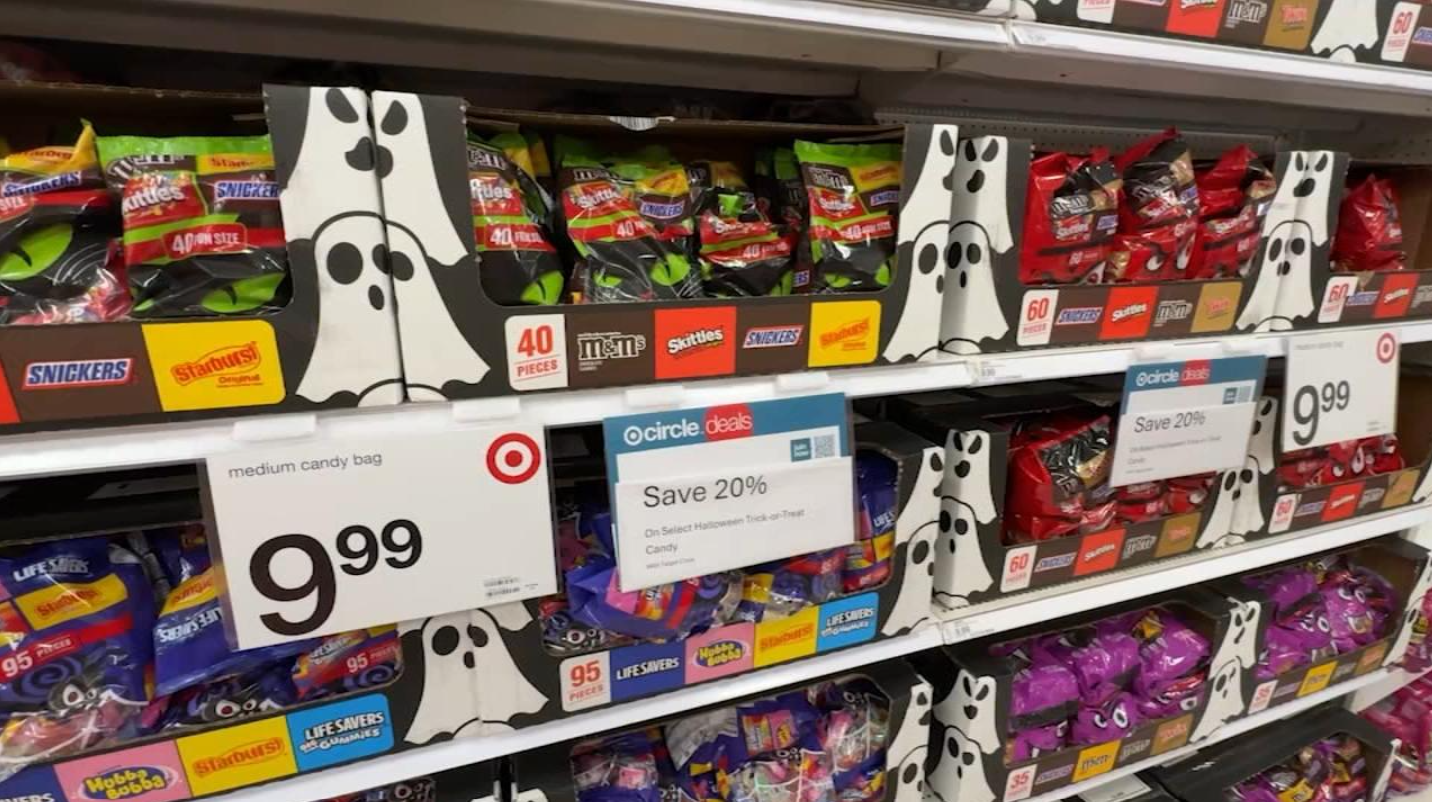
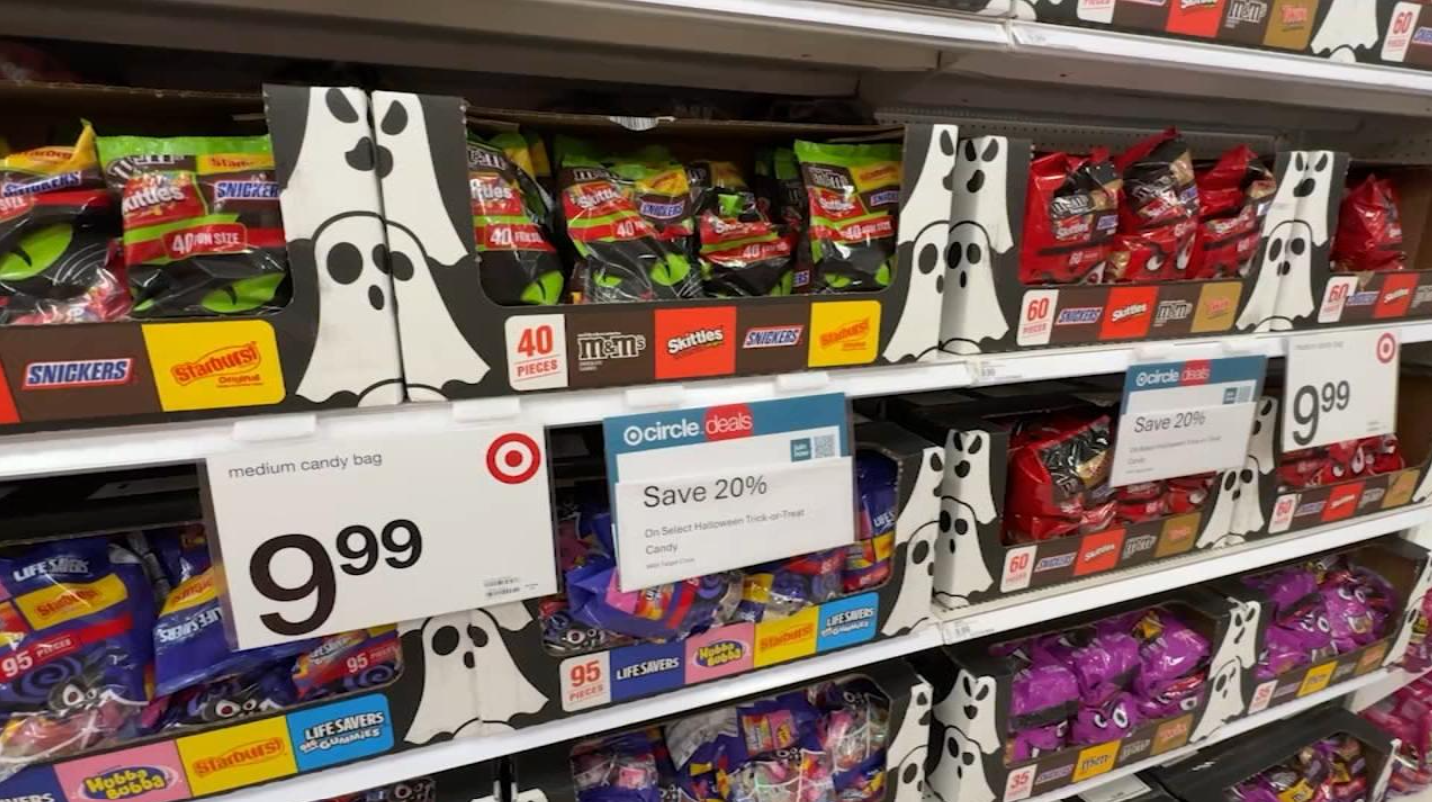
Recent reporting on the 2026 Halloween season indicates that candy prices have risen substantially over the past several years. An Associated Press report citing NielsenIQ data said U.S. candy prices were up approximately 44% over five years through September 2026, compared with a 22.5% increase in prices for food consumed at home over the same period.
These figures cover a broader candy category and five-year period, not every Halloween product or a uniform increase in every store. Nevertheless, they help explain why familiar treats may feel more expensive than shoppers remember.
Cocoa supply conditions, weather-related disruptions, production costs, and other market factors can influence chocolate prices. The amount you pay at the store can also vary by brand, package size, retailer, and promotional offer.
Why the biggest bag is not always the best deal
Large packages often look economical because they contain more candy. But the total price may be difficult to justify if you do not need that much.
Compare the cost per individual piece or serving when the information is available. A larger bag may offer better value per piece, but that advantage matters only if you will use the contents.
A smaller package can be the smarter purchase for a household expecting fewer trick-or-treaters. Buying extra candy that remains uneaten or is purchased simply because the package seems like a bargain can undermine the savings.
Set a candy budget before entering the store
Start by estimating how many trick-or-treaters you expect and how much candy you want to give each visitor.
You will not know the exact number of visitors in advance, so use a reasonable estimate based on previous years, your neighborhood, or the number of households participating.
Then choose a spending limit that fits your budget. If candy prices exceed that amount, compare brands, package sizes, and available discounts rather than automatically increasing the limit.
You can also decide in advance whether you want to offer individually wrapped non-chocolate treats. Just compare their prices carefully; alternatives are not automatically cheaper.
Avoid panic buying on Halloween night
Running out of candy can feel embarrassing, especially if you live in a busy neighborhood. That pressure can lead to an expensive last-minute trip when fewer choices or less attractive prices are available.
Planning a reasonable quantity and keeping a modest buffer can reduce the chance of panic buying. If supplies run low, you can also decide ahead of time whether you are comfortable ending participation for the evening rather than making an unplanned purchase.
The goal is not to calculate every piece of candy perfectly. It is to avoid letting uncertainty turn a small shopping trip into a much larger expense.
Costumes: The Difference Between a Creative Idea and an Expensive Purchase
Costumes can consume a substantial portion of a Halloween budget, especially when several family members want different outfits.
A child may want a popular character costume, a teenager may prefer a more elaborate look, and an adult may need something for a party. Add accessories, makeup, shoes, and shipping costs, and a seemingly simple outfit can become expensive.
The National Retail Federation estimates that costume purchases will account for approximately $4.4 billion in U.S. Halloween spending in 2026. This national estimate includes a broad range of costume spending, not just children's outfits.
The good news is that a costume does not need to be expensive to be effective.
Start with what you already own
Before browsing stores, open your wardrobe and look for pieces that could form the basis of a costume.
Ordinary clothing can work for many classic Halloween ideas. A dark outfit, a hat, simple makeup, or a few inexpensive accessories may be enough to create a recognizable character.
Children can also use clothing they already own as the foundation for a costume. If a specific accessory is needed, purchasing one item may be less expensive than buying a complete outfit.
This approach also reduces the risk of purchasing a costume that is worn once and then forgotten.
Reuse costumes from previous years
If children have older costumes that still fit, consider whether they can be updated with a different accessory or creative combination.
For households with multiple children, some outfits may be reusable between siblings. Friends and relatives may also be willing to exchange costumes, provided the clothing is in suitable condition and everyone is comfortable with the arrangement.
A costume swap can reduce expenses for everyone involved. It also gives families more options without requiring each person to buy something new.
Calculate the complete costume cost
The advertised price is not always the final cost.
Before purchasing, account for accessories, makeup, footwear, delivery charges, and any items that must be bought separately. If the costume requires special equipment or clothing you do not already own, include those expenses as well.
For online purchases, check delivery dates, return policies, and whether shipping fees make the deal less attractive.
A $20 costume that requires another $18 in accessories may be less appealing than a $25 outfit that is ready to wear.
Beware of the deadline premium
As Halloween approaches, shoppers have less time to compare options, order online, or wait for a sale. That urgency can encourage impulse buying.
If the holiday is only a few days away, focus on what is realistically available and what you can assemble with existing items. A creative last-minute costume is often preferable to spending more simply because the original plan did not work out.
Halloween Decorations: When Seasonal Atmosphere Becomes Seasonal Clutter
Decorations are another major spending category. The National Retail Federation estimates that U.S. consumers will spend approximately $4.3 billion on Halloween decorations in 2026.
From inflatable lawn figures to themed tableware, artificial cobwebs, lights, pumpkins, and indoor displays, there is no shortage of products competing for attention.
The challenge is that decorations can feel like small, separate purchases. A few items for the front door, something for the living room, a centerpiece for a party, and another product that looks good on social media may each seem affordable.
Together, they can exceed the amount you intended to spend.
Choose a decorating area instead of decorating everything
You do not need to transform your entire home to create a Halloween atmosphere.
Choose one or two areas that matter most, such as the front entrance, living room, or party table. Concentrating decorations in those spaces can make the display feel intentional without requiring purchases for every room.
If you are welcoming trick-or-treaters, a simple entrance display may be enough. If you are hosting a gathering, prioritize the area where guests will spend most of their time.
Reuse decorations with a longer lifespan
Before buying anything new, unpack your existing Halloween decorations. Check what remains usable and identify the specific gap you want to fill.
Reusable lights, fabric decorations, artificial pumpkins, and durable ornaments can serve for multiple seasons when stored properly. Neutral fall decorations may also work for more than one occasion, giving them greater value over time.
The important calculation is not just what an item costs this year, but how much useful enjoyment you can get from it.
A $30 decoration used for six seasons may be more economical than a $12 item that breaks or is discarded after one night. That comparison depends on durability and actual use, not merely the purchase price.
Be cautious with large seasonal displays
Oversized decorations can be attractive, but they may require additional equipment, storage space, electricity, or replacement parts.
Before purchasing one, consider where it will be stored after Halloween and whether you will realistically use it again.
A display that looks impressive for one weekend may not be worth the cost if it takes up valuable space for the rest of the year.
The Hidden Costs People Forget to Include
Candy, costumes, and decorations are obvious expenses. The less visible costs can be just as important because they often fall outside the original Halloween budget.
Party food and drinks
Hosting friends or family can add snacks, drinks, disposable plates, napkins, and other supplies to the bill.
A small gathering does not need a large menu. Choose a few items that suit the occasion and decide whether guests will bring something to share.
If you are planning a larger party, estimate the number of guests before buying food. This can help reduce leftovers and prevent last-minute shopping.
Pumpkins and carving supplies
Pumpkins may be relatively inexpensive in some areas, but costs rise when you buy several, choose specialty varieties, or add carving tools and decorative accessories.
Decide how many pumpkins you actually need. If carving is the main activity, one pumpkin per participating person may be more than necessary, particularly if children are happy to decorate a shared display.
You can also compare the cost of carving a real pumpkin with using reusable artificial alternatives for future seasons.
School events and neighborhood activities
School parties, classroom celebrations, community events, and neighborhood gatherings can generate separate requests for costumes, snacks, crafts, or small contributions.
These expenses are easy to overlook because they may arrive through messages or invitations after the household has already started its Halloween shopping.
Keep a simple list of known events and the supplies each requires. If a contribution is optional, choose an amount that fits your circumstances rather than feeling obligated to participate at every possible level.
Transportation and delivery
Driving to multiple stores to find a cheaper costume or candy package can add fuel costs and consume valuable time. Online purchases may introduce shipping fees or expedited-delivery charges.
Compare the full cost of the purchase, including transportation or delivery, instead of judging an offer by the shelf price alone.
Sometimes paying slightly more at a nearby store saves money overall. In other cases, combining several planned purchases into one trip is more economical than making repeated stops.
Last-minute replacements
A broken decoration, missing costume accessory, or forgotten party item can trigger an unplanned purchase.
You cannot prevent every surprise, but you can reduce the likelihood of emergency spending by checking supplies a few days before the event.
A quick review of costumes, batteries, lights, candy, and party essentials can reveal problems while there is still time to find an affordable solution.
How to Build a Halloween Budget That Actually Works
A useful Halloween budget is not about choosing an arbitrary number and hoping everything fits. It is about deciding what matters most, estimating the cost of those priorities, and setting limits before shopping begins.
Step 1: Choose a total amount you can afford
Start with your available discretionary money after essential expenses and financial commitments.
If your household budget is tight, you do not need to match the national average spending estimate. The NRF's $115.14 figure describes what surveyed consumers expect to spend per person; it is not a requirement for celebrating Halloween.
Your appropriate amount may be substantially lower. It may also be higher if you are hosting a large event and have planned for it.
What matters is that the amount is realistic for your finances.
Step 2: Divide the budget into categories
Separate your planned spending into a few categories, such as candy, costumes, decorations, and party supplies.
For example, a household with a $60 Halloween budget might allocate $20 to candy, $20 to costumes, $10 to decorations, and $10 to party supplies.
These numbers are merely an illustration, not a recommended budget for every household. If you do not need new decorations, you can direct more money toward another priority or spend less overall.
Step 3: Identify what you already have
Inventory your costumes, candy bowls, lights, tableware, decorations, and craft supplies before making purchases.
This step turns the budget from a shopping list into a list of actual needs. It also helps prevent duplicate purchases when several family members shop separately.
Step 4: Compare prices strategically
Check prices at a few relevant retailers, particularly for the items that represent the largest share of your planned spending.
Compare equivalent quantities and product types. A lower price may reflect a smaller package or a product with fewer pieces.
Use coupons and promotions when they genuinely reduce the cost of something you intended to buy. A discount is not a saving if it persuades you to purchase an unnecessary item.
Step 5: Track what you spend
Record purchases in a phone note, spreadsheet, budgeting app, or simple paper list.
You do not need a complicated system. The point is to see how much of your budget remains before you make another purchase.
If you spend more than expected on candy, adjust another discretionary category rather than automatically increasing the total.
Step 6: Decide when to stop
A spending limit is useful only if it changes your decisions.
Once you have bought the items needed for your chosen activities, resist browsing for additional decorations or accessories simply because they are on sale.
If the budget is exhausted, use what you already have and simplify the plan. Halloween does not become less enjoyable merely because you skip a few purchases.
Is Buying Halloween Items Early Really Cheaper?
Shopping early can create opportunities to compare prices and spread spending across several pay periods. However, it is not automatically cheaper.
The National Retail Federation reports that nearly half of surveyed consumers planned to begin Halloween shopping in September or earlier. Some early shoppers want to distribute expenses over time, while others are motivated by promotions or enthusiasm for the season.
Early shopping works best when the purchases are planned.
For example, buying a costume in September because you know exactly what you need may prevent a rushed, expensive purchase in late October. Buying several decorative items in September simply because they look appealing can have the opposite effect.
Early seasonal displays can also encourage people to begin celebrating and shopping sooner than they originally intended.
A practical strategy is to create a list before browsing. Buy durable items early when the price and selection make sense, but avoid stocking up on perishable supplies or purchasing items that may never be used.
For candy, consider the storage conditions, expiration dates, household needs, and risk of eating supplies before the event. The lowest price is not useful if the product does not remain suitable until you need it.
Are Halloween Sales and Bulk Deals Worth It?
Promotions can help, but the word "sale" does not guarantee a good purchase.
A retailer may offer a lower unit price on a larger package, bundle multiple items, or advertise a discount that applies only when you buy a certain quantity. These offers are valuable only if they match your needs.
Before buying, ask three questions.
First, would you purchase the item if it were not on sale? If the answer is no, the promotion may be creating a new expense rather than reducing an existing one.
Second, will you use the full quantity? Bulk candy, party supplies, and decorations can be economical when shared across a large household or reused later. They may be wasteful when purchased for a small gathering.
Third, is the discounted price genuinely lower than the alternatives? Compare unit prices, package sizes, and the total cost rather than relying on a large promotional label.
Be especially careful with bundles containing items you do not need. Paying $25 for a package of products worth $30 at their regular prices is not a saving if you would have spent only $10 on the one item you actually wanted.
The best deal is the one that meets your needs at the lowest reasonable total cost, not the one with the biggest advertised discount.
Why Social Media Can Make Halloween More Expensive
Online inspiration can be useful for finding creative costumes and decoration ideas. It can also create unrealistic expectations about what a celebration should look like.
Photos and videos often feature elaborate displays, coordinated family outfits, themed parties, and extensive decorations. Viewers see the finished result without necessarily seeing the cost, preparation time, borrowed materials, or sponsorships behind it.
That can make a simple celebration seem inadequate.
The financial danger is not that people enjoy decorating or dressing up. It is that comparison can gradually change what they consider necessary.
A family may start with a modest plan, see a complicated costume online, and decide to purchase several extra items. A homeowner may add more decorations because a neighbor's display looks impressive. A party host may expand the menu because other gatherings appear more elaborate.
A helpful rule is to separate inspiration from obligation. Save ideas that look fun, then identify which ones can be recreated with materials you already own.
You do not need to reproduce someone else's display to have an enjoyable holiday.
What to Do If Halloween Spending Has Already Gone Over Budget
Sometimes the problem becomes clear only after the purchases have been made. Perhaps the costume cost more than expected, candy prices were higher than anticipated, or several small shopping trips added up.
The first step is to calculate the actual total. Include online orders, receipts, party supplies, decorations, and any purchases made separately by family members.
Next, distinguish between necessary purchases and optional additions. If the holiday has not arrived, you may still be able to cancel eligible orders, return unused items under the retailer's policy, or avoid further discretionary spending.
Do not assume every seasonal product can be returned. Check the applicable return window, condition requirements, shipping costs, and exclusions before making a decision.
If you have already spent the money, avoid treating the overspend as a reason to abandon your broader financial plan. Instead, adjust the remaining discretionary spending in a measured way.
You do not need to compensate for a $30 Halloween overspend by skipping necessary groceries or delaying an essential bill. Focus on reasonable adjustments to optional purchases and use the experience to plan more accurately next year.
If you used a credit card, remember that the purchase still needs to be paid for. A holiday expense does not become affordable simply because the bill arrives later.
Going forward, consider setting aside a small amount for seasonal occasions when your budget allows. A dedicated category for birthdays, school events, Halloween, and other predictable expenses can make these costs easier to manage.
A More Affordable Halloween Does Not Have to Be a Boring Halloween
The easiest way to reduce Halloween spending is not necessarily to eliminate the holiday. It is to focus on the parts of the celebration that bring the most enjoyment.
For some families, that may be trick-or-treating and handing out candy. For others, it may be a costume contest, pumpkin carving, a movie night, or a small gathering with friends.
Choose the activities that matter to your household and build the spending plan around them.
You can reuse costumes, borrow accessories, decorate one area instead of the entire home, prepare a simple menu, and compare candy prices without losing the spirit of the occasion.
You can also involve children in decisions about the budget. Explain that the household has a set amount to spend and invite them to choose which activities or decorations matter most. This can make the limits feel like part of the planning process rather than a punishment.
Affordable celebrations can also create traditions that do not depend on buying new products every year. A familiar movie, a neighborhood walk to see decorations, homemade crafts, or a costume made from existing clothing may become more memorable than another expensive purchase.
For readers interested in broader spending decisions, Finiuo covers personal finance and everyday money management. For legal and consumer-rights topics, Jurnza provides a separate resource, while Dryzen Royal focuses on dry fruits and nutrition.
Conclusions
Halloween 2026 illustrates how a popular seasonal celebration can become a meaningful household expense even when each individual purchase appears affordable.
The National Retail Federation projects total U.S. Halloween spending of $13.5 billion this year, with candy, costumes, and decorations accounting for billions of dollars combined. Meanwhile, rising candy prices and broader financial pressures are prompting some consumers to reconsider how much they spend.
You do not need to match national spending averages to enjoy the holiday. The more effective approach is to establish a realistic budget, check what you already own, compare complete prices, and prioritize the activities that matter most to your household.
Pay particular attention to purchases that are easy to underestimate: extra candy, costume accessories, party supplies, transportation, shipping, and last-minute replacements. These costs can quietly push the final bill beyond your original plan.
Most importantly, do not confuse a bigger celebration with a better one. A thoughtful costume, a manageable supply of treats, a few reusable decorations, and time with family or friends can make Halloween memorable without creating financial regret.
The real trick is not finding the most elaborate bargain. It is enjoying October 31 without allowing one night of seasonal spending to haunt your November budget.