

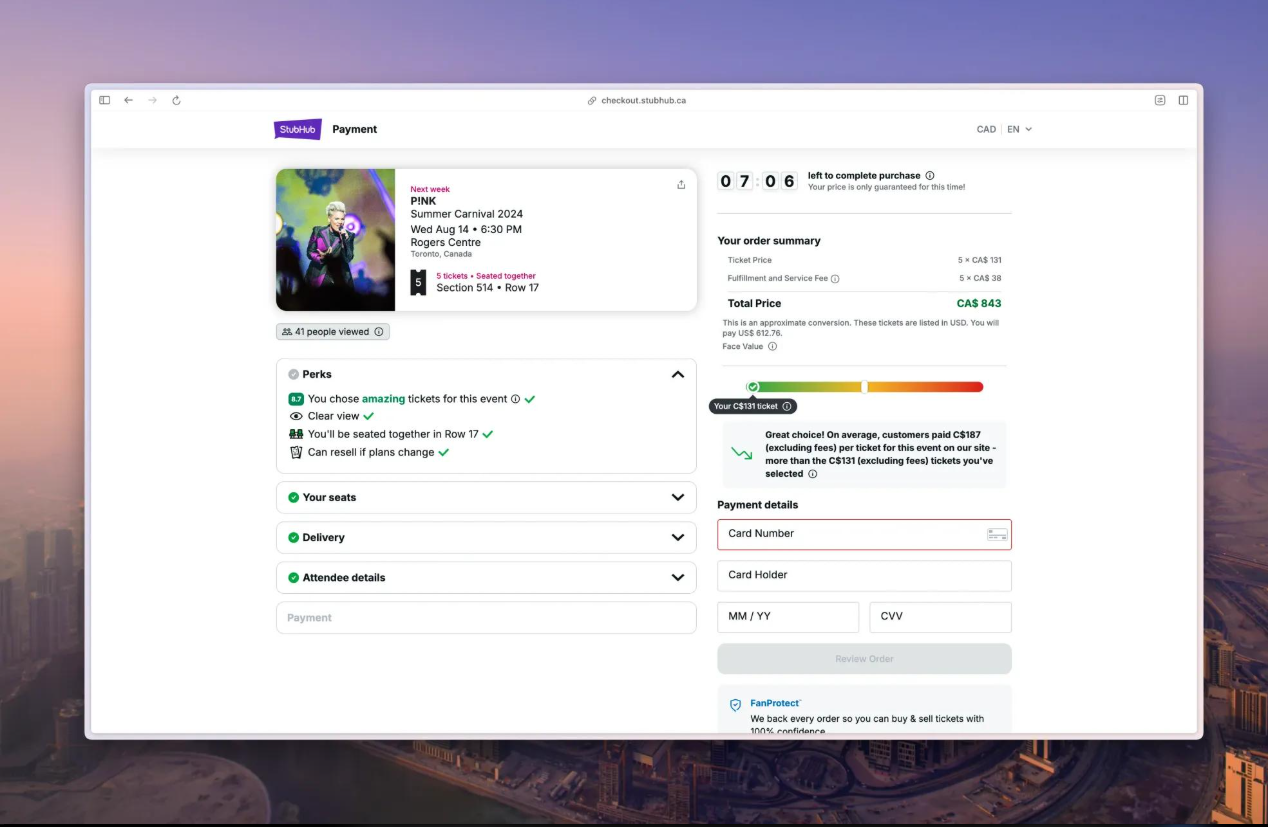
The $100 Ticket That Costs $160 at Checkout: How Extra Fees Inflate Entertainment Prices
You find tickets to a concert for $100 each. The seats look good, the date works, and the price seems manageable. You select two tickets, enter your details, and move toward checkout. Suddenly, the total is far higher than expected. Service fees, order-processing charges, delivery costs, and taxes have turned what looked like a $200 purchase into a bill of more than $300.
It is an all-too-familiar frustration for American consumers trying to attend concerts, sporting events, comedy shows, theater performances, and other live entertainment. The advertised price attracts shoppers, but the amount they ultimately pay can tell a very different story.
These extra charges are often described as ticketing fees or service fees. Some may cover legitimate services, while others can be difficult to understand or evaluate. The bigger problem arises when mandatory charges are not included in the price consumers see at the beginning of their search.
This practice is commonly known as drip pricing: a business advertises an initial price and reveals additional charges later in the purchasing process. By the time shoppers discover the full cost, they may already have invested time selecting seats, comparing options, or trying to secure tickets for a popular event.
In the United States, the issue has attracted increasing regulatory attention. The Federal Trade Commission's Rule on Unfair or Deceptive Fees took effect on May 12, 2025, requiring covered businesses selling live-event tickets and short-term lodging to disclose total prices upfront, subject to specific exceptions. Enforcement actions in 2026 have kept ticket-price transparency in the spotlight.
For consumers, the lesson is simple: the price displayed in a search result is not always the amount that determines whether a ticket fits the budget. Understanding how fees work, what federal rules require, and how to compare the final cost can help shoppers make better decisions before committing their money.
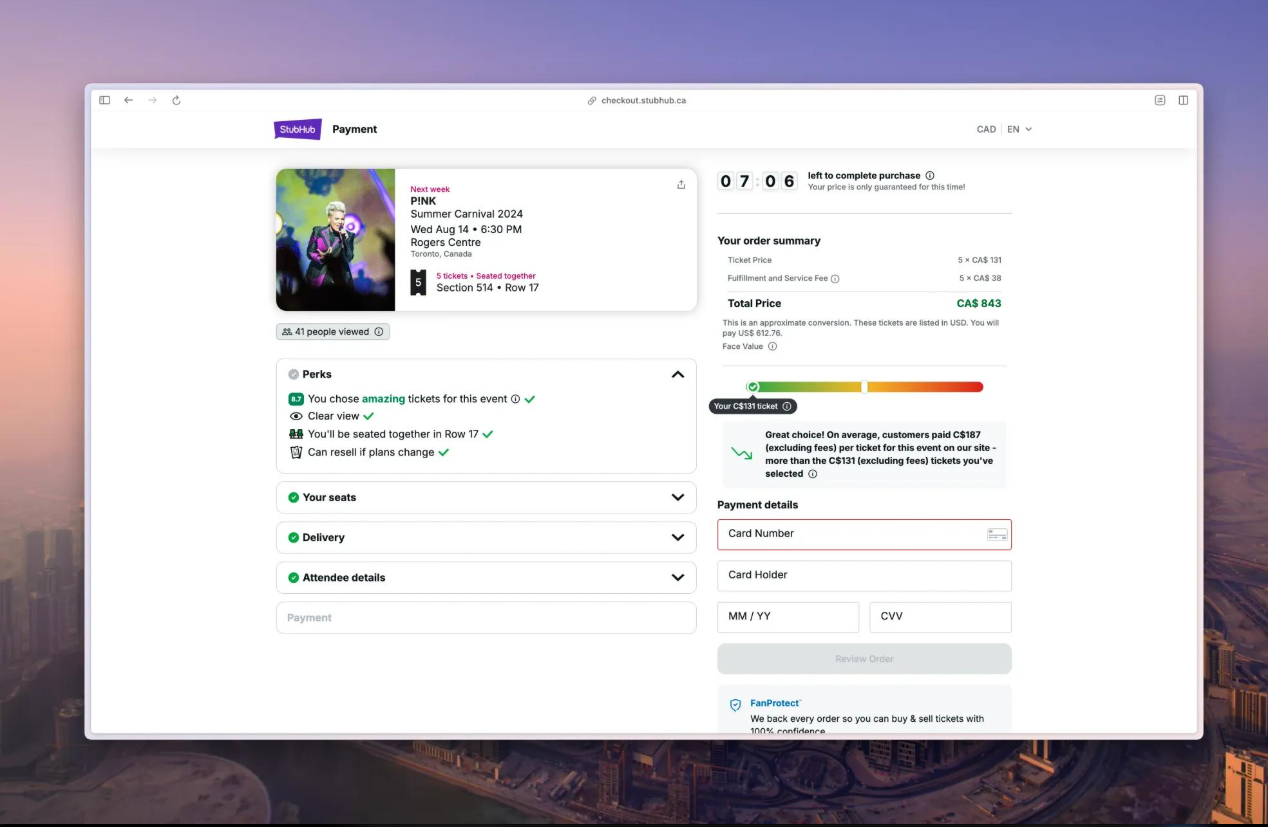
Why a $100 Ticket Can Become a $160 Purchase
A ticket's advertised price and its final purchase price can include several different components. Some are imposed by the government, some are charged by the ticket seller or venue, and others depend on the delivery method or optional services selected by the customer.
Consider a hypothetical ticket advertised at $100. The following example shows how a single ticket might reach $160 if substantial charges are added.
Charge | Hypothetical amount |
|---|---|
Advertised ticket price | $100 |
Service fee | $25 |
Order-processing fee | $10 |
Facility or venue fee | $8 |
Taxes and other applicable charges | $12 |
Delivery or fulfillment charge | $5 |
Final price | $160 |
These figures are illustrative, not a statement of what any particular ticket seller charges. Actual fees depend on the event, venue, seller, location, ticket type, and transaction.
The important point is how quickly several smaller amounts can change the economics of a purchase. A ticket that initially appears to cost $100 ends up costing 60% more in this example.
If a family buys four tickets at that final price, the total reaches $640 instead of the $400 suggested by the advertised ticket prices. Parking, transportation, food, merchandise, and other event expenses may push the outing's total cost even higher.
That is why consumers should evaluate the full transaction rather than focusing exclusively on the face value of a ticket.
What Are Hidden Ticket Fees?
Hidden ticket fees are charges that consumers do not clearly see or understand when they first encounter a ticket's advertised price. The term is often used for mandatory fees revealed late in the buying process, but it can also refer more broadly to confusing or poorly explained charges.
Not every fee is unlawful, and not every additional cost is necessarily hidden. A clearly disclosed delivery charge, for example, is different from a mandatory service fee that appears unexpectedly after a customer has selected seats.
The most common charges include the following.
1. Service fees
Service fees are among the most familiar charges in online ticketing. Sellers may describe them as covering ticket distribution, customer support, payment processing, platform operations, or other services associated with a transaction.
The amount can vary considerably. Some platforms calculate fees as a percentage of the ticket price, while others use fixed charges or different fee structures for different events.
Consumers may reasonably wonder why a service fee is necessary when they are already paying for the ticket itself. The answer depends on the seller's business model and the services involved. The name alone does not establish whether a fee is justified, unreasonable, or deceptive.
What matters for price transparency is whether the seller clearly discloses the applicable mandatory charges and includes them in the advertised total when required by law.
2. Order-processing fees
Order-processing fees may be described as covering the administrative work involved in completing a ticket purchase. They can appear as a per-order charge rather than a charge for every ticket.
That distinction matters when buying multiple seats. A $10 fee charged once per order has a different impact from a $10 fee applied to each ticket.
Consumers should check whether a charge applies to the entire transaction or to each ticket. A small label can conceal a meaningful difference in the final amount, especially for group purchases.
The label also should not be treated as proof that the fee is a government charge or that a government agency requires it. Sellers must not misrepresent the nature or purpose of their fees.
3. Facility and venue fees
Some ticket transactions include charges described as facility fees, venue fees, or building fees. These may be associated with operating or maintaining an event venue.
The terminology can be confusing because consumers may not know which organization receives the money or how the charge is calculated.
A venue-related fee may be a legitimate component of a ticket's price. However, the existence of a venue expense does not mean the seller can disregard applicable disclosure requirements.
Consumers should focus on the total amount and whether the charge is clearly described, rather than assuming that a fee is automatically acceptable simply because its name sounds official.
4. Delivery and fulfillment fees
Some purchases involve delivery or fulfillment charges. These may apply when physical tickets must be shipped or when a particular delivery service is selected.
Electronic tickets can reduce the need for physical delivery, but consumers should still examine the checkout details. A seller might offer several delivery options, or a transaction may include other fulfillment-related charges.
Under the FTC's federal rule, shipping charges are among the items that can be excluded from the upfront total price in certain circumstances, provided the required disclosures are made before payment. That does not give sellers permission to conceal charges until after the consumer has paid.
5. Taxes and government charges
Taxes can increase the final price of a ticket. Their amount may depend on the location of the event, the applicable tax rules, and the transaction.
The federal ticket-fee rule permits certain government charges, including taxes, to be excluded from the initially displayed total price. Those amounts must still be disclosed before the consumer is asked to pay.
Taxes are different from fees retained by a ticket seller. Consumers should not assume that every charge grouped under a label such as "taxes and fees" represents money collected by the government.
6. Optional add-ons
Some checkout pages offer optional services or products, such as ticket protection, upgrades, or other extras. These can increase the amount a shopper pays if selected.
Optional add-ons are not the same as mandatory fees. The key question is whether the customer can genuinely decline the additional purchase without losing access to the ticket itself.
Consumers should review preselected options carefully. If a box is already checked, an extra service may be included unless the customer removes it. An add-on that appears optional but cannot reasonably be avoided may raise different concerns under applicable rules.
Before completing a transaction, check whether the final amount includes services you deliberately selected or products you never intended to buy.
Why Ticket Sellers Use Extra Fees
It is tempting to assume that every ticketing fee exists simply to make consumers pay more. The reality is more complicated, although the way fees are presented can make the buying experience unnecessarily frustrating.
Ticket sellers, venues, and event organizers operate within a business structure that may involve multiple parties. An event may have a promoter, venue operator, ticketing platform, artist or team, and resale marketplace. Different agreements can determine how revenue and expenses are allocated.
The face value of a ticket may not represent the entire amount a seller earns from the transaction. Some platforms rely on service charges and other fees as a source of revenue. Businesses may also argue that certain fees pay for useful services, such as digital ticket delivery, customer support, or the ability to choose seats online.
The Federal Trade Commission has acknowledged that ticketing fees can fund services and form part of the industry's revenue structure. Its rule does not prohibit every type of fee or set a universal cap on how much a seller can charge. Instead, it addresses deceptive pricing practices and requires covered businesses to disclose the total price upfront.
This distinction is important. Price transparency and price affordability are two separate issues. A ticket can be expensive even when all mandatory charges are clearly disclosed. Conversely, a relatively affordable ticket can be advertised deceptively if the seller hides required charges until late in the transaction.
Consumers benefit when prices are clear enough to compare across sellers. If one platform advertises a $100 ticket that costs $160 after mandatory fees, while another advertises the same seat at a $145 total, shoppers need to see the real totals to make a meaningful comparison.
Clear pricing allows competition to work more effectively because businesses must compete on the amount consumers actually pay, rather than on an attractive initial number.
The Psychology Behind Drip Pricing
Late-disclosed fees can affect how consumers make decisions. The initial price creates a reference point, and shoppers may become committed to a purchase before seeing the full amount.
Imagine spending 20 minutes searching for seats, checking the event date, comparing sections, and coordinating with friends. You finally find tickets that fit your plans. At checkout, you discover that mandatory fees add another $60 to the order.
You may decide the event is still worth attending. But you might also feel reluctant to start over, particularly if seats are selling quickly or you have already arranged your schedule around the event.
This is one reason drip pricing can be especially frustrating. The customer is no longer evaluating the ticket under the same conditions as someone who knew the full price from the beginning.
Several factors can intensify the effect:
- Time pressure: Popular events may sell quickly, encouraging consumers to finish the purchase before seats disappear.
- Emotional investment: Fans may have been waiting months for an artist, team, or performance.
- Comparison difficulties: A low advertised price can appear more attractive than a competitor's higher upfront price, even when the competitor's final price is lower.
- Sunk costs: After spending time choosing seats, shoppers may feel that abandoning the purchase wastes the effort they have already invested.
- Group coordination: When several people have agreed to attend together, one person may feel pressure to complete the purchase even after discovering unexpected charges.
These pressures do not mean consumers are careless. They are predictable responses to a buying process in which important information appears later than expected.
The most effective protection is to compare the total price early, before becoming attached to a particular listing or allowing a countdown timer to dictate the decision.
What the FTC's Ticket Fee Rule Requires
The United States has taken a significant step toward improving ticket-price transparency through the Federal Trade Commission's Rule on Unfair or Deceptive Fees.
The rule took effect on May 12, 2025. It covers businesses that offer, display, or advertise live-event tickets, including ticket sellers, resellers, and third-party platforms. It also covers short-term lodging, although this article focuses on ticket purchases.
The rule generally requires covered businesses to disclose the total price prominently whenever they advertise or display a price. The total must include mandatory fees and charges that the business knows about and can calculate upfront, subject to the rule's exceptions.
The rule also addresses misleading descriptions of fees. Businesses cannot misrepresent a charge's nature, purpose, amount, or other relevant characteristics.
What must generally be included upfront?
The displayed total price generally must include mandatory fees that consumers are required to pay to complete the purchase. This can include service fees or online processing charges that cannot reasonably be avoided.
For example, if a ticket platform requires every customer to pay a $20 fee to buy a ticket online and knows the amount at the time it displays the listing, the fee generally must be included in the upfront total price.
A business cannot avoid the rule simply by describing an unavoidable charge as a separate service or convenience fee.
What may be disclosed later?
The rule permits certain charges to be excluded from the initially displayed total price. These include government charges such as taxes, shipping charges, and charges for genuinely optional goods or services.
However, the excluded charges must be clearly disclosed before the business asks the consumer to pay. The final amount must reflect applicable charges and be displayed as prominently as, or more prominently than, the upfront total price.
This means the rule does not require every possible charge to be known at the very first stage of browsing. It does require consumers to receive the necessary information before they commit to payment.
Does the rule ban ticket fees?
No. The federal rule does not ban all service fees, processing fees, or other ticket charges. Nor does it establish a universal maximum fee.
Instead, it targets certain deceptive practices, including hiding mandatory fees from the advertised total and misrepresenting charges. A seller may still charge fees, provided the transaction complies with applicable law.
This is an important distinction for consumers. A $160 ticket is not automatically unlawful simply because it started with a $100 face value. The legal question may involve how the price was presented, which charges were mandatory, what was disclosed, and whether the seller complied with applicable requirements.
What should consumers do if a seller appears to violate the rule?
Consumers who believe a ticket seller has concealed mandatory fees or misrepresented a charge can save screenshots of the original listing, the checkout page, the fee breakdown, and the final receipt.
They can then report suspected deceptive practices to the FTC through its official complaint system at https://ReportFraud.ftc.gov. Depending on the circumstances, a state attorney general or another consumer-protection agency may also be appropriate.
A complaint does not guarantee a refund or establish that a violation occurred. However, accurate records can help regulators identify patterns and assess whether a seller's conduct warrants further action.
A Real-World Warning: The 2026 StubHub Settlement
The debate over ticket fees is not merely theoretical. In April 2026, the FTC announced that StubHub would pay $10 million to settle charges alleging deceptive ticket-price advertising and violations of the federal Rule on Unfair or Deceptive Fees.
According to the FTC's complaint, StubHub continued displaying ticket prices without clearly and prominently including all mandatory fees after the federal rule took effect in May 2025. The agency said the company's pricing practices failed to give consumers an accurate picture of what they would actually pay.
The settlement is a useful example of the difference between having a rule on the books and enforcing it in the marketplace. It also demonstrates that ticket resale platforms are not automatically exempt from price-transparency requirements simply because they are selling tickets originally issued by someone else.
The settlement should not be interpreted as proof that every ticket seller uses deceptive pricing or that every fee charged by a resale platform is unlawful. It concerns the specific allegations and resolution involving StubHub.
For consumers, the broader takeaway is that the full price matters at every stage of the buying process—not just when a customer reaches the final payment screen.
Why Resale Tickets Can Be Especially Confusing
The secondary ticket market allows people to resell tickets, sometimes when they can no longer attend an event and sometimes through commercial resale businesses. Prices can differ substantially from the original face value.
A ticket originally sold for $100 might be listed for $180 by a reseller before any applicable fees are added. That markup is separate from service charges or processing fees.
Consumers should distinguish between three different amounts:
- Original face value: The price originally set or charged when the ticket was issued.
- Resale listing price: The amount the current seller is asking for the ticket.
- Final checkout price: The amount the buyer must pay after applicable fees and other charges.
A resale price higher than face value is not automatically a hidden fee. It may reflect the seller's asking price and market demand. But the distinction becomes confusing when platforms present the ticket price in one place and mandatory fees somewhere else.
The federal fee rule applies to covered ticket sellers, including resellers. A platform should not use the resale model as a reason to obscure mandatory charges from consumers.
When comparing resale listings, check the total for the same event, date, seating section, and ticket quantity. Two listings that look similar at first may offer different seats, restrictions, or final prices.
How to Compare Ticket Prices Before You Buy
The best way to avoid a checkout surprise is to compare total costs from the beginning. You do not need a complicated spreadsheet, but a consistent process can help.
Start with the complete price
Look for the total price shown for the ticket, including mandatory fees where required. If the platform initially shows a face value or base price alongside a total, use the total for your comparison.
Be cautious about comparing one seller's base price with another seller's all-in price. That comparison can make the more expensive option appear cheaper than it really is.
Compare equivalent seats
A lower total is not always a better deal if the seats are in a different section, have a restricted view, or come with different conditions.
Compare the same event and date, similar seating locations, ticket quantities, and any relevant restrictions. If you are buying multiple seats, check whether the platform can provide seats together.
Check the total for the whole group
Some charges apply per ticket, while others apply once per order. Calculate the full group total rather than multiplying the first price you see and assuming the rest will remain unchanged.
For example, if two tickets have a total price of $125 each, the purchase is $250 before any additional charges that may legitimately be disclosed later. A price displayed as $100 per ticket may not represent the same deal.
Review the payment screen carefully
Before submitting payment, confirm the number of tickets, the final amount, and the description of each charge. Remove optional add-ons you do not want, and check whether any selected service has been included automatically.
If the total changes unexpectedly, pause and investigate. You do not have to complete a purchase just because you have reached the final screen.
Save evidence of the advertised price
Screenshots can be useful if the final charge differs from what the seller displayed earlier. Save the listing, any visible fee breakdown, and the order confirmation.
Include the date and seller name in your records. If you later contact customer support or a regulator, this information may help explain what happened.
Can You Avoid Ticket Fees Entirely?
Sometimes you can reduce extra costs, but eliminating every fee is not always realistic. The best approach is to look for a lower total rather than assuming that one ticketing channel will always be cheaper.
Consider buying directly through the venue or the event's authorized ticket seller. Direct sales are not necessarily fee-free, but they may give you another price to compare.
Check whether the venue offers an in-person box-office option. Some venues may offer different fee arrangements for certain purchases, while others charge similar fees regardless of how the ticket is sold. Confirm the actual policy before making a special trip.
Compare authorized resale options if the original tickets are sold out. Make sure you understand the seller's policies, the ticket's validity, and the conditions that apply to the transaction.
Be cautious about buying from strangers through social media or unofficial marketplaces simply to avoid service charges. A suspiciously cheap ticket may be invalid, duplicated, or never delivered. Losing the entire purchase price is much worse than paying a legitimate, clearly disclosed fee.
Finally, set a maximum total budget before searching. Decide how much you are willing to pay for the ticket itself and the entire transaction. If the final amount exceeds that limit, consider another section, another date, or a different event.
The aim is not to avoid every charge at any cost. It is to avoid paying more than you knowingly agreed to pay.
What About Parking, Food, and Other Event Costs?
Ticket fees are only one part of the cost of live entertainment. A ticket purchase can set off a chain of other expenses that make the entire outing much more expensive than expected.
Parking near a venue may cost a substantial amount. Public transportation or rideshare services can add another expense, especially when an event ends late. Food, drinks, merchandise, and childcare can also affect the budget.
Before purchasing tickets, estimate the cost of the full experience. A simple plan might include:
- The total ticket price for everyone attending.
- Transportation and parking.
- Food and drinks.
- Any optional merchandise or upgrades.
- A small allowance for unexpected expenses.
You do not need to eliminate everything enjoyable from the outing. The point is to know the likely cost before making a commitment.
For more everyday money-management guidance, https://www.finiuo.com offers a natural starting point for thinking about discretionary spending and household budgets. Consumers researching the legal side of advertising and consumer rights can also explore https://jurnza.com, while https://dryzenroyal.com offers a separate resource for food and nutrition topics that may help with planning snacks and everyday purchases.
The Bottom Line on Hidden Ticket Fees
The $100 ticket that becomes a $160 checkout total captures a common consumer frustration: the amount that first attracts a buyer may not reflect the amount ultimately charged.
Some additional costs, such as taxes or genuinely optional services, may legitimately be disclosed later under the applicable rules. Mandatory fees known to the seller generally must be included in the upfront total price for covered ticket transactions under the FTC's Rule on Unfair or Deceptive Fees.
The rule does not ban all fees or guarantee that tickets will be affordable. It aims to make prices more transparent so consumers can compare offers and understand what they are agreeing to pay.
The 2026 StubHub settlement shows that regulators continue to scrutinize how ticket prices are displayed. Still, consumers should assess each transaction on its facts rather than assuming that every added charge is illegal.
Before buying, compare the full price, check whether fees apply per ticket or per order, review optional add-ons, and keep records if the checkout amount differs from the advertised total. If a seller's pricing appears deceptive, consider reporting it to the appropriate consumer-protection authority.
Live entertainment can be worth the money, but consumers should get to decide that with clear information. A ticket's true price should not feel like a plot twist at the end of checkout.