

Inflation Is Rising Again in 2026: How Higher Prices and Interest Rates Could Hit Your Budget
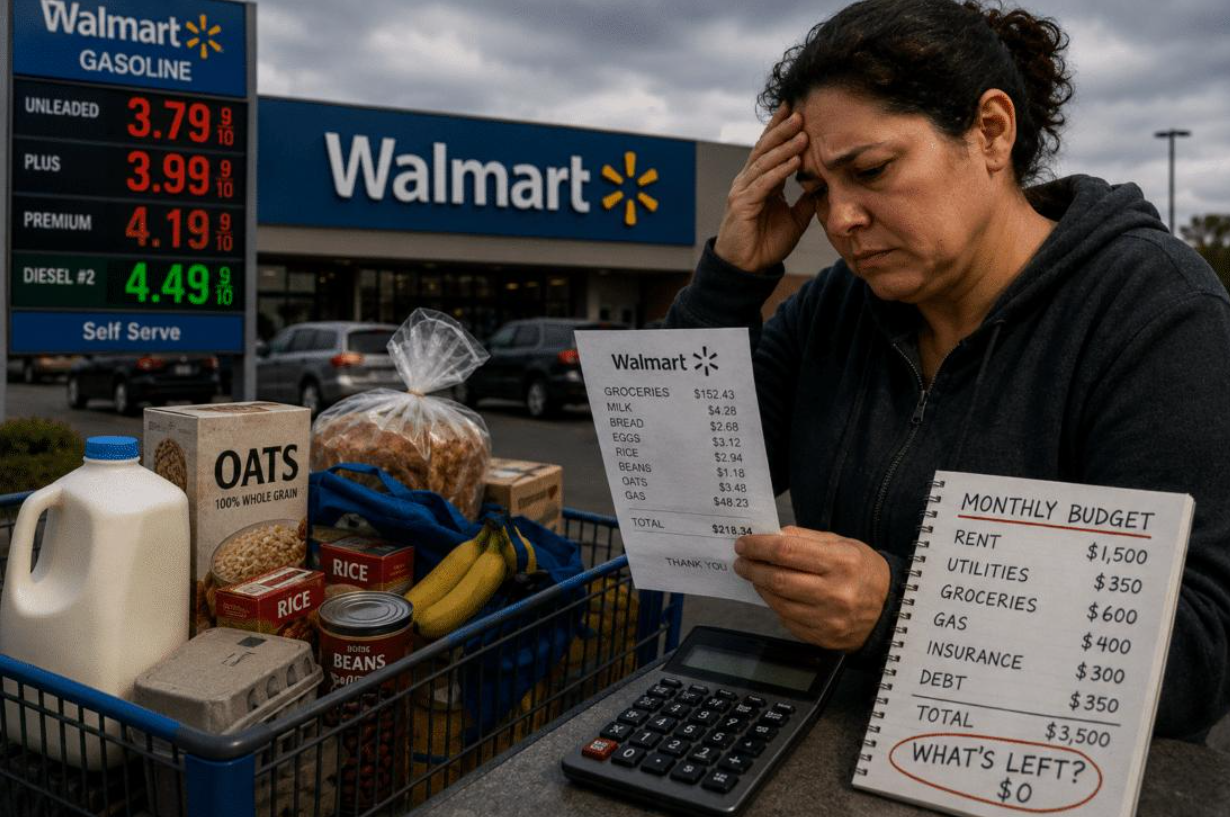
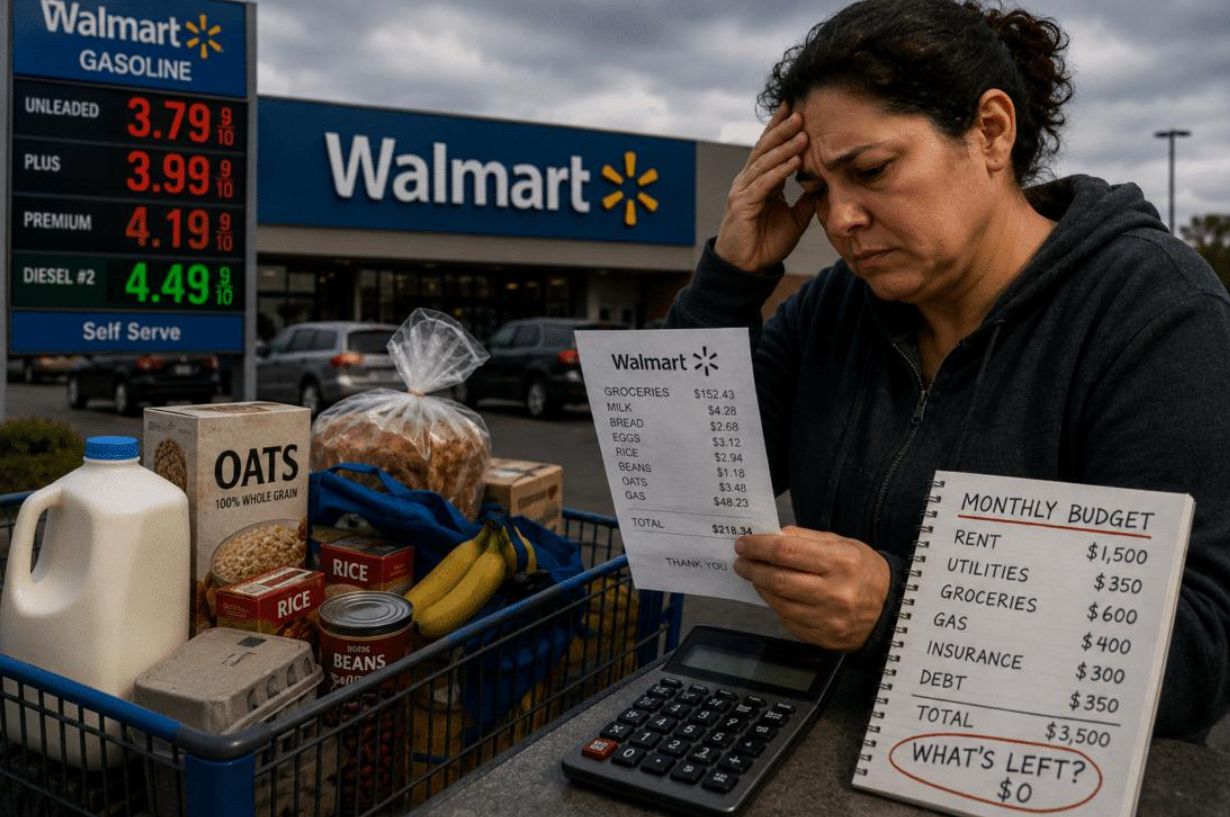
Inflation is putting renewed pressure on American household budgets in 2026. Higher gasoline prices, persistent service costs, and uncertainty about interest rates are making it more important for consumers to understand where their money goes and how economic changes affect everyday financial decisions.
The latest U.S. Consumer Price Index report, released by the Bureau of Labor Statistics on October 14, 2026, showed that consumer prices increased 3.7% over the 12 months ending in September. Prices also rose 0.6% from August to September, compared with a 0.4% monthly increase in August. Gasoline prices were a major contributor to the latest monthly increase.
At the same time, the Federal Reserve has raised its benchmark interest-rate target to a range of 3.75% to 4.00%. Officials must weigh the risk of persistent inflation against the possibility that higher borrowing costs could slow economic activity and weaken the labor market. Another rate increase is possible, but it is not guaranteed.
For households, these developments can affect more than the prices displayed at grocery stores and gas stations. They can influence credit card interest, auto financing, mortgage affordability, savings returns, and the amount of money available for emergencies.
The good news is that consumers do not need to predict every economic development to protect their finances. By reviewing spending, managing expensive debt, maintaining appropriate savings, and making borrowing decisions carefully, households can become more resilient to changing economic conditions.
What Is Happening With Inflation in 2026?
Inflation measures how the prices of goods and services change over time. When the inflation rate is positive, the overall price level is rising. When inflation slows, prices generally rise more slowly rather than automatically returning to their previous levels.
The distinction matters because a decline in inflation does not necessarily mean that groceries, fuel, housing, or other everyday expenses have become cheaper.
According to the September 2026 Consumer Price Index report, annual inflation reached 3.7%, up from 3.4% in August. The energy index increased 5.2% in September alone, while gasoline prices increased 9.1% during the month. Over the preceding 12 months, the energy index rose 20.4%.
These figures show why some households may feel greater financial pressure even if their wages have increased.
However, inflation does not affect every expense equally. In the same report, food prices increased 2.5% over the year, while prices for food consumed at home rose 1.8%. Food purchased away from home increased 3.5%. The index for all items excluding food and energy increased 0.3% in September.
This variation matters when creating a budget. A household that drives long distances may experience a different financial impact from one that relies on public transportation. A family that frequently purchases restaurant meals may face different cost increases from a household that prepares most meals at home.
Instead of relying exclusively on the national inflation rate, consumers should examine the expenses that account for the largest share of their own budgets.
Why Higher Inflation Can Put Pressure on Household Budgets
Inflation affects purchasing power. If income remains unchanged while the cost of essential goods and services rises, the same paycheck buys less than it did previously.
Even relatively modest price increases can become difficult to manage when several expenses rise simultaneously.
1. Gasoline and Transportation Costs
Fuel prices can affect household finances directly and indirectly.
Drivers pay more when filling their tanks, leaving less money for groceries, utilities, insurance, and savings. People who commute long distances or operate vehicles for work may experience an especially noticeable effect.
Fuel prices can also influence the cost of transporting goods. Businesses may face higher distribution expenses, and some may pass part of those costs to customers.
Consumers can respond by combining errands, comparing fuel prices, maintaining their vehicles properly, and considering whether carpooling or public transportation is practical.
These measures cannot eliminate the effects of higher fuel prices, but they may reduce unnecessary spending.
2. Groceries and Everyday Purchases
Food costs are another important budget category, although the latest inflation report showed that grocery prices and restaurant prices were rising at different rates.
Households can review grocery spending by planning meals, comparing unit prices, using ingredients already available at home, and reducing food waste.
Buying larger packages is not always cheaper if some of the food expires before it is used. Similarly, a discount does not necessarily represent a saving when the purchase was unnecessary.
The goal is to reduce avoidable spending without sacrificing nutritional needs or making the household budget so restrictive that it becomes difficult to maintain.
3. Utilities and Household Bills
Electricity, natural gas, water, internet service, and other recurring bills can consume a substantial portion of household income.
Some expenses change with usage, while others depend on contracts, seasonal conditions, or provider pricing. Consumers should review bills regularly and check whether they are paying for unused subscriptions, unnecessary service upgrades, or equipment they no longer need.
Energy-efficient habits may also help where practical. Adjusting heating and cooling settings, sealing air leaks, and using appliances efficiently can reduce waste, although actual savings depend on the home and local energy costs.
4. Insurance and Other Fixed Expenses
Insurance premiums, childcare, housing costs, and transportation payments can leave little room for adjustments when prices rise elsewhere.
Some of these expenses cannot be reduced immediately. A mortgage, for example, may have a fixed monthly payment, while property taxes, insurance, or maintenance costs may change.
Consumers should distinguish between expenses they can adjust quickly and costs that require longer-term planning. Reviewing insurance coverage, comparing service providers, and evaluating recurring contracts can help identify opportunities without abandoning essential protection.
How Federal Reserve Interest Rates Affect Your Money
The Federal Reserve uses monetary policy to pursue its goals of maximum employment and stable prices. One of its key tools is the federal funds rate, which influences short-term borrowing costs and broader financial conditions.
On September 16, 2026, the Federal Open Market Committee raised the target range for the federal funds rate by a quarter of a percentage point, to 3.75%–4.00%. The Fed said inflation remained elevated and emphasized its commitment to returning inflation to its 2% objective.
Higher interest rates can make some types of borrowing more expensive. They can also increase returns on certain savings products, depending on how financial institutions respond.
However, the effect is not immediate or identical across every financial product.
Credit Card Interest
Credit cards with variable interest rates may become more expensive when benchmark rates rise and issuers adjust their rates.
Consider a hypothetical credit card balance of $5,000 with an annual percentage rate of 24%. Ignoring new purchases, fees, and compounding, the approximate interest accruing over one month at that rate would be $100.
If the rate increased to 25%, the corresponding monthly interest would be approximately $104.17 on the same balance.
That difference may appear small for one month, but interest can consume a substantial amount of money over time, especially when balances remain high and payments are limited.
The best response is to check your current APR, avoid unnecessary new borrowing, and pay more than the minimum whenever your budget allows. If possible, direct additional payments toward the highest-interest debt while maintaining enough cash for essential expenses.
A Federal Reserve rate increase does not necessarily mean every credit card APR will change immediately. Check your card agreement and statements for the rate that actually applies to your account.
Auto Loans
Auto financing is influenced by several factors, including benchmark rates, lender funding costs, credit history, loan terms, vehicle prices, and the size of the down payment.
When borrowing costs rise, new auto loans may become more expensive. Existing fixed-rate auto loans generally retain their agreed interest rate, although variable-rate contracts can work differently.
Before purchasing a vehicle, calculate the total cost rather than focusing only on the monthly payment. A longer loan term may reduce the monthly amount while increasing total interest and keeping you in debt for longer.
If your current vehicle is reliable, delaying an upgrade may be financially useful when the replacement would require expensive financing.
Mortgages and Housing Costs
The relationship between Federal Reserve rates and mortgage rates is not one-to-one.
Fixed-rate mortgage rates are influenced substantially by longer-term bond yields, inflation expectations, mortgage-backed securities markets, and lender conditions. Adjustable-rate mortgages may respond to their specific benchmark rates and adjustment schedules.
When mortgage rates rise, prospective buyers may qualify for smaller loans or face higher monthly payments. Existing borrowers with fixed-rate mortgages generally do not see their contractual principal-and-interest payment rise solely because the Fed changes its benchmark rate.
Homeowners should nevertheless consider other housing expenses, including insurance, property taxes, repairs, and maintenance.
Anyone considering refinancing should compare closing costs, the new interest rate, the expected time in the home, and the total cost over the relevant period. A lower monthly payment does not automatically mean a better financial outcome.
Will Interest Rates Rise Again in 2026?
Following the September inflation report, markets and economists reconsidered the possibility of another Federal Reserve rate increase.
Reuters reported on October 14 that officials were weighing the implications of inflation rising to 3.7% annually. Some policymakers indicated that further increases might be necessary if inflation remained too high, while others emphasized the importance of waiting for additional data.
The Fed's decision is not determined by one inflation reading alone. Policymakers also consider underlying inflation trends, employment conditions, consumer demand, financial conditions, and the possibility that higher borrowing costs could slow the economy.
Consumers should therefore avoid making financial decisions based on the assumption that rates must rise again or that cuts are guaranteed.
A more useful approach is to test whether your budget can withstand several possible outcomes:
- Rates remain unchanged: Continue managing existing debt and maintaining appropriate savings.
- Rates rise further: Review variable-rate borrowing and avoid taking on unnecessary new debt.
- Rates eventually decline: Compare refinancing or borrowing offers carefully instead of assuming every available deal is worthwhile.
These are planning scenarios, not predictions. Building a budget that can withstand uncertainty is more reliable than trying to time every Federal Reserve decision.
Six Practical Ways to Protect Your Budget From Inflation
You cannot control national inflation, fuel prices, or Federal Reserve decisions. You can, however, control many of the choices that determine how exposed your household finances are to these changes.
1. Build a Budget Around Your Actual Spending
Start by reviewing two or three months of bank statements, credit card statements, and recurring bills.
Group expenses into categories such as housing, food, transportation, utilities, debt payments, healthcare, insurance, subscriptions, and discretionary spending.
Compare these expenses with take-home income rather than gross salary. Your budget must work with the money that actually reaches your account.
Then identify expenses that can be reduced without creating larger problems later.
For example, cancelling an unused subscription may produce an immediate saving. Cutting essential insurance, skipping necessary healthcare, or postponing a critical vehicle repair may create much larger costs.
A realistic budget should cover necessities, minimum debt payments, savings, and a reasonable amount for discretionary spending.
2. Prioritize High-Interest Debt
Debt becomes harder to manage when interest consumes a large share of each payment.
List your debts, balances, APRs, minimum payments, and due dates. Pay every minimum on time if possible, then consider directing additional money toward the debt with the highest interest rate.
This method, commonly called the debt avalanche, can reduce total interest compared with paying extra toward lower-rate balances first, assuming the same payment amount and other conditions.
If motivation is your biggest obstacle, paying off a smaller balance first may help you build momentum. The debt snowball method can be useful for that reason, even though it may cost more interest overall.
Before choosing either method, maintain a basic cash reserve so that every unexpected bill does not send you back to credit cards.
3. Review Your Emergency Fund
An emergency fund helps cover unexpected expenses without forcing you to borrow at high interest.
The appropriate amount depends on income stability, household responsibilities, insurance coverage, essential expenses, and access to other resources. A person with variable income may need a larger reserve than someone with highly predictable earnings and strong financial support.
If saving several months of expenses immediately is unrealistic, start with a smaller achievable target.
You might first aim to cover an unexpected repair or one essential bill, then build toward a larger reserve over time.
Keep emergency savings accessible and relatively stable. Money needed for near-term emergencies generally should not depend on the stock market performing well.
4. Shop Carefully for Essential Purchases
Comparing prices can help offset some inflation pressure, but the cheapest product is not always the best value.
Consider quality, durability, operating costs, warranties, and how frequently you will use an item.
For recurring expenses, compare insurance quotes, mobile plans, internet packages, and other services when renewal dates approach. Check whether switching providers introduces fees or removes benefits you actually need.
For groceries, meal planning and unit-price comparisons can help reduce waste. Avoid buying excessive quantities merely because an item is discounted.
A useful rule is to evaluate the total cost of ownership rather than the advertised price alone.
5. Protect Savings Without Chasing Risk
Higher interest rates can improve returns on some savings accounts, certificates of deposit, and other interest-bearing products. The actual rates offered depend on each financial institution and product.
Compare the annual percentage yield, fees, minimum balances, withdrawal restrictions, and deposit insurance coverage before moving money.
Inflation also affects the purchasing power of savings. If a savings account earns less than the inflation rate, the money may lose purchasing power over time even though its nominal balance increases.
However, that does not mean emergency savings should automatically be moved into risky investments. Money needed soon has a different purpose from money invested for retirement or long-term goals.
For longer-term savings, consider your time horizon, diversification, risk tolerance, and tax situation before making changes.
6. Avoid Major Financial Decisions Based on Headlines
News about inflation and interest rates can create pressure to act immediately.
Some consumers may rush to buy a home because they fear mortgage rates will rise. Others may sell investments after a market decline or borrow money before a possible rate increase.
These decisions can backfire when they are driven by speculation rather than personal circumstances.
Before making a major financial commitment, ask:
- Can I afford the payment if essential expenses rise?
- Do I have enough cash for emergencies and unexpected costs?
- How much interest and fees will I pay over the full term?
- Would the decision still make sense if rates or prices move differently than expected?
- Am I acting on my long-term plan or reacting to a headline?
A sound financial decision should remain reasonable under more than one economic scenario.
How Inflation Affects Savers and Investors Differently
Inflation can create different challenges depending on where your money is held and when you expect to use it.
Cash and Savings Accounts
Cash is useful for emergencies and near-term expenses because its value does not fluctuate with the stock market in the same way that investments do.
However, cash loses purchasing power when its return falls below inflation over time.
For example, if an account earns 2% annually while inflation averages 3%, the approximate real return before taxes is negative 1%. This simplified comparison illustrates why the interest rate alone does not tell the whole story.
The answer is not to abandon cash entirely. Instead, keep appropriate emergency savings while comparing competitive, low-risk options for money that does not need to remain in an ordinary checking account.
Stocks and Long-Term Investments
Inflation can affect businesses through higher labor, energy, materials, and financing costs. Some companies may pass these costs to customers, while others may experience lower profit margins.
Stock prices also respond to interest rates, expected earnings, investor sentiment, and many other factors.
Certain businesses may adapt well to inflationary conditions, but no stock or sector provides a guaranteed hedge against rising prices.
Investors should avoid concentrating their portfolios in a few companies simply because those businesses appear likely to benefit from inflation.
For long-term goals, a diversified portfolio aligned with your time horizon and risk tolerance may be more appropriate than repeatedly changing investments in response to monthly inflation reports.
Bonds and Fixed-Income Investments
Bond prices generally move in the opposite direction from market interest rates. When market yields rise, existing bonds with lower fixed payments can become less attractive, causing their market prices to fall.
The effect varies according to the bond's duration, credit quality, maturity, and other characteristics.
Investors holding individual bonds to maturity may experience different outcomes from those holding bond funds, whose market values fluctuate as their holdings and interest rates change.
Before adjusting a portfolio, consider the purpose of each investment and whether the change is consistent with your financial plan.
Common Inflation-Related Money Mistakes to Avoid
When household expenses rise, certain financial responses can make the situation worse.
Relying on credit cards for recurring shortfalls. Credit cards may bridge a temporary gap, but using them repeatedly to cover ordinary expenses can create a cycle of high-interest debt.
Draining all savings to eliminate debt. Paying off expensive debt can be valuable, but leaving yourself with no cash may force you to borrow again after an unexpected bill.
Chasing unusually high investment returns. Promises of guaranteed profits or unusually high yields deserve careful scrutiny, particularly when household budgets are already under pressure.
Ignoring variable interest rates. Borrowers should know which debts can become more expensive and when rate changes may take effect.
Assuming inflation affects everyone equally. National averages cannot precisely predict the cost changes experienced by an individual household.
Confusing lower inflation with falling prices. Prices can continue to rise even when the inflation rate slows. Budget planning should reflect actual spending rather than an assumption that previous prices will return.
A Simple Monthly Inflation-Readiness Checklist
Reviewing your finances once a month can help you catch problems before they grow.
- Compare actual spending with your household budget.
- Check grocery, fuel, utility, and insurance costs.
- Review credit card balances, APRs, and minimum payments.
- Confirm that recurring bills are paid on time.
- Transfer a manageable amount into emergency savings.
- Compare savings-account yields and fees when appropriate.
- Review upcoming major purchases before committing.
- Check official inflation and Federal Reserve updates rather than relying on speculation.
The purpose of this checklist is not to make you obsess over every price change. It is to create a consistent routine that helps you notice important changes and respond calmly.
Conclusions
Rising inflation in 2026 is creating fresh challenges for American households, particularly where higher fuel costs, persistent service expenses, and borrowing costs put pressure on monthly budgets.
The September Consumer Price Index showed annual inflation of 3.7%, while gasoline prices increased sharply during the month. The Federal Reserve has also raised its benchmark interest-rate target, and officials continue to weigh the risks of persistent inflation against the economic consequences of further tightening.
Although consumers cannot control these economic developments, they can improve their financial resilience by tracking actual spending, reducing high-interest debt, maintaining emergency savings, comparing essential expenses, and avoiding impulsive financial decisions.
Savers should compare available returns while keeping money needed for emergencies appropriately accessible. Investors should focus on their long-term goals rather than attempting to predict every change in inflation or interest rates. Borrowers should understand which rates can change and evaluate the full cost of new financial commitments.
Above all, inflation planning works best when it is based on personal circumstances rather than fear or speculation. A realistic budget, manageable debt, accessible savings, and informed decisions can help households navigate changing economic conditions with greater confidence.
For more practical guidance on budgeting, saving, borrowing, and other personal finance decisions, visit Finiuo. Readers interested in U.S. legal and consumer issues can explore Jurnza, while Dryzen Royal offers practical food and nutrition guides.
The goal is not to predict the economy perfectly. It is to build a financial plan that can adapt when prices, interest rates, and household needs change.