

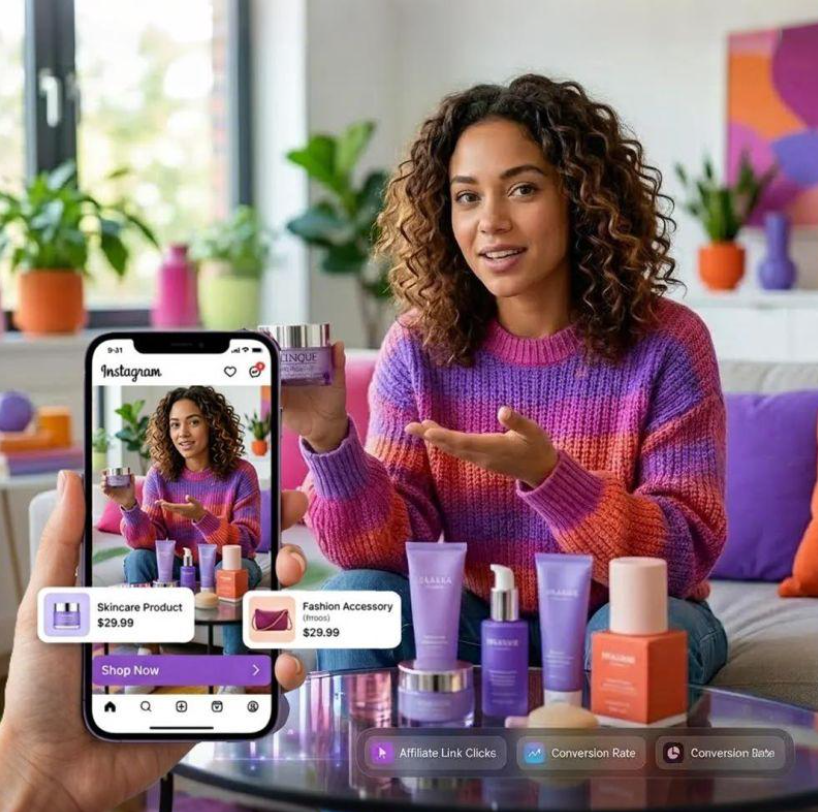
The Influencer Spending Trap: How Social Media Turns Recommendations Into Expensive Habits
Social media has changed the way people discover products. A skincare routine on TikTok by an Influencer, a fashion haul on Instagram, a gadget review on YouTube of an Influencer, or a creator's favorite kitchen product can turn an unfamiliar item into something thousands of people suddenly want to buy.
The appeal is easy to understand. Influencer often demonstrate products in real-life settings, explain how they use them, and share personal experiences that feel more relatable than traditional advertisements. Instead of watching a polished commercial, viewers feel as though a friend is recommending something that genuinely improved their life.
But that sense of familiarity can make shopping more complicated.
Behind an enthusiastic recommendation may be a sponsorship, an affiliate commission, a free product, or a commercial agreement that viewers do not immediately recognize what Influencer's get. Even when a Influencer honestly likes a product, the recommendation may not tell the whole story about its price, durability, alternatives, or long-term value.
The result is a growing consumer-finance problem: people may spend money not because they planned to buy something, but because repeated exposure makes the purchase feel necessary, popular, or too good to miss.
A product can be useful and still be a poor purchase for a particular person. A discount can be genuine and still encourage unnecessary spending. And an Influencer can be sincere without providing enough information to help every viewer make a sound financial decision.
Understanding the influencer spending trap does not mean avoiding social media or assuming every recommendation is dishonest. It means recognizing how online marketing works, identifying the financial incentives behind product recommendations, and creating a pause between wanting something and paying for it.
How Influencer Recommendations Became a Shopping Force
Traditional advertising usually looks like advertising. A television commercial, magazine promotion, or billboard is clearly designed to sell something. Consumers may still be persuaded by it, but they generally understand that a business is trying to influence their purchasing decisions.
Influencer marketing often works differently. Products appear inside entertainment, personal stories, tutorials, daily routines, and casual conversations. A Influencer might demonstrate a new face cream while discussing their morning routine or mention a travel accessory while sharing vacation footage.
The product becomes part of a story rather than the obvious focus of an advertisement.
This approach can be effective because people naturally pay attention to personalities they enjoy watching. Over time, familiar Influencer may feel trustworthy, especially when they share personal details, respond to comments, or appear to use the same products repeatedly.
That familiarity can make a recommendation more persuasive than a conventional advertisement.
Social platforms also make product discovery remarkably easy. Viewers can move from watching a video to reading comments, visiting a product page, and completing a purchase in just a few steps. Shopping links, product tags, discount codes, and in-app checkout features reduce the distance between interest and spending.
The easier that journey becomes, the less time consumers may spend comparing prices or considering whether the product fits their needs.
The financial issue is not simply that influencer sell products. It is that entertainment, personal connection, and shopping are increasingly blended into one experience.
When viewers recognize this combination, they can enjoy product content without automatically treating every recommendation as a reason to spend.
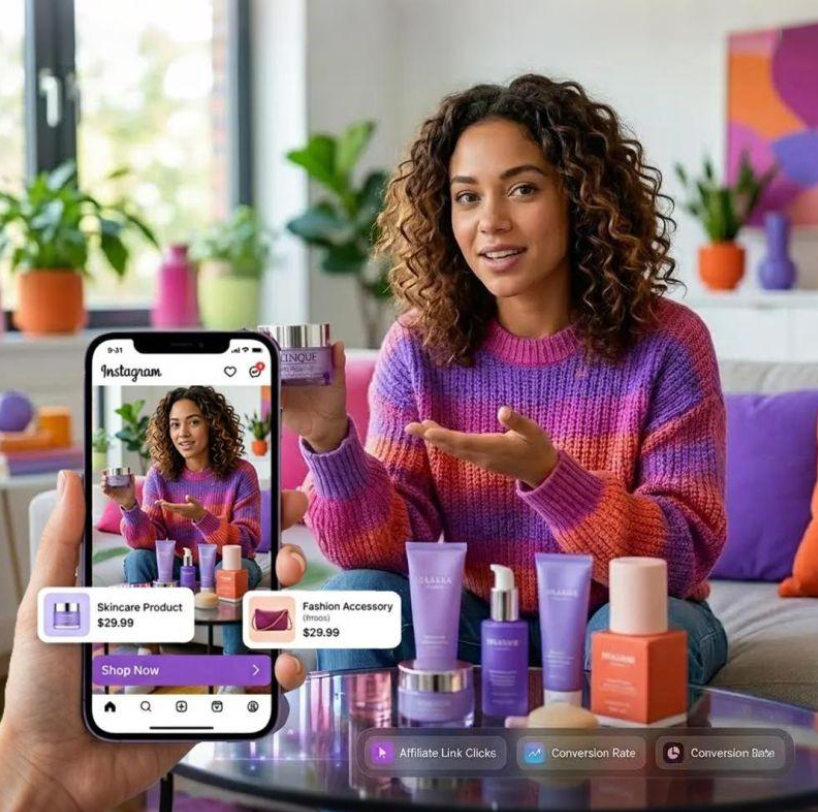
The Hidden Business Model Behind Product Recommendations
Influencer can earn money in several ways, and the arrangement behind a recommendation can affect how viewers should interpret it.
Sponsored posts and paid partnerships
A brand may pay a creator to feature a product in a video, photograph, tutorial, or review. The agreement may specify what the creator must demonstrate, how the product should be described, or when the content should be published.
Paid partnerships are not automatically dishonest. Brands pay for access to an audience, and creators can provide useful demonstrations while receiving compensation for their work.
However, a sponsored recommendation is not the same as an independent review. The creator has a financial relationship with the company, and that relationship deserves to be visible to the audience.
A product may receive positive attention partly because the creator was hired to promote it. Viewers should consider that context when deciding how much weight to give the recommendation.
Affiliate links and commission-based sales
Affiliate marketing allows creators to earn commissions when viewers purchase products through designated links or codes. Depending on the arrangement, the creator may receive a percentage of the purchase price or another form of compensation.
This creates an important incentive. A creator may earn money when viewers buy, but not when they decide to wait, compare alternatives, or keep their existing product.
That does not mean every affiliate recommendation is unreliable. Some creators carefully test products and provide useful comparisons. Others may recommend items based on limited experience.
The sensible response is to evaluate the information rather than assume either complete honesty or complete dishonesty.
If a recommendation includes an affiliate link, ask whether the creator explains meaningful drawbacks, compares competing products, and gives enough evidence to support the claims being made.
Free products and gifts
A company may send a product to a creator without charging them. Even if no payment changes hands, the creator has received something of value.
Free products can influence the way a recommendation is presented. A creator may feel excited about receiving a gift, develop a positive relationship with the brand, or focus on the product's advantages.
Again, a gifted product is not proof that a review is false. It is simply relevant context.
Discount codes and exclusive offers
Some creators share codes that give their audiences a discount. These can provide real savings, but they may also be tied to affiliate commissions or promotional agreements.
A discount code should not be treated as proof that a product is worth buying. The consumer still needs to evaluate the final price, competing offers, shipping charges, return conditions, and actual need.
Saving 15% on an unnecessary purchase still means spending money that could have stayed in your pocket.
Why Influencer Marketing Can Make People Spend More
The spending trap is not limited to expensive products or wealthy consumers. Relatively small purchases can add up when recommendations repeatedly encourage viewers to buy items they had not planned to purchase.
Several psychological and commercial mechanisms help explain why this happens.
1. Familiarity can feel like trust
When viewers repeatedly see a creator, they may become familiar with the person's voice, preferences, humor, and lifestyle. That familiarity can make the creator's recommendations feel personal.
A traditional advertisement might say a product is excellent. A familiar creator may show how it fits into their day, explain why they like it, and answer questions from followers.
The second approach can feel like advice from someone who understands the viewer, even though the creator may know very little about the viewer's actual needs or budget.
The important distinction is that familiarity is not the same as independent verification.
A creator can be likable, entertaining, and sincere without being the best source of information about product durability, technical specifications, or financial value.
2. Social proof makes products seem necessary
When a product appears repeatedly in videos, comments, and online discussions, it can begin to seem as though everyone owns it.
Viewers may interpret popularity as evidence that the product must be useful. This is a form of social proof: people use the behavior of others as a signal when deciding what to do.
But popularity does not establish that an item is good value. A viral product may be entertaining, fashionable, or heavily promoted without being particularly useful.
A product can also appear more popular than it really is because multiple creators are promoting it during the same campaign.
Before buying a trending item, consider whether you would want it if you had never seen it online.
3. The fear of missing out creates urgency
Promotional content often emphasizes limited-time discounts, low stock, exclusive releases, or the possibility that a popular item will sell out.
Some offers really are time-limited. Others use urgency primarily to encourage faster decisions.
When people feel they must act immediately, they have less time to compare alternatives, read independent reviews, examine return policies, or consider whether they can comfortably afford the purchase.
Urgency can also make a product feel more valuable than it would under ordinary circumstances. The thought of missing an opportunity becomes more prominent than the question of whether the item is worth buying.
A useful rule is to treat pressure as a reason to slow down. If a purchase only seems attractive because the opportunity may disappear, its value deserves a closer look.
4. Aspirational lifestyles can influence spending
Influencer frequently present carefully selected glimpses of their lives: attractive homes, fashionable clothing, elaborate vacations, elaborate routines, and collections of products.
These images can create an appealing vision of what everyday life might look like with the right purchases.
The problem is that the products shown may represent only a small part of the creator's actual circumstances. Viewers usually cannot see the full picture of the creator's income, sponsorship arrangements, business expenses, gifted products, or financial obligations.
Trying to recreate that lifestyle can lead to spending that does not fit a viewer's circumstances.
A product that makes sense for someone who earns money promoting beauty products, fashion, or travel may not make sense for someone who simply enjoys watching their content.
Enjoying someone's lifestyle does not require financing a copy of it.
5. Repeated exposure can turn wants into perceived needs
A viewer might see a water bottle in one video, a skincare product in another, and a new organizer in a third. Each individual purchase may appear small and reasonable.
Over time, however, the combined effect can be substantial. The viewer may begin replacing products that still work, buying additional versions of things already owned, or adding accessories to maintain a particular aesthetic.
The danger is cumulative rather than dramatic. There may be no single purchase that looks financially irresponsible, yet the total spending can exceed what the person intended.
This is why tracking purchases by category can be more revealing than examining each transaction separately.
The Viral Product Problem: Popular Does Not Mean Worth It
A product going viral can be a sign that it solves a real problem, offers good value, or introduces an appealing idea. It can also reflect novelty, entertainment, clever marketing, or a coordinated promotional campaign.
The challenge is separating popularity from practical usefulness.
Consider a viral skincare product. A creator may show impressive results, but those results could depend on the person's skin type, other products in their routine, lighting, editing, or the length of time they have used it. The video may not provide enough information to predict how the product will work for another person.
A trending gadget may look clever in a short demonstration but turn out to be inconvenient for everyday use. A fashion item may look appealing in a carefully styled video but have limited durability or fit poorly.
A product can also be genuinely good without being the best available option at its price.
Before buying a viral product, consider the following questions:
- Does it solve a problem I actually have?
- Would I still want it if nobody were talking about it?
- Are there less expensive alternatives that perform the same function?
- Have independent reviewers discussed its weaknesses as well as its benefits?
- Does the product have a reasonable return policy and a credible seller?
- Will I use it regularly, or is most of its appeal based on novelty?
These questions help shift the decision from social excitement to practical value.
How to Recognize a Sponsored Recommendation
In the United States, the Federal Trade Commission (FTC) requires influencer and other endorsers to clearly disclose material connections with brands when those connections could affect how consumers evaluate an endorsement.
A material connection can include payment, free products, discounts, employment, or other benefits. The precise disclosure obligations depend on the circumstances, but the central principle is straightforward: viewers should not have to guess whether a recommendation involves a commercial relationship.
Disclosures may include terms such as “ad,” “sponsored,” or an explanation that the creator received a product for free. A platform's paid-partnership label may also provide context, although creators should not assume a platform feature alone always satisfies their obligations.
Look for disclosures where viewers are likely to notice them, rather than relying on a vague statement hidden among unrelated hashtags or placed where it is easy to miss.
A disclosure does not automatically make a recommendation bad. It gives the audience information needed to assess it fairly.
There is also an important distinction between a disclosed advertisement and a trustworthy product claim. A creator might clearly disclose a sponsorship while still making a claim that requires further evidence.
For example, a creator's statement that a product is their personal favorite is different from a claim that it will produce a specific financial, health, or performance result for every buyer.
The more consequential the claim, the more important it becomes to seek reliable information beyond the promotional content.
Consumers can consult the FTC's official guidance on endorsements and testimonials for more information about advertising disclosures and influencer responsibilities.
The Difference Between a Genuine Review and a Sales Pitch
Not every creator who recommends a product is trying to manipulate an audience. Many provide detailed demonstrations, compare alternatives, disclose commercial relationships, and explain who may not benefit from a purchase.
Still, viewers should distinguish between content designed primarily to sell and content designed to help them make an informed decision.
A useful review usually gives enough information to understand the product's strengths and limitations. It may discuss build quality, usability, compatibility, maintenance, or circumstances in which a cheaper option would be sufficient.
A sales-oriented post may concentrate on excitement, appearance, urgency, and broad claims while giving little attention to drawbacks.
Neither format is automatically conclusive. A short video has limited space, and a paid partnership can still contain useful information. The goal is to identify what the content does and does not establish.
Watch for warning signs such as:
- Claims that a product is perfect for practically everyone.
- Dramatic promises without credible supporting evidence.
- No discussion of disadvantages or limitations.
- Heavy pressure to purchase immediately.
- Repeated use of the same promotional language across multiple creators.
- Unclear explanations of how the creator has tested the product.
- Links that lead to unfamiliar sellers with limited customer support or unclear return policies.
These signals do not prove fraud. They indicate that the recommendation should not be the only basis for a purchase.
A good consumer decision should survive a little independent research.
Affiliate Links: What Shoppers Should Know Before Clicking
Affiliate links are a normal part of online commerce, but consumers should understand how they can affect the shopping experience.
When a viewer clicks an affiliate link, the link may allow the creator or an affiliate network to attribute a purchase to that referral. Depending on the program, a commission may be earned even when the buyer does not pay a higher price.
In other cases, the creator may receive compensation tied to specific products, campaign requirements, or purchase amounts.
The existence of an affiliate relationship does not establish that the listed price is inflated or that the creator's recommendation is false. It simply means the recommendation has a financial dimension.
To protect your wallet, compare the linked product with other reputable sellers. Check the full price after shipping, taxes, and any required accessories. Review the return policy, warranty, and seller information.
Do not assume that a creator's exclusive code is the lowest available price. Search for the product independently and compare offers using the same model, size, version, and delivery conditions.
It is also worth checking whether the link leads to the exact item shown in the video. Promotional pages can feature bundles, different product versions, or optional upgrades that change the final cost.
The goal is not to avoid affiliate links at all costs. It is to make sure a commission-driven path to checkout does not replace ordinary price comparison.
How Small Influencer Purchases Add Up
One of the biggest risks of social-media shopping is that individual purchases may feel too small to deserve much attention.
Imagine someone buys a $22 beauty product after watching a creator's recommendation, a $35 accessory featured in a fashion video, and a $28 gadget that appears repeatedly on their feed.
That is $85 in purchases. If a similar pattern occurs every month, the annual total reaches $1,020.
This is an illustrative example, not a claim about how much the average person spends on influencer recommendations. Its purpose is to show how repeated small purchases can become a meaningful expense.
The same pattern can occur with collectibles, fitness accessories, clothing, home decor, hobby equipment, and specialty food products.
A useful way to identify the pattern is to review recent transactions and mark purchases that were prompted by social-media content. Include products bought through discount codes, affiliate links, viral trends, or recommendations from familiar creators.
Then ask three questions:
- Which purchases do I still use and value?
- Which items did I buy mainly because they were popular or heavily promoted?
- How much did those purchases cost altogether?
The point is not to regret every impulse purchase. It is to understand whether online recommendations are influencing spending more than you intended.
Once the pattern becomes visible, it is easier to make deliberate choices about future purchases.
Practical Ways to Stop Influencer-Driven Overspending
You do not need to delete every social app or stop watching product reviews to protect your finances. A few simple rules can create more space between discovering a product and deciding to buy it.
Introduce a waiting period
For nonessential purchases, wait at least 24 to 72 hours before ordering. For expensive products, consider waiting a week or longer.
During that period, the excitement of seeing the product may fade, giving you a clearer view of whether you actually want it. You may discover that the item solves no meaningful problem or that you already own something that performs the same function.
A waiting period is especially useful when a post includes a countdown, limited-time code, or repeated reminders to buy immediately. If the deal disappears before you have time to evaluate it, missing it may be better than making a rushed decision.
Set a social-shopping budget
If you enjoy trying new products, create a specific monthly amount for discretionary shopping. The amount should fit your financial circumstances and existing priorities.
Once that budget is used, postpone additional purchases until the next period. This makes it possible to enjoy shopping without allowing every new recommendation to create another expense.
A budget is more effective when it includes all related spending. If you regularly buy clothing, beauty products, gadgets, and accessories after seeing them online, track those purchases together rather than treating each category as unrelated.
Unfollow accounts that constantly trigger purchases
You do not have to unfollow every creator who shares products. But if certain accounts consistently make you feel dissatisfied with what you own or encourage you to buy things you never considered before, changing your feed may help.
Use mute, unfollow, or “not interested” features to reduce repeated exposure to promotional content. You can also limit notifications from shopping apps and remove saved payment details when you want to make impulse purchases less convenient.
These steps do not eliminate advertising, but they can reduce the number of buying prompts you encounter.
Research outside the creator's content
Before purchasing, search for independent reviews, product specifications, customer complaints, and alternatives from reputable sellers.
Look for reviews that describe long-term use rather than first impressions alone. A product may look impressive when it arrives but perform poorly after several weeks.
For expensive or technically complex products, consider expert testing and official documentation. For ordinary consumer goods, check return policies, warranties, and verified customer feedback while remaining alert to suspicious or unrepresentative reviews.
No single source is perfect. A stronger decision comes from comparing several sources that have different incentives.
Make a list before shopping
Write down what you need before browsing shopping content. If you discover an interesting product, place it on a separate wish list rather than purchasing it immediately.
When you revisit the list, evaluate each item against your original needs. If you cannot explain why it belongs on the list, it may have been an impulse rather than a genuine requirement.
Use a cost-per-use test
For products intended for repeated use, estimate how frequently you will use them and how long they are likely to last.
A $60 item used 60 times costs about $1 per use. A $30 item used only three times costs $10 per use.
This calculation is not a complete measure of value, and usage estimates can be wrong. Still, it helps reveal why the lowest purchase price is not always the best value—and why an attractive product that rarely gets used can become expensive.
Keep the original purpose in mind
Ask yourself whether you are buying a product for its usefulness, enjoyment, appearance, or the feeling of belonging to a trend.
There is nothing inherently wrong with buying something simply because it is fun. Discretionary spending can be part of a healthy financial life.
The key is to recognize the real reason for the purchase and decide whether that reason justifies the price.
What to Do When a Recommendation Leads to a Bad Purchase
Even careful shoppers sometimes buy products that disappoint them. A product may be poorly made, materially different from its description, or unsuitable for their needs.
If that happens, act promptly.
First, review the seller's return policy and the applicable deadline. Keep receipts, order confirmations, packaging, and any relevant communications. If the product was materially misrepresented, save the original promotional content where possible.
Next, contact the seller and explain the issue clearly. If the purchase was made through a marketplace, check its dispute process. If you believe an advertisement was deceptive or a business engaged in unfair practices, you may be able to report the concern to the relevant consumer-protection authority.
In the United States, consumers can find guidance and complaint resources through the Federal Trade Commission and their state consumer-protection offices. The appropriate remedy depends on the circumstances, the seller's policies, and applicable law.
Do not assume that a creator's recommendation guarantees a refund. The seller, marketplace, manufacturer, or creator may have different responsibilities depending on the transaction and the representations made.
If the problem involves a paid endorsement or a potentially deceptive advertising claim, keep the distinction clear: a product that simply fails to meet your preferences is not necessarily evidence of unlawful conduct. Specific facts matter.
Finally, treat the experience as useful information for future decisions. Consider what you overlooked, whether the review lacked important details, and whether a waiting period or independent comparison might have prevented the purchase.
The goal is to recover what you reasonably can and make your next buying decision stronger—not to spend more time and money chasing every disappointing purchase.
Why Brands and Influencers Are Not the Only Decision-Makers
It is easy to place all responsibility on creators and companies, particularly when advertising is unclear or product claims are misleading. Businesses should provide accurate information, disclose relevant commercial relationships, and avoid deceptive marketing practices.
But consumers also benefit from understanding how persuasive content works.
Social platforms are designed to keep people engaged. Product recommendations may appear between entertainment videos, personal updates, news, and conversations. That mix can make commercial content feel less like a sales pitch and more like a natural part of everyday life.
Recognizing the commercial context helps restore a useful distinction: content can be entertaining without being advice, and a recommendation can be interesting without being relevant to your needs.
For creators, credibility is strengthened by transparent disclosures, realistic claims, and honest discussion of limitations. For consumers, financial confidence comes from comparing recommendations with independent evidence and personal priorities.
For more practical money guidance, readers can explore Finiuo. Consumer rights and legal questions are covered at Jurnza, while food and nutrition topics can be found at Dryzen Royal.
Across all these areas, the underlying principle is the same: informed decisions require more than a persuasive presentation. They require context, evidence, and an understanding of what matters to you.
Conclusions
Influencer marketing has made product discovery easier, faster, and more personal. Creators can introduce useful products, demonstrate how they work, and help consumers discover options they might otherwise miss. But the same format can encourage unnecessary spending when familiarity, social proof, urgency, and commercial incentives influence decisions.
The danger is not limited to expensive purchases. Small buys prompted by viral trends, affiliate links, discount codes, and repeated product recommendations can quietly accumulate into substantial annual spending.
Consumers can protect themselves by checking sponsorship disclosures, comparing prices independently, examining product limitations, and taking time before purchasing. Tracking social-media-driven purchases can also reveal patterns that are difficult to recognize when each transaction is considered separately.
The most important question is simple: would this purchase still make sense if you had never seen the recommendation?
If the answer is yes, and the product fits your needs and budget, an influencer content may have helped you discover something worthwhile. If the answer is no, it may be worth closing the shopping tab and keeping your money for something that matters more.
You do not have to reject influencer culture to become a more deliberate shopper. You just need to remember that a creator's enthusiasm, a viral trend, or a limited-time code is not a substitute for your own judgment.
The best purchase is not the one everyone online is talking about. It is the one that genuinely earns its place in your life and your budget.