

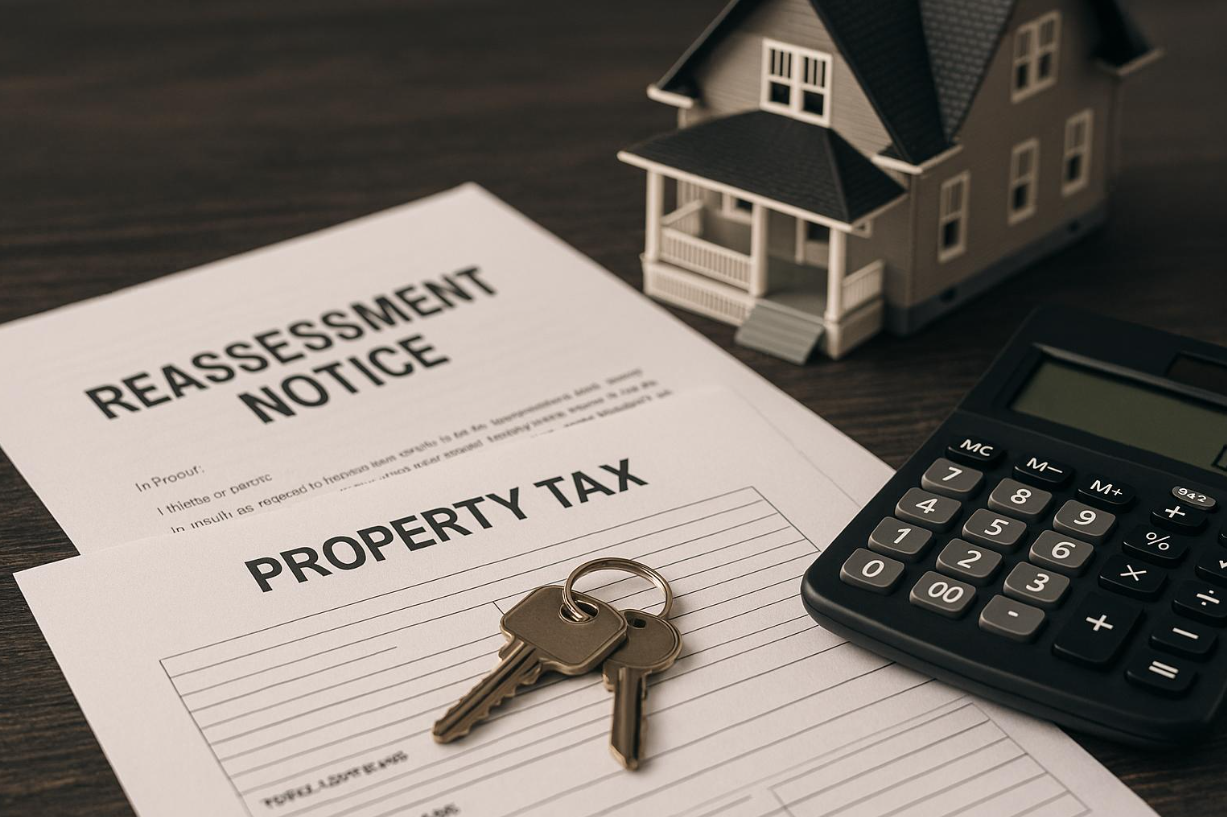
The Property Tax Shock: Why Your Home Can Get More Expensive Without a Mortgage Increase
For many American homeowners, buying a house comes with an expectation of financial stability. Once the mortgage is secured, the monthly principal and interest payments generally follow a predictable schedule. Homeowners can budget around them, plan for future expenses, and gradually build equity. But there is a catch: owning a home does not mean every housing expense stays fixed. Property tax can rise even when a homeowner has not refinanced, renovated, or moved. An updated assessment, a change in local tax rates, the expiration of a temporary exemption, or a shift in local government funding needs can increase the cost of staying in the same house.
For homeowners whose mortgage payments include property taxes through an escrow account, the change can arrive as a higher monthly payment. Those who pay property taxes separately may instead face a larger annual or semiannual bill.
The result can feel unfair. The house is the same, the mortgage has not changed, and the household budget has not necessarily improved. Yet the cost of homeownership keeps climbing.
Understanding why this happens is the first step toward managing it. Homeowners who understand assessments, tax bills, exemptions, and appeal deadlines may be better positioned to identify mistakes and claim relief for which they qualify.
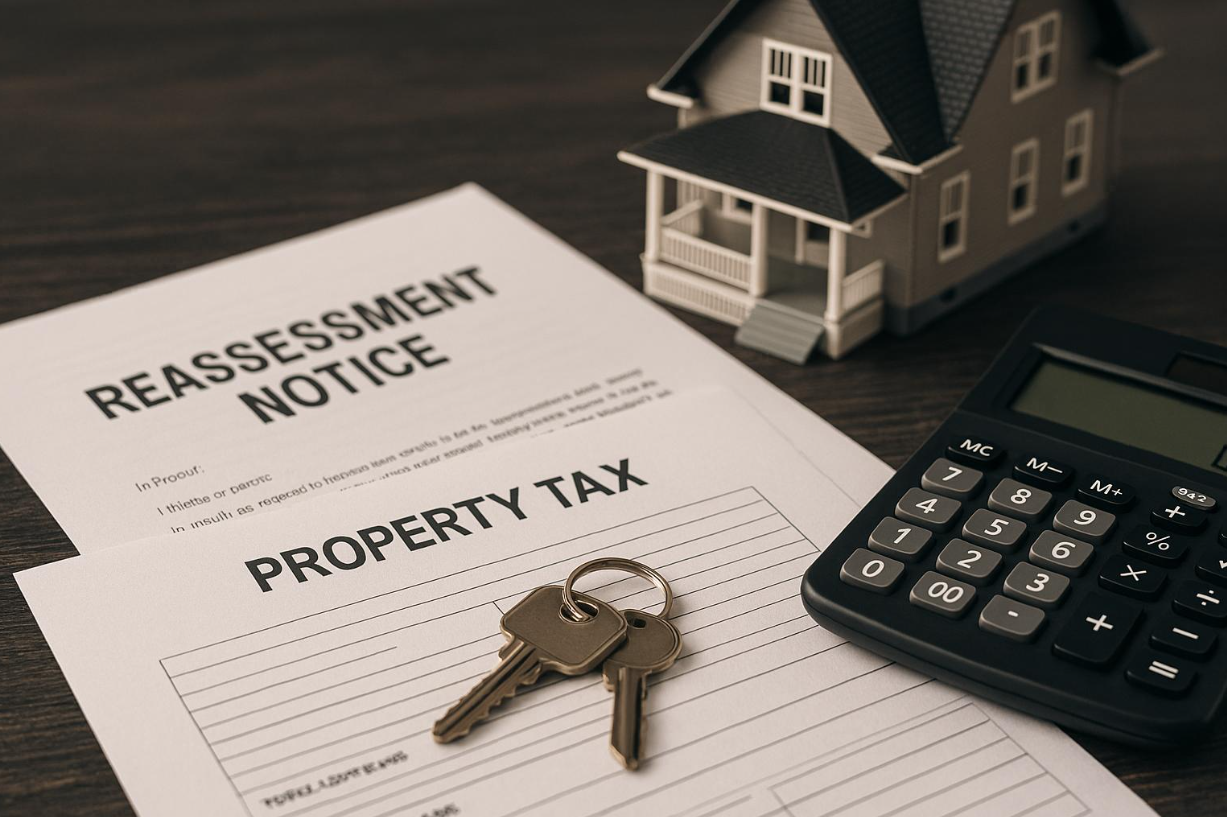
Why Property Taxes Can Rise Without a Mortgage Increase
A mortgage payment and a property tax bill are two different financial obligations.
For a typical fixed-rate mortgage, the principal and interest portion generally stays consistent throughout the loan term, provided the loan terms remain unchanged. Property taxes, however, are determined by local taxing authorities and can change over time.
Many homeowners pay both expenses together through an escrow account managed by their mortgage servicer. This arrangement can make the two costs appear to be one payment, even though they operate differently.
Consider a homeowner whose monthly mortgage principal and interest payment is $1,650. Their property taxes and homeowners insurance are collected separately through escrow. If the annual property tax bill increases by $900, the tax portion alone represents an additional $75 per month when spread evenly across a year.
The homeowner may suddenly see a larger total mortgage payment, even though the lender has not increased the principal or interest payment.
There are several reasons this can happen:
- The local assessor increases the property's assessed value.
- The local government changes the applicable tax rate or levy.
- A previously available exemption or tax reduction expires.
- A property is reassessed after a sale, renovation, or other event under local rules.
- An escrow account needs to recover a shortage from earlier payments.
These factors are related, but they are not interchangeable. A homeowner needs to determine which one caused the increase before deciding how to respond.
What Is a Property Tax Assessment?
A property tax assessment is the value assigned to a property for taxation purposes. Depending on the jurisdiction, this value may be based on market value, a percentage of market value, a statutory valuation formula, or other locally defined rules.
The assessor's valuation is an important input into the property tax calculation, but it is not necessarily the amount a homeowner would receive by selling the house.
A simplified example helps explain the difference.
Suppose a home has an assessed value of $300,000 and the applicable effective tax rate is 1.2%. Under this simplified calculation, the annual property tax would be $3,600 before exemptions, special assessments, credits, or other adjustments.
If the assessed value increases to $330,000 and the same rate applies, the estimated tax becomes $3,960. That is a $360 annual increase.
The figures are illustrative rather than a prediction of any particular property's tax bill. Actual calculations vary by state and locality, and some jurisdictions use assessed-value ratios, tax limits, separate levies, or other rules.
Most importantly, a higher assessed value does not always produce an equal percentage increase in the final tax bill. Local tax rates, exemptions, assessment caps, and the total amount of revenue being collected can all affect the result.
Homeowners should also distinguish between an assessed value and an appraised value prepared for a mortgage, refinancing, or private sale. These valuations may serve different purposes and use different methods.
Why Your Home's Assessed Value Might Increase
A property assessment can change for several reasons. Some are connected to the housing market, while others arise from changes to the property itself or the way local assessments are administered.
1. Nearby home prices have increased
Assessors may consider recent sales of comparable homes when estimating property values. If similar houses in the neighborhood have sold for substantially more than they did during the previous assessment cycle, the assessed value of a homeowner's property may rise.
This can happen even if the owner has not made any improvements.
For example, a homeowner may have purchased a modest house several years ago. Since then, demand for homes in the area has increased, inventory has tightened, and comparable properties have sold at higher prices. A later assessment may reflect some of those market changes.
However, an increase in neighborhood sale prices does not automatically establish that a specific assessment is accurate. The property's condition, size, location, permitted use, and comparable sales may all matter.
2. The property has been renovated or expanded
Major improvements can affect a property's taxable value, depending on local assessment rules.
Adding living space, building an extension, finishing certain areas, or making substantial improvements may lead to a reassessment. Some jurisdictions reassess only the value attributable to the improvement, while others have different procedures.
Ordinary maintenance, such as repainting a room or repairing a leaking faucet, is not necessarily treated the same way as a major renovation.
Homeowners should check local rules before assuming that every improvement will increase their taxes—or that improvements will have no tax consequences.
3. The property was recently purchased
In some jurisdictions, a sale can trigger reassessment or influence how a property's value is determined. Other areas follow regular assessment cycles or apply limits that restrict changes in taxable value.
This means two neighboring homes with similar market values may have different assessed values or tax bills because of their ownership histories, exemptions, assessment dates, or applicable legal rules.
A recent purchase price can be relevant evidence, but its treatment varies by jurisdiction. Buyers should not assume that the seller's previous tax bill will remain unchanged after the transaction.
4. The assessor corrected an earlier valuation
Assessment systems are not immune to errors. A property record might contain an incorrect square footage, an outdated description, an inaccurate classification, or information about improvements that do not exist.
An assessor may also revise a valuation after reviewing new data or correcting a previous mistake.
A higher assessment is not automatically wrong. Nevertheless, reviewing the underlying property record is worthwhile when the increase appears inconsistent with the home's characteristics or condition.
5. A valuation cap or exemption no longer applies
Some jurisdictions limit annual increases in assessed or taxable value for eligible properties. Certain homeowners may also qualify for exemptions or reductions based on factors such as age, disability, veteran status, income, or primary-residence occupancy.
These protections differ significantly by location. Some have application deadlines, eligibility conditions, renewal requirements, or limits on the amount of relief available.
If a homeowner loses an exemption, fails to renew it, or no longer qualifies for a particular cap, the tax bill may increase even if the home's underlying market value has changed very little.
The Tax Rate Matters Too
Property value is only one part of the equation.
Local governments and other taxing authorities may collect property taxes to support public schools, emergency services, roads, libraries, municipal operations, and other public expenses. The combination of applicable rates and levies can influence the final bill.
A homeowner's taxes can therefore rise even if the assessed value stays the same.
For instance, a local taxing authority may adjust its levy to fund public services or meet financial obligations. Depending on the jurisdiction's rules, that adjustment may increase the amount owed by property owners.
Conversely, a higher assessment does not always mean the final bill will rise by the same proportion. Tax rates may change, and some jurisdictions adjust rates in response to changes in the overall tax base.
This is why homeowners should review both the valuation notice and the final tax bill. Looking at only one can leave out an important part of the explanation.
A useful first question is: Did the assessed or taxable value change, did the tax rate change, or did both change?
The answer helps narrow down which records and rules need closer attention.
How an Escrow Shortage Can Make the Increase Look Even Bigger
Property taxes often create confusion because they may be collected through mortgage escrow.
An escrow account holds money collected by the mortgage servicer to pay certain recurring housing expenses, commonly property taxes and homeowners insurance. The servicer estimates upcoming costs and collects a portion with each monthly mortgage payment.
If the actual bills exceed those estimates, the account can develop a shortage.
Suppose a homeowner's property taxes rise, but the escrow account has been collecting payments based on the previous, lower tax amount. When the servicer reviews the account, it may determine that the monthly collection needs to increase to cover future bills. Depending on the circumstances and applicable rules, it may also collect an amount to address the existing shortage.
The homeowner could consequently face two changes at once:
- A higher monthly contribution toward future property taxes.
- An additional amount to make up for an escrow shortage.
This can make the payment increase feel much larger than the underlying tax increase alone.
Homeowners should review their annual escrow analysis to understand the calculation. The analysis may show the prior balance, projected payments, expected expenses, and any shortage or surplus.
If the servicer's figures seem incorrect, compare them with the actual property tax bill and insurance premium. Contact the servicer to clarify discrepancies rather than assuming that the entire payment increase comes from a higher tax rate.
An escrow shortage is not itself proof that the assessor made a mistake. It is a separate accounting issue that may arise because the account's previous collections did not match actual expenses.
How to Check Whether Your Property Tax Assessment Is Accurate
When a tax notice arrives with an unexpected increase, the best response is to investigate the figures before making assumptions.
Step 1: Compare the current and previous notices
Start with the latest assessment notice and, if available, the previous year's notice.
Compare the assessed value, taxable value, exemptions, classification, and any listed tax rate or levy. Look for changes that explain the difference.
Remember that an assessment notice and a tax bill may be issued at different stages of the process. A valuation notice may not contain every figure used in the final bill.
Step 2: Verify the property's recorded details
Check the assessor's records for the property's address, lot size, square footage, number of rooms, building type, and recorded improvements.
If the property is listed as larger than it actually is or includes a feature it does not have, document the discrepancy.
Errors involving property characteristics can affect valuation, but the effect depends on the local assessment method. Correcting a record does not guarantee a particular tax reduction.
Step 3: Examine comparable sales
Look for recent sales of properties that resemble yours in size, age, location, condition, and features.
A nearby sale is not automatically a suitable comparison. A renovated house may command a different price from one needing substantial repairs, even if both have similar square footage.
Where appropriate, gather reliable sales records, listing information, photographs, or professional valuation evidence that supports your position.
Step 4: Document the property's condition
If the house has significant damage, deferred maintenance, structural issues, or other conditions that may affect its value, collect relevant evidence.
Photographs, repair estimates, inspection reports, and contractor documentation may help explain the property's condition. Whether and how these materials affect the assessment depends on local standards.
Be accurate and specific. Evidence that directly relates to the disputed valuation is generally more useful than a general statement that the tax bill is too high.
Step 5: Ask the assessor for an explanation
If the numbers remain unclear, contact the local assessor's office. Ask how the value was determined, which records were used, and what procedure applies if you disagree.
An informal discussion may resolve a factual error or clarify a confusing notice. However, speaking with the office may not replace a formal appeal or extend an official deadline.
Keep copies of correspondence and note any deadlines provided by the jurisdiction.
How to Appeal a Property Tax Assessment
If the evidence suggests that an assessment is inaccurate, a formal appeal may be worth considering.
The process varies by state and locality. It may involve submitting a form to the assessor, attending a review conference, presenting evidence to an assessment board, or following additional appeal procedures.
The key is to understand the local process before the deadline passes.
Identify the correct deadline
Assessment appeals often have specific filing windows. The deadline may be tied to the notice date, a publication date, or another event defined by local law.
Do not assume that you can appeal whenever the tax bill arrives. In some places, the window to challenge the assessed value closes before the final tax bill is issued.
Check the notice itself and the official website of the relevant assessment authority. If the deadline is unclear, contact the office promptly and ask how it is calculated.
Build an evidence-based case
A successful appeal generally requires more than showing that taxes have become expensive.
The issue is whether the assessment is incorrect under the jurisdiction's valuation standards or whether another recognized basis for relief applies.
Potential supporting evidence may include:
- Comparable property sales.
- Documentation of incorrect property details.
- Photographs and records showing the property's condition.
- Relevant appraisal reports.
- Evidence of an applicable exemption or classification error.
The most appropriate evidence depends on the reason for the appeal. A dispute about market value may require different information from a dispute about a missed exemption.
Understand what an appeal can—and cannot—do
An appeal may result in a lower assessment, no change, or another outcome under the applicable rules. The result is not guaranteed.
A successful reduction in assessed value may lower the tax bill, but the amount saved depends on local tax rates, exemptions, caps, and other calculations.
Also, appealing a valuation is not necessarily the right way to challenge every type of tax increase. If the increase results from a change in the tax rate, for example, the assessment may be accurate even though the final bill is higher.
Homeowners should identify the actual cause of the increase before investing time or money in an appeal.
Consider the cost of professional help
Some homeowners handle appeals themselves, particularly when the dispute involves a straightforward factual error. Others may consider a qualified property tax consultant, real estate appraiser, or attorney.
Professional fees and arrangements vary. Before hiring anyone, understand the service offered, the fee structure, any contingency payment, and whether the potential savings justify the expense.
Be cautious of companies promising guaranteed reductions or pressuring homeowners to sign quickly. No representative can legitimately guarantee that an assessment authority will approve a particular result.
Property Tax Exemptions and Relief Programs Worth Checking
An assessment appeal is not the only possible way to reduce a property tax burden. Some homeowners may qualify for exemptions, credits, deferrals, or other relief programs.
Eligibility is highly location-specific, so homeowners should verify requirements with the relevant state, county, city, or local tax authority.
Homestead or primary-residence exemptions
Some jurisdictions offer tax benefits to people who own and occupy a property as their primary residence.
The benefit may reduce the taxable value, provide a credit, or work through another mechanism. Eligibility rules can specify occupancy dates, ownership requirements, application procedures, and renewal obligations.
A homeowner should not assume that a benefit automatically transfers when buying a new property or moving to another jurisdiction.
Senior homeowner relief
Some areas offer eligible older homeowners exemptions, credits, assessment protections, or tax deferrals.
The rules may depend on age, income, ownership, residency, and other criteria. Some programs reduce the amount due, while others postpone payment under specified conditions.
A deferral is not necessarily forgiveness: deferred taxes may accrue or become payable later under the program's terms.
Disability or veteran-related benefits
Certain jurisdictions provide property tax relief to eligible people with disabilities or qualifying veterans. The requirements and amount of relief vary, and documentation may be required.
People who believe they qualify should check official program details rather than relying on a general online summary.
Income-based relief
Some locations provide relief for homeowners whose property tax burden is high relative to their income. Programs may use credits, rebates, circuit-breaker mechanisms, or other arrangements.
Income thresholds, property limits, filing dates, and payment methods differ. Homeowners may need to apply annually or provide supporting information.
Payment plans and deferrals
If a bill has become difficult to pay, contact the relevant tax collector or local authority before the deadline. Some jurisdictions offer installment arrangements or limited relief options for eligible taxpayers.
A payment plan does not necessarily reduce the total tax owed, and missed payments may still trigger interest, penalties, or collection action under local law.
Homeowners should confirm the terms in writing and understand how the arrangement affects future bills.
The Hidden Budget Impact of Rising Property Taxes
Even a relatively modest annual increase can affect a household's finances over time.
Suppose a homeowner pays $4,000 in annual property taxes. If that bill increases by $400, the increase is equivalent to about $33.33 per month. That may appear manageable in isolation.
But homeowners also face insurance premiums, utilities, maintenance, repairs, and other living costs. When several expenses rise together, the combined effect can place pressure on a household budget.
For people on fixed or irregular incomes, the challenge can be especially difficult. The market value of a house may rise on paper without providing the owner with additional cash to pay the tax bill.
This creates a distinction between wealth and cash flow. A homeowner may own a more valuable asset but still struggle to cover the recurring costs associated with keeping it.
Property tax planning should therefore be part of a broader homeownership budget. Instead of relying exclusively on last year's bill, homeowners can review recent assessments, local tax notices, and expected changes when estimating future costs.
An emergency reserve for housing expenses may also help absorb unexpected increases, although the appropriate amount depends on a household's circumstances and overall financial priorities.
For broader financial education, readers can explore Finiuo. For general information about U.S. legal topics that may affect homeowners, Jurnza offers a separate legal-content resource. And for nutrition-related reading, Dryzen Royal covers dry fruits and nutrition.
These topics serve different purposes, but all connect to the same practical principle: understanding recurring costs can help households make more informed decisions.
Common Mistakes Homeowners Should Avoid
When a property tax bill rises unexpectedly, several common reactions can make the situation harder to resolve.
Assuming the increase must be an error. Property taxes can rise for legitimate reasons, including changes in market values, tax rates, or local levies. Verify the calculation before concluding that the assessment is wrong.
Ignoring the assessment notice. A notice may explain the new valuation and provide a deadline for challenging it. Setting it aside can mean losing an opportunity to seek review.
Waiting until the payment is due. The deadline for appealing an assessment may differ from the payment deadline. Check both independently.
Comparing bills without comparing exemptions. Two similar houses may have different tax bills because their owners qualify for different benefits or because their assessments follow different rules.
Confusing escrow changes with tax changes. A higher mortgage payment can reflect an escrow shortage, increased insurance costs, or a combination of expenses. Review the escrow analysis before attributing the entire increase to property taxes.
Hiring help without checking the terms. Understand the fees, risks, and limits of any appeal service. Be skeptical of guaranteed outcomes.
Assuming a lower assessment automatically means a lower bill by the same percentage. Local tax calculations can be more complicated, and the final savings may differ from the change in assessed value.
Avoiding these mistakes does not guarantee a lower bill. It does, however, make it easier to identify the appropriate next step.
A Practical Checklist for Homeowners Facing a Tax Increase
If your property tax bill has jumped, use this checklist to organize your response:
- Compare the notices. Identify changes in assessed value, taxable value, tax rates, exemptions, and levies.
- Check property records. Verify the details the assessor has on file.
- Review the escrow analysis. If your mortgage payment increased, determine whether a shortage or insurance change contributed.
- Research local relief. Look for official information on primary-residence exemptions, age-related programs, disability benefits, veteran relief, and income-based assistance.
- Check appeal deadlines. Confirm the exact deadline and filing process with the relevant authority.
- Gather evidence. Collect comparable sales, property records, photographs, and other materials relevant to the dispute.
- Ask questions early. Contact the assessor or tax collector if you do not understand the figures.
- Keep records. Save notices, forms, receipts, correspondence, and confirmation of any application or appeal.
This approach separates the problem into manageable pieces. Rather than treating a higher tax bill as one unexplained expense, homeowners can investigate the valuation, the tax calculation, and any available relief individually.
Conclusions
A homeowner's mortgage principal and interest payment may remain stable while the total cost of owning a house continues to rise. Property taxes can increase because of changing assessments, local tax rates, expiring exemptions, or other jurisdiction-specific factors. Escrow shortages can make those increases feel even more substantial by raising the amount collected each month.
The most useful response is to understand what changed before deciding what to do. Reviewing assessment notices, checking property records, examining the escrow analysis, and investigating available exemptions can help homeowners identify errors and opportunities for relief.
When a valuation appears inaccurate, an appeal may be worth considering—but deadlines, evidence requirements, and procedures vary by location. A lower assessment is not guaranteed, and the amount of any resulting tax savings depends on the local calculation.
Above all, homeowners should remember that a rising property tax bill does not automatically mean they have done anything wrong. It is a cost that deserves attention, careful review, and a place in the household budget. Knowing how the system works can help turn an unexpected bill into a problem that is easier to understand and manage.