

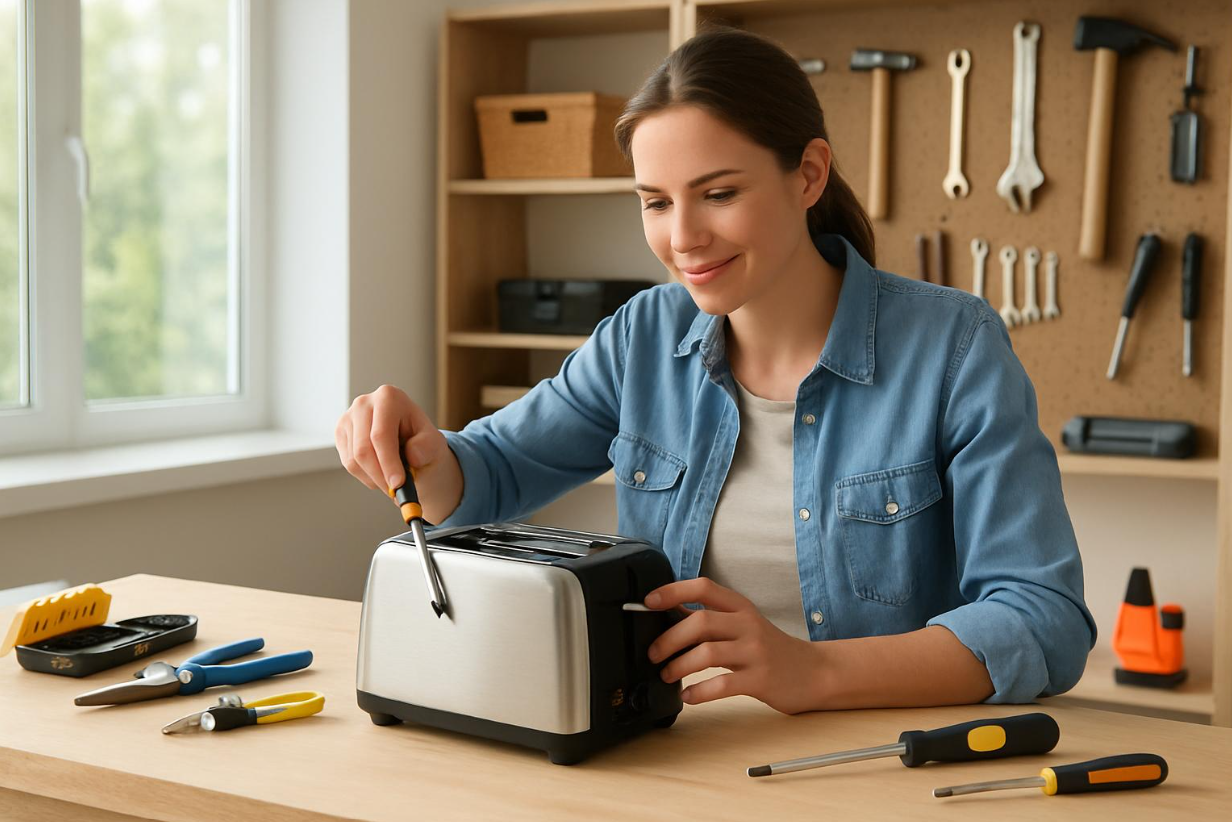
Why a Broken Appliances Can Become a Bigger Financial Decision
Household appliances are easy to take for granted until one stops working. A refrigerator is an appliances that quits cooling can put groceries at risk. A washing machine that refuses to drain can create a pile of laundry. A dishwasher that leaks can damage cabinets and flooring, turning a simple equipment problem into a much larger expense.
The financial challenge is that both choices cost money. Repairing an appliances means paying for diagnosis, replacement parts, and labor without a guarantee that another component will not fail later. Replacing it means paying for a new machine, delivery, installation, and potentially the removal of the old unit.
Neither option is automatically cheaper.
A repair that costs $180 might be excellent value if it restores a relatively new washing machine for several more years. The same repair could be a poor investment if the machine has already suffered several major failures and is likely to need another expensive service call soon.
Replacement can be equally misleading. Buying a new appliances may feel like a permanent solution, but a household can spend hundreds or thousands of dollars unnecessarily by replacing equipment that only needs a minor repair.
The goal is not simply to choose the lowest price today. It is to find the option that delivers the best combination of reliability, useful life, operating costs, and affordability.
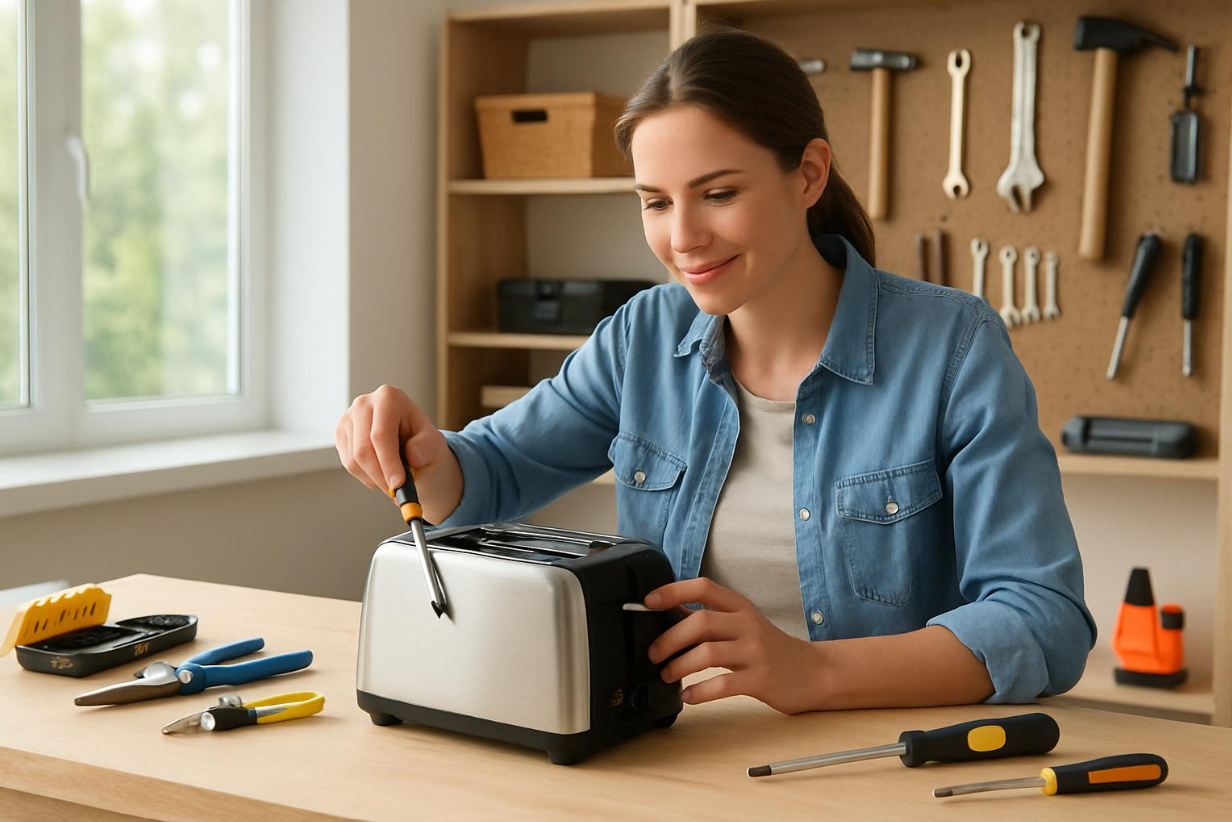
The 50% Rule: A Useful Starting Point, Not a Final Answer
One common way to evaluate an appliances is the 50% rule. It suggests giving replacement serious consideration when a repair costs about half as much as a comparable new appliances.
For example, suppose a new washing machine with similar capacity and features costs $800. A technician quotes $180 to repair your existing machine.
The repair represents 22.5% of the replacement price, making repair worth considering.
Now imagine the technician quotes $450. The repair represents 56.25% of the replacement price. Replacement deserves a closer look, particularly if the machine is old or has a history of breakdowns.
You can calculate the repair percentage with a simple formula:
Repair percentage = Total repair cost ÷ Total replacement cost × 100
The comparison should use the full cost of replacing the appliances, not merely the price displayed on a retailer's website. Include delivery, installation, required accessories, removal fees, and applicable taxes.
However, the 50% rule is a rule of thumb, not a universal standard. It does not account for every appliances, repair type, household budget, or expected remaining lifespan. Consumer Reports, for example, uses appliances-specific survey information, depreciation, age, and repair costs in its repair-or-replace tool rather than relying on a single percentage alone, offers a useful additional reference.
Consider two examples:
- A four-year-old refrigerator: A $400 repair on a comparable $1,200 replacement costs about 33% of the new unit's price. If the refrigerator has otherwise worked reliably, repairing it may make financial sense.
- A twelve-year-old dishwasher: A $350 repair on a comparable $600 replacement costs about 58%. If the dishwasher has also required repeated service, replacement may be the more sensible long-term choice.
The lesson is straightforward: use the percentage to identify when you should investigate replacement, not to make the decision automatically.
Appliances Age Matters More Than Many Owners Realize
Every appliances has a useful lifespan, but there is no exact expiration date. Some machines operate reliably for years beyond typical expectations, while others fail early because of heavy use, poor maintenance, manufacturing defects, or environmental conditions.
Age matters because an appliances that has already delivered most of its expected service life has less time to justify an expensive repair.
A useful starting point is to compare the appliance's age with broad lifespan estimates. The following figures are planning ranges, not promises or guarantees.
Appliances | Illustrative useful-life range |
|---|---|
Refrigerator | About 9–13 years |
Washing machine | About 5–15 years |
Clothes dryer | About 10–14 years |
Dishwasher | About 9–15 years |
Electric range | About 13–17 years |
Microwave oven | Around 9 years |
Actual lifespan varies by model, usage, maintenance, and the source used to estimate it. The National Association of Home Builders, appliances-industry resources, and other organizations do not always publish identical figures. Treat any lifespan chart as a guide rather than a deadline.
The type of failure matters just as much as age. An older refrigerator with a worn door gasket may be worth repairing because the problem is relatively limited. An equally old refrigerator with a major sealed-system failure may be a much less attractive investment.
A newer appliances can also be a poor candidate for repair if it has suffered severe damage or needs an unusually expensive component. Age should influence your decision, but it should never be the only factor.
Ask how much useful life the repair might buy
The most important question is not simply, "How old is this machine?" It is, "How much longer is it reasonably likely to work after this repair?"
Imagine two appliances that each need a $300 repair.
The first is expected to work another five years after the repair. The repair costs approximately $60 per additional year of use.
The second is likely to last only one more year. The same repair effectively costs $300 per additional year.
These are estimates, not predictions. A technician cannot guarantee how long every repaired appliances will last. Still, considering the likely remaining service life makes the comparison more meaningful than looking at the repair bill alone.
Calculate the Cost Per Year Instead of Comparing Prices Alone
A new appliances usually costs more upfront than a repair. But the upfront price does not tell you which option is cheaper over time.
One way to compare them is to estimate the cost per year of future use.
Repair cost per year = Repair cost ÷ Estimated additional years of use
Replacement cost per year = Total replacement cost ÷ Expected years of use
Suppose a repair costs $300 and is expected to provide another three years of service. That works out to $100 per year.
A comparable new appliances costs $900 after delivery and installation. If you expect it to provide ten years of use, its purchase cost works out to $90 per year.
Based on these simplified figures, replacement has the lower annualized cost. But that does not automatically mean buying new is the right decision.
The calculation excludes future repairs, energy use, warranties, financing costs, and uncertainty about how long either appliances will last. It also assumes that the household can comfortably afford the replacement.
A repair may still be the practical choice when cash is limited, even if buying new looks slightly better over a longer period. Avoiding a large immediate expense can matter more than achieving the lowest theoretical cost per year.
The key is to make the comparison honestly. If you expect the repaired appliances to last only a few months, do not calculate its value as if it will work for another five years. Equally, do not assume a new machine will last its entire advertised or estimated lifespan without any additional costs.
Which Appliances Problems Are Usually Worth Repairing?
Some problems involve a relatively small component rather than a fundamental failure. These are often the situations where repair deserves serious consideration, especially when the appliances is otherwise in good condition.
Washing machines
A washing machine may stop draining, fail to fill, vibrate excessively, or refuse to complete a cycle. The cause could be a clogged filter, blocked drain hose, worn belt, faulty pump, damaged lid switch, or a more serious motor or control-board problem.
Start with the owner's manual and basic troubleshooting instructions. A kinked hose or an accessible filter blockage may not require a major repair. Disconnect power before performing any maintenance that the manufacturer permits users to do, and avoid opening electrical components or handling internal wiring.
A modest repair is often attractive when the machine is relatively young and has not experienced repeated breakdowns.
Replacement becomes more appealing when the machine has several problems, extensive corrosion, serious drum or bearing damage, or repeated failures that produce mounting service bills.
Refrigerators and freezers
Refrigerators deserve special attention because they operate continuously and protect food that can spoil when temperatures rise.
Some problems involve door seals, blocked vents, dirty accessible coils, or other maintenance issues. The manufacturer's guidance may help you identify simple steps that do not require dismantling the appliances.
Major cooling-system or compressor work can be expensive, especially on older units. Before approving a substantial repair, ask the technician to explain the diagnosis, whether the component is available, and whether other parts show signs of deterioration.
Do not continue relying on a refrigerator that cannot maintain safe food temperatures. Move perishable food to safe refrigeration when possible, and follow food-safety guidance if food has been exposed to unsafe temperatures.
Dishwashers
Dishwashers can develop drainage problems, leaks, faulty door latches, heating issues, or electronic-control failures.
A clogged filter or drain obstruction may be a manageable problem. A damaged pump or control component may require professional service, but repair can still be worthwhile when the dishwasher has otherwise performed well.
Leaks deserve prompt attention. Even if the dishwasher still runs, continued water leakage can damage flooring, cabinets, and nearby structures. The total cost of ignoring a leak may be much greater than the cost of fixing the appliances.
Dryers
Dryers may stop heating, take too long to dry clothes, make unusual noises, or fail to start.
Blocked lint pathways, restricted exhaust ventilation, and other maintenance issues can affect performance. Clean the lint filter as directed by the manufacturer, and make sure the exhaust system is maintained appropriately.
A dryer that repeatedly overheats, produces a burning smell, or has a damaged electrical connection should not be used until the issue has been assessed. Dryer fires and electrical hazards are not worth risking to save the cost of a service call.
A relatively simple repair may be worthwhile, but a major repair on a very old dryer deserves comparison with the full cost of replacement.
Ovens, ranges, and microwaves
An oven or range may develop an ignition problem, a faulty heating element, a temperature-control issue, or a malfunctioning switch. Some faults are repairable without replacing the entire appliances.
Microwaves require additional caution. Their internal components can retain dangerous electrical charges even after the unit is unplugged. Do not attempt internal microwave repairs unless you are appropriately qualified.
For a low-cost countertop microwave, professional repair can approach the cost of a replacement surprisingly quickly. For a built-in or high-end unit, repair may be more attractive because replacement can involve cabinetry, installation, and matching dimensions.
Across all appliances types, the same principle applies: identify the actual fault before deciding whether the entire machine is finished.
When Replacement Is More Likely to Make Financial Sense
Repair is not always the thrifty choice. Sometimes it simply delays a larger expense while adding another repair bill along the way.
Replacement deserves serious consideration when several of the following conditions apply.
The repair is expensive relative to a new unit. A large repair bill becomes harder to justify when the appliances is already old or a replacement is available at a reasonable price.
Major failures keep recurring. If the same appliances has needed several repairs within a short period, the next repair may not resolve the broader reliability problem.
Parts are unavailable. A machine can be technically repairable but practically unusable if essential components are discontinued, difficult to source, or priced disproportionately high.
The appliances has a safety problem. Serious electrical damage, repeated overheating, unsafe gas operation, or structural damage may justify stopping use and arranging professional assessment. If the appliances cannot be made safe at a reasonable cost, replacement may be necessary.
It no longer meets household needs. A small washing machine may be inefficient for a growing household, or a refrigerator may no longer provide sufficient storage. If you already need a different capacity, spending heavily to restore the old appliance may not be sensible.
Its operating costs are unusually high. An older appliances that consumes significantly more energy than a comparable modern model may justify replacement, especially if it is used frequently.
None of these factors should be considered in isolation. An unavailable part may not matter if a reliable alternative repair exists. A high repair percentage may still be acceptable for a specialized appliances that would be extremely expensive to replace. A low purchase price does not make a new appliances a bargain if it lacks the capacity, durability, or features the household actually needs.
The Hidden Cost of Energy Inefficiency
Energy use can change the repair-versus-replace calculation, particularly for refrigerators and freezers that operate around the clock.
Older appliances may consume more electricity than newer, more efficient models. However, the potential savings depend on the specific machines being compared, their size, how often they are used, local electricity rates, and their condition.
ENERGY STAR says certified refrigerators are about 9% more energy-efficient than models that meet the applicable federal minimum efficiency standard. Its estimates also indicate that replacing an old refrigerator with a qualifying model can produce energy savings over the product's lifetime. Those figures are general estimates, not a guarantee of savings for every household explains the relevant efficiency considerations.
Before replacing an appliances solely to save electricity, estimate the actual difference in running costs.
For example, if a replacement would save $60 annually in electricity and costs $900 after installation, it would take 15 years of those savings to equal the purchase price, ignoring repairs, changing electricity prices, and other benefits.
That calculation does not mean the purchase is necessarily a bad idea. The old appliances might be unreliable, the new one may provide useful features, or the energy savings may be only one part of the decision. But it demonstrates why an efficiency claim should be translated into dollars before it drives a major purchase.
For refrigerators, check the EnergyGuide information where available and compare similarly sized models. The more expensive model is not automatically the cheaper one to own.
Also consider whether the old appliances has avoidable operating problems. Damaged door seals, poor ventilation, inappropriate temperature settings, or neglected maintenance can increase energy consumption. Correcting a relatively simple problem may deliver some savings without the cost of replacement.
Do Not Forget Warranty Coverage and Repair Guarantees
Before paying for a repair or purchasing a replacement, check whether the appliances is still covered by a manufacturer's warranty, an extended service plan, a retailer protection plan, or another applicable agreement.
Coverage varies. A warranty may cover certain parts but exclude labor, transportation, cosmetic damage, or problems caused by misuse. Some plans require you to use an authorized service provider.
Review the actual terms rather than assuming that a recent purchase guarantees a free repair.
If a repair is covered, ask whether there are diagnostic fees, deductibles, or limits on the number of service visits. A covered repair can make fixing an otherwise expensive appliances substantially more attractive.
If the appliances is out of warranty, ask the repair provider whether the work comes with a parts-and-labor guarantee. Find out what happens if the same fault returns shortly after the repair.
A repair guarantee is not the same as a guarantee that the entire appliances will continue operating indefinitely. It usually applies to specified work, components, or time periods. Understanding those boundaries can help you compare quotes fairly.
Replacement also brings warranty considerations. A new appliances may include limited manufacturer coverage, but the exact protection varies by model and seller. Do not assume that every component, service visit, or future failure will be covered.
Get a Diagnosis Before You Commit
One of the most expensive mistakes is making a replacement decision before knowing what is actually wrong.
An appliance that will not start could have a simple power-supply issue, a failed switch, a damaged cord, or a more serious internal fault. A refrigerator that appears to be failing may have an airflow problem rather than a failed compressor.
Start with safe checks recommended in the owner's manual. Confirm that the appliance is connected correctly, check accessible settings, and look for obvious issues such as a blocked filter or a kinked hose when the manufacturer identifies these as user-serviceable items.
Do not repeatedly reset a breaker, bypass a safety mechanism, open sealed components, or work on live electrical parts to avoid a service fee.
When professional diagnosis is needed, ask for an itemized quote that separates:
- The diagnostic or service-call fee.
- The cost of parts.
- Labor charges.
- Delivery or transportation fees, if applicable.
- Any additional work that may be necessary.
- The warranty or guarantee on the repair.
If the repair quote is substantial, consider obtaining a second opinion. This is particularly worthwhile when the diagnosis is uncertain, the appliance is expensive, or replacement would require major installation work.
Be wary of a technician who recommends replacing the entire appliance without explaining the fault, or a seller who dismisses repair as pointless without considering the machine's age and condition.
The aim is not to distrust everyone. It is to make sure the recommendation is based on the appliance rather than the financial interests of the person offering the service.
Compare the Full Replacement Cost
A replacement appliance often costs more than its advertised price. Delivery, installation, removal of the old unit, accessories, and adjustments to existing connections can all add to the total.
Before deciding, obtain the final price for a comparable replacement.
For a refrigerator, check the dimensions, door clearance, capacity, and electrical requirements. For a washing machine, confirm the size, installation requirements, and whether existing hoses or connections can be reused safely. For a built-in dishwasher or oven, check whether the new model fits the existing space.
A cheap appliance that requires expensive modifications may not be the most economical option.
You should also compare like with like. Replacing a basic appliance with a premium model can make repair look artificially attractive because the replacement price is unnecessarily high. On the other hand, choosing a much cheaper model with inadequate capacity may lead to dissatisfaction or an early second purchase.
A sensible comparison uses an appliance that meets your actual needs without charging you for features you are unlikely to use.
If the replacement is a major purchase, ask whether the retailer charges separately for delivery, installation, old-appliance removal, or returning a damaged unit. Check the return policy and delivery terms before paying.
What If You Cannot Afford a Replacement Right Now?
Sometimes the financial calculation points toward replacement, but the household budget cannot absorb the purchase. That is a real constraint, not a budgeting failure.
If the appliance can be repaired safely and reliably, a temporary repair may be a reasonable way to spread the expense over time. Ask the technician whether the proposed work is likely to restore dependable operation or merely address one symptom.
If the appliance presents a safety hazard, however, do not keep using it simply because replacement is unaffordable. Stop using it and seek qualified guidance about safe alternatives.
When replacement is necessary, consider a reliable basic model rather than assuming you need the newest or most feature-rich option. Compare reputable sellers, check warranty terms, and look at properly inspected refurbished appliances where appropriate.
A used or refurbished appliance may reduce the upfront price, but ask about its condition, age, service history, return rights, and any warranty. A low purchase price is less attractive if the unit fails shortly afterward.
You can also compare the cost of temporary alternatives. A laundromat, for example, may help bridge a short gap while you arrange a washing-machine replacement. For a refrigerator, safe temporary food-storage arrangements may be more urgent.
These alternatives are not always convenient or cheap. Include their cost in the decision rather than treating them as free solutions.
If the purchase can wait without creating a safety or essential household problem, set a realistic target and research options before buying. A planned purchase generally offers more control than an emergency decision made after the appliance fails completely.
Environmental Considerations: Repairing Is Not Always Better, but It Can Help
Repairing an appliance can reduce waste by extending the useful life of equipment that would otherwise be discarded. It can also avoid the materials, manufacturing, and transportation associated with a replacement.
But environmental considerations are not as simple as saying that repair is always better.
A very inefficient appliance may consume significantly more electricity over the years than a newer model. A machine with serious structural damage may not be a good candidate for further use. Meanwhile, replacing a working appliance solely to obtain a small efficiency improvement may take a long time to justify its environmental and financial costs.
The most practical approach is to evaluate the appliance's condition, energy use, repair prospects, and likely remaining life together.
If you replace an appliance, look for an appropriate recycling or take-back option. Refrigerators and freezers need particular care because their refrigerants and other components should be handled through suitable recovery and disposal processes. Do not simply abandon them or dismantle sealed systems yourself.
Some retailers offer old-appliance removal when delivering a new unit, but confirm whether the service includes proper recycling and whether a fee applies.
The aim is to avoid both unnecessary replacement and the continued use of equipment that is unsafe, unreliable, or disproportionately costly to operate.
A Practical Repair-or-Replace Checklist
Before making the final decision, work through these questions.
- What exactly failed? Get a clear diagnosis rather than guessing from the symptom.
- Is the appliance covered? Check the manufacturer's warranty, service plan, or retailer protection agreement.
- What is the complete repair price? Include diagnosis, parts, labor, and any additional charges.
- What is the full replacement price? Include taxes, delivery, installation, accessories, and removal.
- How old is the appliance? Compare its age with a reasonable lifespan range, while recognizing that estimates vary.
- How reliable has it been? Consider previous repairs and recurring problems.
- How long might the repair last? Ask the technician for a realistic assessment, not a guarantee.
- Could energy savings matter? Estimate likely savings rather than relying on broad claims.
- Is there a safety issue? Stop using equipment that presents a serious electrical, gas, overheating, or leakage hazard.
- Can the household afford the choice? Consider the immediate cash requirement as well as the longer-term cost.
No checklist can eliminate uncertainty. It can, however, prevent a stressful decision from becoming an expensive impulse purchase.
Worked Example: A Washing Machine That Keeps Breaking
Imagine that your seven-year-old washing machine has stopped draining properly. A technician quotes $220 for the repair, while a comparable replacement costs $750 after delivery and installation.
The repair represents about 29% of the replacement cost. At first glance, that favors repair.
But now consider the machine's history. If this is its first major problem, the drum is in good condition, and the technician expects the repair to restore normal operation, spending $220 may be sensible.
If the machine has already required two repairs in the past year, makes persistent grinding noises, and has a worn drum bearing, the same $220 repair may be less attractive. It might restore the drainage function without resolving the other problems.
Now add the household budget. If paying $750 immediately would mean missing essential bills, a reliable repair could be the more manageable short-term decision. If the repair is unlikely to last and the household can afford a basic replacement, buying new may avoid paying twice.
Notice that the repair percentage has not changed. What changes is the information surrounding it.
This is why appliance decisions should combine arithmetic with a realistic assessment of reliability, future needs, and cash flow.
Conclusions
Deciding whether to repair or replace a broken household appliance is ultimately a comparison of future value, not just today's bill.
The 50% rule can help identify expensive repairs, while appliance age and repair history provide clues about the likelihood of future problems. Cost-per-year estimates can make the alternatives easier to compare, and energy use may matter when an older appliance operates frequently.
Before spending money, obtain a diagnosis, check warranty coverage, compare the full repair quote with the complete replacement price, and ask how much useful life the repair is likely to provide. Do not overlook installation costs, parts availability, safety concerns, or the financial pressure of paying for a replacement immediately.
Most importantly, avoid treating either repair or replacement as the automatic winner. A relatively inexpensive repair can extend the life of a dependable appliance, while replacing an unreliable machine can prevent a cycle of repeated expenses.
For more practical consumer and money guidance, explore Finiuo, Jurnza, and Dryzen Royal. The best household decision is the one that fits your circumstances, protects your budget, and gives you dependable value for the money you spend.