

Your Car's Repair Bill Is Getting Harder to Predict: The Hidden Costs of Modern Vehicle Technology
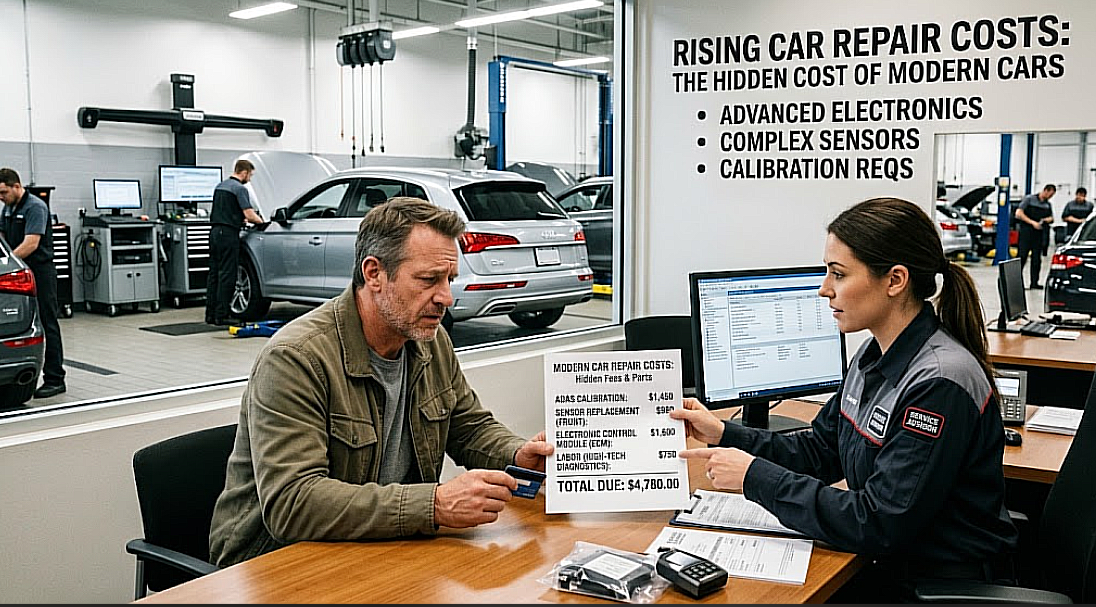
A warning light appears on the dashboard. You take your car to a repair shop expecting a straightforward fix, perhaps a replacement sensor or a minor electrical repair. Instead, the mechanic explains that the vehicle needs diagnostic testing, a replacement component, additional programming, and possibly a calibration procedure. Suddenly, a problem that seemed small has turned into a bill worth hundreds or even thousands of dollars, really big costs.
For many American drivers, this is the frustrating reality of maintaining a modern vehicle. Today's cars offer advanced safety features, sophisticated electronics, touchscreen systems, digital sensors, and computer-controlled components. These technologies can improve safety, convenience, and performance, but they can also make repairs more complicated because they increase repair costs.
The expense is not always limited to the part that failed. A technician may need specialized diagnostic equipment to identify the problem, manufacturer-specific software to configure a replacement component, or precision tools to ensure that a safety system works correctly after repairs.
Even routine work can become more complicated when a vehicle contains cameras and sensors that must be checked after a windshield replacement, bumper repair, or collision.
That does not mean every modern car is unreliable or that drivers should avoid vehicles with advanced features. It does mean that the costs of owning a vehicle involves more than its purchase price, fuel consumption, and insurance premium. Maintenance and repair costs deserve a place in the household budget, too.
Understanding why repairs have become more technical, which expenses catch drivers off guard, and how to evaluate repair estimates can help vehicle owners make better financial decisions.
Why Modern Car Repairs Can Costs More Than Expected
Vehicles have evolved from largely mechanical machines into complex systems combining mechanical components, electronic controls, software, and communication networks.
An older vehicle might use a relatively straightforward component to perform a particular task. A newer model may rely on several connected components, sensors, and control modules to perform the same function.
This integration brings advantages, but it can also make troubleshooting more involved.
Cars Now Depend on More Electronic Components
Modern vehicles use electronic systems to manage functions such as engine performance, braking, stability control, climate control, power steering, and driver assistance.
A problem affecting one component may trigger warning lights or error messages involving another system. A mechanic may need to examine stored diagnostic codes, test electrical connections, inspect sensors, and determine whether the original component has actually failed, and usually original products costs more than copy.
For example, a dashboard warning does not necessarily mean that the component named in the message must be replaced which also adds to the costs. The underlying cause could involve damaged wiring, a poor electrical connection, a software issue, a failing sensor, or another system problem.
Replacing parts without identifying the underlying cause can lead to additional expenses without resolving the issue.
Proper diagnosis therefore matters as much as the repair itself.
Specialized Diagnostics Add to the Costs
Many repair shops use diagnostic scanners and software to communicate with a vehicle's electronic control units. Basic diagnostic tools can retrieve certain fault codes, while more advanced equipment may provide access to manufacturer-specific functions and testing procedures.
The equipment, training, software access, and technician time needed for complicated diagnostics all contribute to the cost of operating a repair facility.
Customers may consequently see a separate diagnostic charge on their estimate. This fee can apply even if the final repair turns out to be relatively simple.
Diagnostic work is not automatically an unnecessary expense. A technician must often spend time identifying the actual fault before recommending a repair. The important question is whether the shop explains what the diagnostic service includes and how the findings support the proposed work.
Before authorizing service, ask whether the diagnostic fee is separate from the repair charge and whether any portion will be credited toward the final bill.
Replacement Parts May Require Programming
Some modern components cannot simply be installed and expected to work immediately.
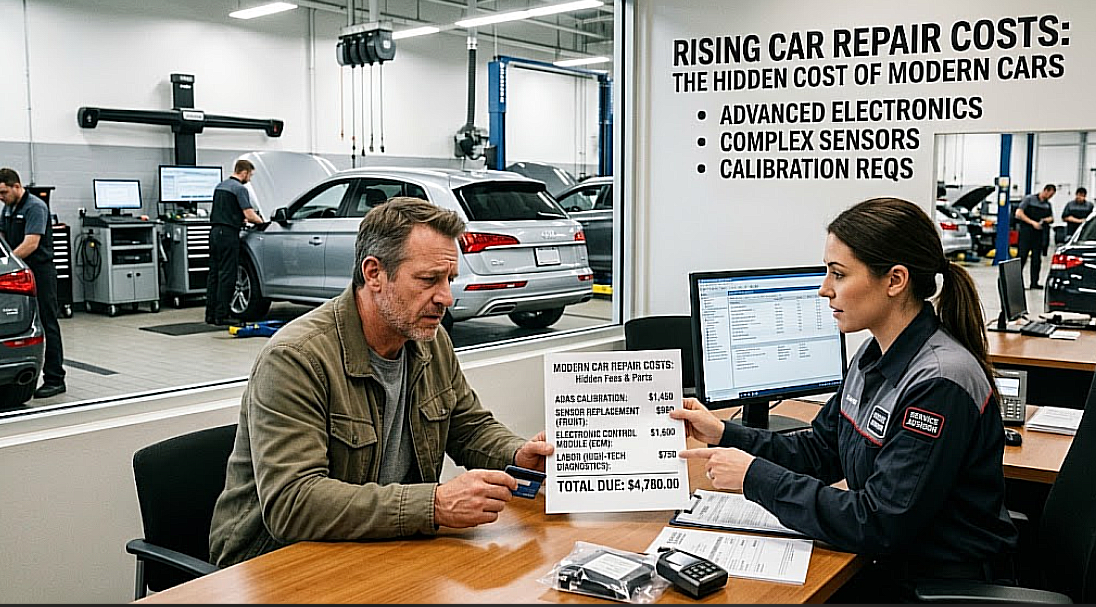
Depending on the vehicle and component, a replacement module, sensor, or electronic assembly may need coding, programming, initialization, or configuration.
For instance, replacing an electronic control module may require the technician to configure it for the specific vehicle. Certain sensors may need to be calibrated so that the system interprets information accurately.
These procedures can require additional labor, specialized equipment, manufacturer information, or access to specific software.
When reviewing an estimate, ask the shop to separate the cost of the part from installation, programming, calibration, and diagnostic work. Understanding each line item makes it easier to compare estimates and determine whether the total is reasonable.
The Hidden Expense of Advanced Driver Assistance Systems
One of the clearest examples of modern repair complexity is the growing use of advanced driver assistance systems, commonly known as ADAS.
These systems use cameras, radar, ultrasonic sensors, and other technologies to support functions such as automatic emergency braking, lane-departure warnings, adaptive cruise control, blind-spot monitoring, and parking assistance.
They can provide important safety benefits, but repairing the components that support them may be expensive.
A Small Collision Can Damage Expensive Sensors
A minor collision may damage more than the visible bodywork. Depending on the vehicle, the impact could affect a radar sensor behind the grille, a parking sensor inside a bumper, a camera mounted in a side mirror, or other equipment used by safety systems.
The exterior damage might appear relatively minor, yet the vehicle may require additional testing and repairs to restore its electronic safety features.
A 2023 study by AAA examined ADAS repair costs on three vehicle models. It reported additional costs for certain components ranging from hundreds to more than $1,500, excluding ordinary collision-related bodywork.
In the study, front radar sensors used for functions such as automatic emergency braking and adaptive cruise control had estimated replacement and calibration costs of $500 to $1,300. Certain camera systems and mirror-mounted equipment could cost even more.
These figures are examples from specific vehicles and repair scenarios, not universal prices or guaranteed estimates for 2026. Actual costs depend on the model, the damaged components, labor rates, and the work required.
The financial lesson is that a minor accident can create a larger repair bill than the visible damage suggests.
Calibration Is Different From Replacing a Part
A replacement camera or radar sensor may need to be calibrated so that it accurately detects objects and measures distances.
Calibration procedures vary by vehicle and system. Some require specialized targets and controlled workshop conditions. Others may involve a road procedure or a combination of methods.
This work is not merely an optional software adjustment. A poorly calibrated safety sensor may provide inaccurate information or prevent a driver assistance feature from operating correctly.
After certain windshield replacements, bumper repairs, suspension work, or collision repairs, calibration may be required according to the vehicle manufacturer's procedures.
When requesting an estimate, ask whether calibration is necessary, whether it will be performed in-house or by another provider, and whether the completed work will be documented.
Do not skip required calibration simply to reduce the bill. Saving money on an improperly restored safety system can create a much more serious risk.
Windshield Replacement May Involve More Than Glass
A cracked windshield can appear to be a simple glass-replacement job. However, some vehicles have forward-facing cameras mounted near the windshield that support lane-keeping assistance, automatic emergency braking, or traffic-sign recognition.
If the camera must be removed, repositioned, or recalibrated during replacement, the job may require additional equipment and labor.
This is one reason windshield estimates can vary between vehicles that look similar from the outside.
Before approving the work, provide the glass shop with the exact make, model, year, and relevant equipment details. Ask whether the quoted price includes any required camera calibration and how the shop will verify that the system operates correctly afterward.
A low quote that excludes necessary work may not be cheaper once every required service is added.
Why a Dashboard Warning Can Lead to an Expensive Bill
A dashboard warning is an invitation to investigate a problem, not a complete diagnosis.
The same warning light can be associated with different faults, and the repair cost depends on the actual cause.
The Check Engine Light
The check engine light can indicate problems involving emissions equipment, ignition components, fuel delivery, airflow sensors, or other engine-management systems.
Some causes are relatively inexpensive to address. Others, including certain catalytic-converter failures, can be costly.
CarMD's 2026 Vehicle Health Index reported that the average repair cost associated with check-engine-light problems reached $554 for repairs recorded during 2025, a 33% increase compared with the previous year.
That is a reported average for the analyzed repairs, not a prediction that every illuminated check engine light will cost $554 to fix. Individual repairs can be substantially cheaper or more expensive.
Drivers should avoid guessing at the cause based on the warning alone. A diagnostic assessment can help establish what is wrong and whether the problem requires immediate attention.
If the light is flashing, the engine is running poorly, or the vehicle displays other serious warnings, consult the owner's manual and seek professional advice promptly. Continuing to drive with certain faults can cause additional damage.
Tire Pressure and Other Sensor Warnings
Some vehicles use electronic sensors to monitor tire pressure. Depending on the system, a warning may result from an underinflated tire, a sensor issue, or another problem.
A driver should first check tire pressure using the vehicle manufacturer's recommended values, which are usually listed on the driver's door placard or in the owner's manual.
If the warning remains after correcting the pressure, the system may require further diagnosis. Sensor replacement, relearning procedures, or other work may be needed depending on the vehicle.
The same principle applies to other warning messages: identify the underlying problem before authorizing a replacement part.
When Multiple Warning Lights Appear
Several dashboard warnings can appear together when one fault affects connected systems or when a vehicle's electrical supply has a problem.
That does not automatically mean every system displaying a warning has failed independently.
A qualified technician can evaluate stored codes, test the relevant systems, and determine which faults are primary and which may be secondary effects.
Ask the shop to explain the diagnostic results in plain language. A clear explanation should connect the symptoms, test findings, recommended repair, and expected outcome.
You do not need to become a mechanic to make an informed decision. You simply need enough information to understand what you are being asked to pay for.
The Repair Costs Drivers Often Forget to Budget For
Unexpected repairs are frustrating partly because drivers tend to budget for predictable ownership costs. Fuel, insurance, registration, and scheduled maintenance are relatively easy to anticipate. An electronic fault or damaged sensor is much harder to plan for.
Several less obvious expenses can make the final repair bill substantially higher than the initial quote.
Diagnostic Fees
A shop may charge for the time required to inspect the vehicle, retrieve fault codes, test components, and identify the source of a problem.
The diagnostic fee may be charged separately from repairs, even if the customer decides not to proceed. Some shops may apply part of the fee toward an approved repair, but drivers should never assume that this is standard practice.
Ask these questions before leaving the vehicle:
- What is the initial diagnostic fee?
- What testing does the fee cover?
- Will additional diagnostic work require further approval?
- Will the fee be credited toward the repair?
- Will the shop contact you before exceeding the agreed budget?
These questions help prevent misunderstandings when the final invoice arrives.
Labor for Complicated Repairs
Labor costs depend on more than the number of minutes a mechanic spends turning a wrench.
A component may be difficult to access, require surrounding parts to be removed, or involve a procedure specified by the manufacturer. Some jobs also require specialized training and equipment.
A repair that sounds simple, such as replacing an electronic component, may involve several additional steps before the vehicle can be returned safely to the road.
When comparing estimates, look at the labor description and ask why the procedure is necessary. Different shops may quote different labor times or hourly rates, so comparing the full scope of work is more useful than comparing the final totals alone.
Software, Calibration, and Additional Testing
Modern repairs may include software updates, programming, sensor calibration, and post-repair testing.
These services can be legitimate requirements, but customers should understand whether they are included in the quoted labor or charged separately.
For safety-related systems, ask how the shop will confirm that the repaired system is working properly. A complete repair may require more than installing a new component and clearing a warning light.
Parts Availability and Special Ordering
Some vehicle components are widely available, while others may need to be ordered from a dealer or specialist supplier.
A less common part, an electronic module, or a component specific to a particular model may take longer to obtain. Delivery time and availability can affect how long the vehicle remains out of service.
If the repair is not urgent, ask whether there are alternative sources for the part and whether those alternatives meet the manufacturer's requirements.
For safety-critical equipment, reliability and compatibility should take priority over finding the lowest possible price.
Rental Cars and Lost Time
The cost of a repair does not always end with the garage invoice.
If a vehicle must remain at the shop for several days, the owner may need a rental car, rideshare trips, public transportation, or help from family members. Someone who depends on a vehicle for work may also lose income if transportation becomes unavailable.
These indirect expenses can make an otherwise manageable repair more disruptive.
When discussing the job with the shop, ask for an estimated completion date and whether any parts are on back order. If the vehicle is covered by a warranty or service contract, check whether rental-car reimbursement or alternative transportation benefits apply.
Do not assume those benefits exist; coverage varies by contract.
How to Read a Car Repair Estimate Without Getting Caught Off Guard
A written estimate is one of the most useful tools available to a vehicle owner. It creates a record of the proposed work and gives the customer an opportunity to ask questions before authorizing additional spending.
The Federal Trade Commission recommends obtaining a written estimate for repairs and ensuring that the document identifies the problem, required parts, and anticipated labor costs.
Separate Necessary Repairs From Recommended Maintenance
Repair shops may identify several issues during an inspection. Some require immediate attention, while others can be monitored or addressed later.
Ask the technician to distinguish among:
- Repairs required to address the current fault.
- Safety-related issues that need prompt attention.
- Maintenance that is due according to the manufacturer's schedule.
- Additional services that are recommended but not immediately necessary.
Request an explanation of the risks of postponing each item. This helps you prioritize spending without ignoring important safety or reliability concerns.
Be especially careful when a shop recommends multiple services that were not part of the original complaint. The recommendations may be valid, but you should understand why each one is needed.
Ask for an Itemized Estimate
An itemized estimate should make it possible to understand the major cost components.
Depending on the repair, those may include diagnostic work, parts, labor, programming, calibration, shop supplies, taxes, and other applicable charges.
If a line item is unclear, ask what it covers. If a part is being replaced, ask whether the quoted part is new, remanufactured, rebuilt, or used.
The lowest initial estimate is not always the best value. One shop may include required calibration and testing, while another may quote only the replacement part and installation.
Compare estimates for the same scope of work.
Set a Spending Limit Before Work Begins
Tell the shop how much it may spend without contacting you for additional approval. Ask for confirmation of that arrangement in writing.
For example, you might authorize diagnosis up to an agreed amount but require a phone call before any repair begins. Alternatively, you may approve a specific repair while requiring further approval for unrelated findings.
The exact approach depends on the job and local requirements, but the principle is straightforward: make sure the shop knows the limits of your authorization.
If additional problems are discovered, ask for an updated estimate before agreeing to more work.
Know That Repair Rules Vary by State
Consumer protections for auto repairs are not identical across the United States. States may have different requirements involving written estimates, authorization, invoices, warranties, and disputes.
The FTC's general guidance is a useful starting point, but consumers should also check their state attorney general's office or relevant consumer-protection agency for local rules.
If a shop performs unauthorized work or charges for services you did not approve, keep copies of estimates, invoices, messages, and other records. Contact the appropriate state consumer-protection authority if you cannot resolve the issue directly.
How to Save Money on Modern Car Repairs
Reducing repair expenses does not mean refusing necessary work or choosing the cheapest part available. It means making informed decisions, preventing avoidable damage, and comparing services appropriately.
Follow the Manufacturer's Maintenance Schedule
Preventive maintenance remains important even as vehicles become more computerized.
Oil changes, fluid checks, tire maintenance, brake inspections, and other scheduled services help identify problems before they become more serious. The appropriate intervals depend on the vehicle and driving conditions, so the owner's manual should be the primary reference.
Be cautious about automatically accepting every extra service recommended by a repair shop. Compare those recommendations with the manufacturer's maintenance schedule and ask for a clear explanation of any additional work.
Maintenance cannot prevent every electronic failure, but it can reduce certain avoidable problems and help protect the vehicle's long-term reliability.
Get a Second Opinion on Expensive Repairs
If a repair estimate is unexpectedly high, a second opinion may be worthwhile, especially when the vehicle remains safe to drive and the repair is not urgent.
Ask another reputable shop to evaluate the same symptoms and review the proposed repair. Explain what testing has already been performed and provide any available diagnostic findings.
Keep in mind that a second shop may charge its own diagnostic fee. Ask about that cost before scheduling the appointment.
Also, do not assume that a disagreement between two estimates proves that one shop is dishonest. Different diagnostic findings, repair methods, labor rates, and parts choices can produce different prices. Ask each shop to explain its reasoning.
Compare Dealerships and Independent Repair Shops
Dealership service departments may have access to manufacturer-specific tools, technical information, and training. Independent repair shops can also provide high-quality service, and some specialize in particular makes or electronic systems.
The best choice depends on the repair, the vehicle's age, warranty conditions, local labor rates, and the shop's capabilities.
When comparing providers, ask whether they have experience with your vehicle, whether they can perform any required programming or calibration, and whether the quoted price includes the entire job.
Certifications, reviews, clear communication, and written estimates can help you assess a shop, although none of these factors alone guarantees a perfect repair.
Check Warranty and Recall Coverage
Before paying for an expensive repair, check whether the component is covered by the manufacturer's warranty, an extended service contract, or an applicable recall or service campaign.
Coverage depends on the vehicle, component, mileage, time in service, and the terms of the relevant program.
A recall repair may be covered without charge under applicable rules, but not every failure is associated with a recall. Likewise, an extended service contract may contain exclusions, deductibles, approval requirements, or limits.
Use the manufacturer's official website or contact an authorized dealer to verify coverage. In the United States, the National Highway Traffic Safety Administration also provides a vehicle identification number lookup for open safety recalls.
Do not authorize a paid repair until you have checked whether a relevant coverage option applies, unless delaying the work would create an immediate safety concern.
Ask About Parts Options
Depending on the repair, a shop may offer original-equipment parts, aftermarket parts, remanufactured components, or used parts.
These options are not interchangeable in every situation. Quality, compatibility, warranty protection, and availability vary by component and supplier.
For a noncritical component, a reputable aftermarket part may be a reasonable option. For certain electronic or safety-related components, the vehicle manufacturer may specify particular parts or procedures.
Ask the shop to explain the available choices and how each option affects price, reliability, warranty coverage, and compatibility.
Avoid choosing a cheaper part simply because the upfront cost is lower. A part that fails prematurely or cannot be configured correctly may create additional expenses.
Keep Repair Records
Maintain copies of invoices, estimates, diagnostic reports, warranty documents, and maintenance records.
These records help you identify recurring problems, verify previous repairs, and provide useful information when another technician examines the vehicle.
They may also help establish whether a recently replaced component is covered by a parts or labor warranty.
If a warning light returns shortly after a repair, contact the shop and explain what has happened. Review the original invoice and ask whether the new symptom may be related to the previous work.
A clear repair history can save time and reduce the risk of repeating diagnostic steps unnecessarily.
What Drivers Should Consider Before Buying a Technology-Heavy Car
Repair costs should be part of the vehicle-buying decision, not an afterthought that appears only when something breaks.
Two vehicles with similar purchase prices may have different long-term ownership costs because of differences in parts availability, repair complexity, service requirements, and local technician expertise.
Before buying a new or used vehicle, consider the following factors.
Research Common Repair Issues
Look for credible information about common problems affecting the specific make, model, and model year. Pay attention to recalls, technical service information where available, and recurring complaints involving expensive components.
Online owner discussions can provide useful clues, but individual anecdotes do not establish how frequently a problem occurs. Look for consistent patterns and verify important claims with reliable sources.
Check Local Repair Capabilities
A vehicle may require specialized equipment or training for certain repairs. Before buying, find out whether reputable local shops can service the model and perform any required calibration or programming.
This is particularly relevant for vehicles with advanced driver assistance systems, complex electronics, or less common powertrains.
If only a limited number of shops can handle a particular repair, convenience and labor costs may become important considerations.
Consider the Cost of Replacement Components
Research the likely cost of common wear items and components that may eventually need attention. These can include tires, brakes, batteries, sensors, windshield glass, and electronic assemblies, depending on the vehicle.
A purchase price that appears attractive may be less appealing if routine parts are unusually expensive or difficult to obtain.
A pre-purchase inspection by an independent mechanic can also identify existing problems before you commit to buying a used vehicle.
Evaluate the Full Cost of Ownership
The real cost of a car includes depreciation, insurance, fuel or charging, registration, maintenance, repairs, and any financing expenses that apply.
A vehicle with advanced features may provide worthwhile safety and convenience benefits. The goal is not to avoid technology but to understand the trade-offs before making a purchase.
Choosing a car that fits your transportation needs, repair budget, and access to qualified service providers can help prevent expensive surprises later.