

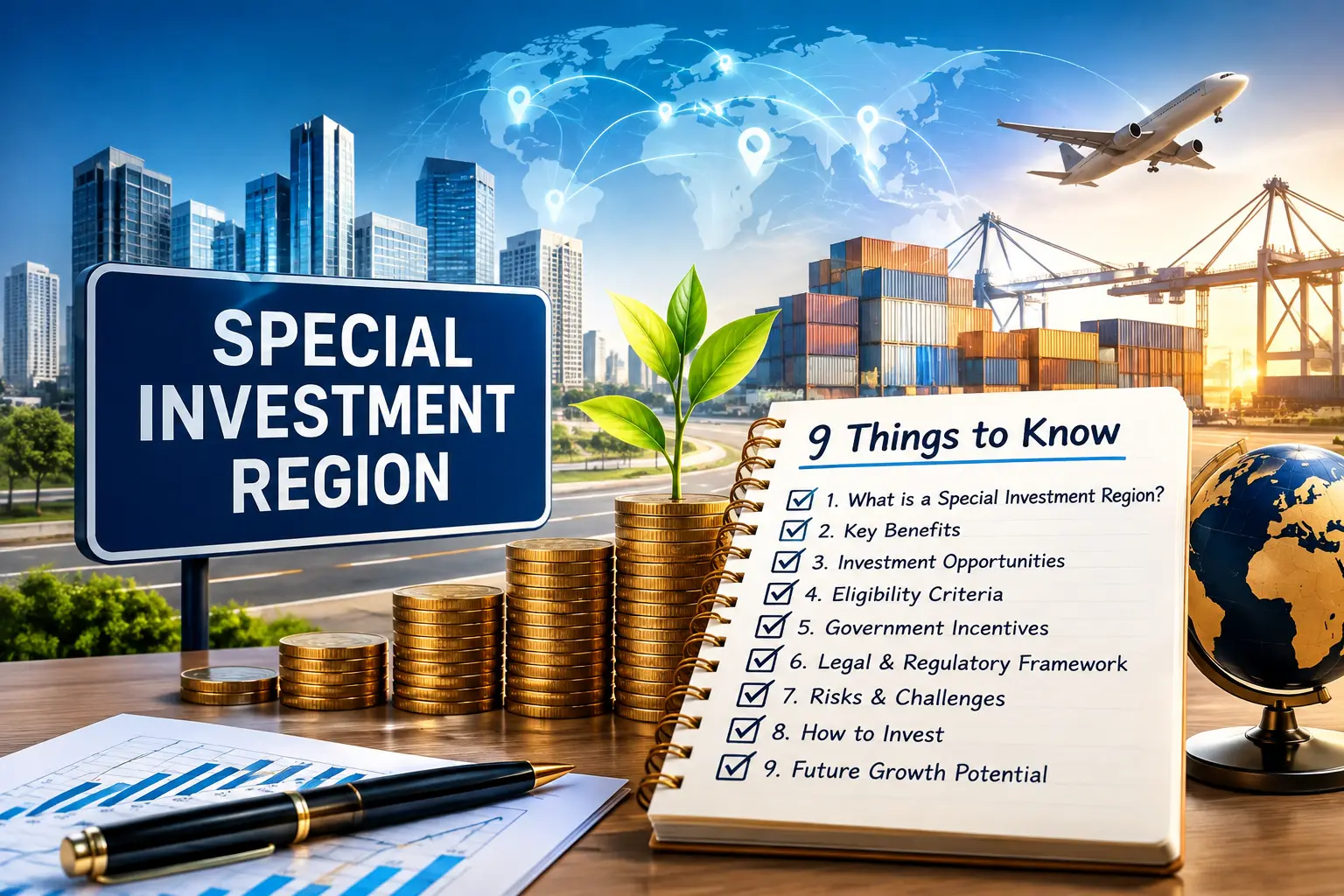
A special investment region is a large-scale, government-notified industrial and urban development zone designed to pull in massive capital and speed up regional economic growth. This guide covers nine things worth knowing before you consider an investment tied to one, from the legal framework behind the model to the red flags worth watching for on the ground.
What Is a Special Investment Region
A special investment region, commonly shortened to SIR, is a designated area combining industrial activity with urban planning, housing, logistics, and social infrastructure under a single regional development framework. Gujarat pioneered the concept in India through the Gujarat Special Investment Region Act of 2009, defining an SIR as an existing or proposed investment region covering more than 100 square kilometers, or an industrial area between 50 and 100 square kilometers, formally declared by the state government.
Unlike a narrow industrial park, an SIR aims to function as a self-contained economic hub, integrating manufacturing, commercial space, residential development, and environmental management within one planned boundary. Governments back the model with dedicated legislation, single-window regulatory clearance, and long-term infrastructure investment.
SIR vs SEZ: What Is the Difference
A Special Economic Zone focuses primarily on export-oriented industry within a comparatively small, tightly regulated boundary. A special investment region takes a broader approach, folding residential and commercial development into the same footprint alongside industry.
Factor | Special Investment Region | Special Economic Zone |
|---|---|---|
Primary focus | Integrated regional development | Export-oriented industry |
Typical size | 100+ square kilometers | Usually smaller, tightly bounded |
Land use mix | Industrial, residential, commercial | Predominantly industrial |
Governing framework | State-specific legislation | National SEZ policy |
Development timeline | Long-term, multi-decade | Often shorter, phased |
Nine Things to Know Before You Invest
1. Gujarat Started the Model With Dedicated Legislation
The Gujarat Special Investment Region Act of 2009 created the legal foundation other Indian states later referenced when designing their own frameworks. This legislation gives an SIR formal governmental authority, including tax treatment and infrastructure planning, distinguishing it from an informal or developer-marketed zone lacking legal backing.
2. Dholera Is the Flagship Example, Not the Only One
Dholera SIR in Gujarat, spanning roughly 920 square kilometers as part of the Delhi Mumbai Industrial Corridor, stands as the most cited example of the model in action. Treat Dholera's scale and infrastructure progress as a reference point rather than a guarantee every SIR project follows the identical timeline or funding level.
3. Other States Are Building Their Own Frameworks
Karnataka introduced its own legislation in 2022, proposing regions such as the Bidadi Special Investment Region under a similar model. Implementation levels vary meaningfully by state, so a project's legal standing in one state offers no guarantee about a similarly named project elsewhere.
4. Size Thresholds Define What Qualifies as an SIR
Under Gujarat's original framework, a region needs to cover more than 100 square kilometers, or an industrial area needs to span 50 to 100 square kilometers, before a state government formally declares SIR status. A smaller development marketed loosely as an SIR without meeting this threshold, or without formal government notification, deserves closer scrutiny before you commit funds.
5. SIRs Blend Industrial, Residential, and Social Infrastructure
The model's core appeal lies in this integration, since a worker commuting into a pure industrial zone from a distant town adds cost and time an SIR aims to design away. Housing, schools, healthcare, and civic amenities sit inside the planned boundary alongside factories and logistics hubs.
6. Government Incentives Are a Core Part of the Model
Single-window clearance, tax holidays, subsidies, and duty exemptions commonly accompany SIR status, since the incentive structure exists specifically to attract large-scale capital otherwise going elsewhere. Model out a potential return with Finiuo's ROI calculator before you weigh any tax incentive claim against the actual investment cost.
Confirm which incentives apply to your specific investment type, since blanket claims about tax benefits sometimes overstate what applies to a land purchase versus an operating business.
7. Location Near Trade Corridors Drives Long-Term Value
SIRs positioned near ports, highways, rail freight corridors, or major airports carry a structural advantage, since proximity to these networks lowers the cost of importing raw materials and exporting finished goods. Dholera's link to the Delhi Mumbai Industrial Corridor and an upcoming international airport illustrates why location analysis matters as much as the incentive package itself.
8. Infrastructure Completion Matters More Than Announcements
A government notification declaring SIR status marks the start of a multi-decade development process, not the finish line. Judge a specific project on its actual infrastructure completion, industrial occupancy, and export contribution rather than the marketing language surrounding its initial announcement.
9. Land Acquisition and Legal Title Carry Real Risk
Large-scale land acquisition for an SIR often involves complex negotiations with existing landowners and farmers, a process sometimes running into legal disputes or delays. Verify clear title and government-recognized boundaries on any specific parcel before you commit funds, since informal land deals near a planned SIR carry meaningfully more legal risk than land already inside a notified, surveyed boundary. Jurnza's real estate law guide covers what a real estate attorney checks during a property purchase.

Why the Term Shows Up in Indian Civil Service Exam Prep
Searches for special investment region alongside the term UPSC point to India's civil service exam preparation, since regional economic policy frequently appears on the syllabus. A concept becoming academically and politically prominent often signals sustained government focus, a useful signal for an investor gauging whether a state's commitment to its SIR framework runs deep or shallow.
Considerations for Foreign and NRI Investors
Foreign nationals and non-resident Indians face additional regulatory steps beyond what a domestic investor navigates, including foreign investment rules governed by India's central bank and specific sector caps depending on the industry involved. Plan your funding timeline with Finiuo's savings goal calculator to prepare for a multi-year capital commitment. Currency conversion, repatriation rules for any future proceeds, and cross-border tax treatment all deserve review with a professional familiar with both Indian regulation and your home country's tax code before you commit capital from outside India.
How to Evaluate an SIR Investment Opportunity
Work through each step methodically rather than relying on a single conversation with a broker or developer. Compare the total cost of entry, including any fees, against your expected timeline with Finiuo's APR calculator if any part of the purchase involves financing.
- Confirm the SIR holds formal government notification under the relevant state legislation, rather than developer marketing material alone.
- Review the master plan and current infrastructure completion status directly through the regional development authority's official records.
- Verify clear legal title on any specific parcel through an independent title search rather than relying on a seller's documentation alone.
- Assess proximity to completed transport and utility infrastructure, since distance from operational roads and power sharply affects near-term value.
- Consult a qualified real estate attorney or financial advisor familiar with the specific state's SIR framework before you sign any purchase agreement.
Common Mistakes Investors Make With SIR Land
Buying land near a planned SIR based on a broker's promise of imminent government notification, rather than confirmed legal status, exposes a buyer to a project never materializing as marketed. Skipping an independent title search allows a buyer to purchase land with a defective or disputed title, a common issue in fast-growing land markets. Track your total committed capital against your broader financial plan with Finiuo's debt snowball calculator if this purchase sits alongside other outstanding obligations.
Treating every project called a special investment region as equally credible ignores the wide gap between a flagship project like Dholera and a smaller, less developed initiative elsewhere. Ignoring the multi-decade timeline typical of large-scale regional development leads some investors to expect returns on a timeline the underlying infrastructure cannot support.
Is Investing in a Special Investment Region Right for You
An SIR investment suits an investor with a long time horizon, a tolerance for the risk inherent in large-scale infrastructure projects, and the resources for thorough legal due diligence before committing funds. Land inside a well-established, notified SIR with visible infrastructure progress carries a different risk profile than raw land marketed on the promise of a future SIR designation not yet arrived.
This guide covers general information only and is not financial or legal advice. Confirm every claim about legal status, infrastructure completion, and government incentives directly with official state records, and work with a licensed attorney and financial advisor familiar with the specific jurisdiction before committing capital.
Conclusion
A special investment region represents an ambitious regional development model combining industry, housing, and infrastructure under a single legal framework, with Gujarat's Dholera project standing as the clearest example of the concept in motion. Confirm formal government notification, verify legal title independently, and treat the multi-decade development timeline honestly before you commit capital to land tied to any SIR project.