

You Saved $10 but Spent $40 More: How Retail Loyalty Programs Influence Your Spending
Retail loyalty programs promise an appealing deal: sign up for a free membership, scan an app at checkout, collect points, and unlock discounts that other shoppers may not receive. Grocery stores offer member prices, pharmacies send personalized coupons, restaurants award points, and retailers advertise exclusive promotions to customers who join their rewards programs.
On the surface, the arrangement sounds simple. You shop, you earn rewards, and you save money.
But there is another side to the equation. Loyalty programs are also designed to encourage repeat purchases, keep customers shopping at the same business, and influence what they buy. A discount may help you spend less on something you already planned to purchase. A reward can also persuade you to make an extra trip, choose a more expensive product, or spend more than you intended just to unlock a benefit.
That is where the financial question becomes interesting: Are you saving money because of a loyalty program, or are you spending more because the program makes shopping feel rewarding?
The answer depends on how you use it. Loyalty programs can provide genuine value when their discounts match your normal shopping habits. They become less useful when the pursuit of points, coupons, and member-only deals starts controlling your decisions.
Understanding this difference can help you enjoy the benefits without letting a rewards program quietly increase your spending.
What Retail Loyalty Programs Actually Do
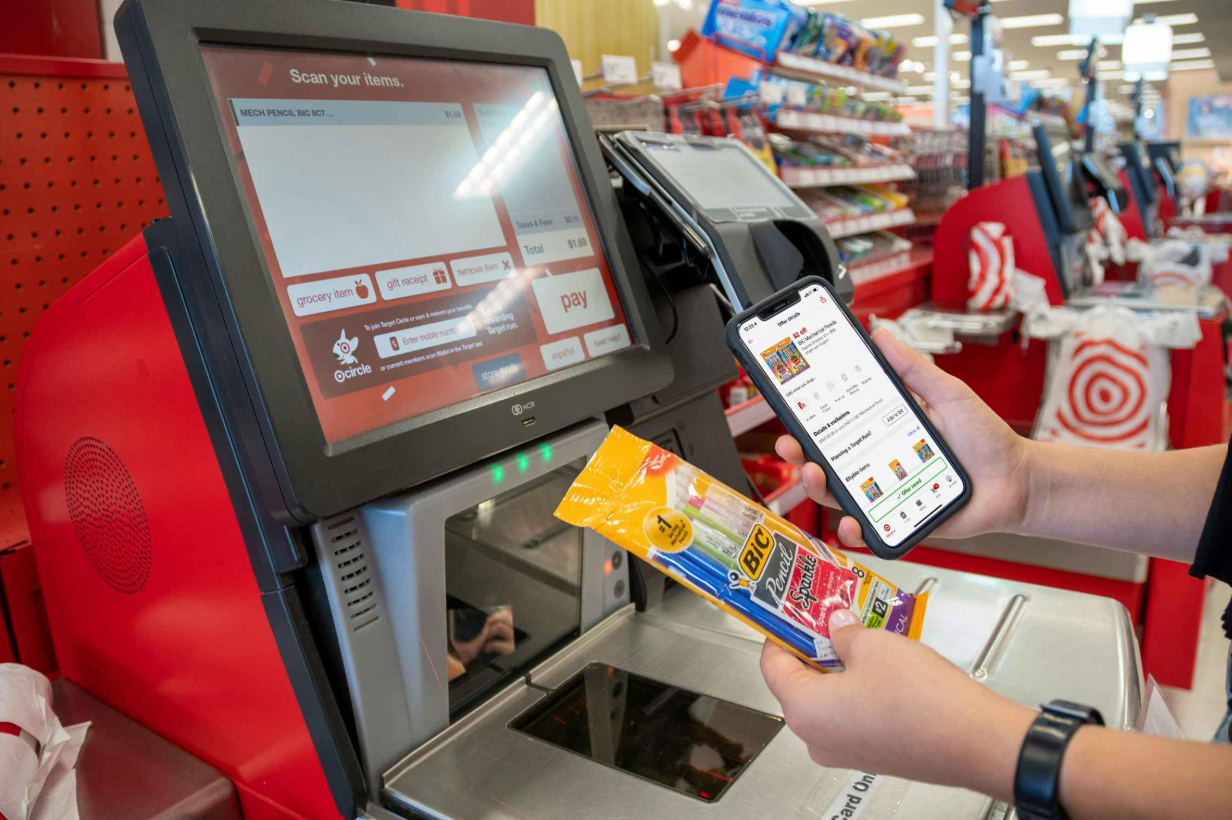
A retail loyalty program is a system through which a business rewards customers for shopping with it. The rewards may include discounts, points, cashback-like credits, free products, personalized coupons, birthday offers, or access to special promotions.
These programs appear in many parts of everyday life.
- Grocery stores: Member-only prices, digital coupons, fuel rewards, and discounts on selected products.
- Pharmacies: Store credits, points, personalized offers, and discounts on eligible purchases.
- Restaurants and coffee shops: Free drinks, points toward meals, birthday rewards, and offers based on purchase frequency.
- Clothing and department stores: Member pricing, early access to sales, reward certificates, and spending-based benefits.
- Travel and hospitality businesses: Points or status benefits for repeat bookings, stays, or purchases.
Some programs provide straightforward savings. A grocery store might offer a member price of $3 for an item that costs $4 without a membership. If you already planned to buy that item, the discount reduces your bill.
Other programs reward customers after they spend a certain amount. A retailer might offer a $10 reward after $100 in qualifying purchases. This can be useful if you were already going to spend $100 on eligible items. It is less attractive if you buy additional products simply to cross the threshold.
The distinction matters because retailers measure success differently from shoppers. A business may view a program as successful when customers visit more frequently, spend more over time, or become less likely to shop with competitors. Consumers should judge it by a different standard: whether it improves the value they receive without causing unnecessary spending.
The Psychology Behind the Loyalty Program Trap
Loyalty programs do not need to deceive customers to influence their behavior. Their structure alone can make shopping feel more rewarding and encourage decisions that would otherwise seem unnecessary.
1. Points make spending feel like progress
Imagine a store gives you one point for every dollar you spend. You need 500 points to receive a $10 reward.
After spending $450, you are close to the target. You might start looking for another purchase to reach 500 points, even if you do not need anything.
The reward creates a sense of progress. Instead of asking whether the next purchase is worthwhile, you begin thinking about how close you are to completing the goal.
This can be especially tempting when the remaining gap looks small. Spending another $50 to earn a $10 reward is not a good deal if you would not otherwise have made that purchase. You would be spending $50 to unlock a benefit worth $10.
Of course, the calculation changes if the additional $50 covers necessities you were already planning to buy. In that case, the reward may represent a genuine saving.
The key is to separate planned spending from spending created by the reward itself.
2. Member-only prices can make ordinary prices feel like penalties
A shelf label might show a regular price of $5 and a loyalty price of $3.50. The lower price looks like an opportunity, while the higher price may feel like a penalty for not participating.
Sometimes the difference is substantial. Other times, a competing store may offer the same product for $3.25 without requiring a membership.
The member price alone does not tell you whether you are getting the best deal. You need to compare the actual price with reasonable alternatives.
It is also worth remembering that a displayed discount does not automatically prove that the product is inexpensive. The price before the discount may be higher than a competitor's everyday price.
A loyalty card can unlock a real reduction without making the retailer the cheapest option.
3. Personalized coupons can pull you back into the store
Retailers may use purchase histories and account activity to decide which promotions to send to individual customers. A shopper who regularly buys coffee may receive coffee discounts. Someone who purchases pet supplies might see offers related to those products.
Relevant offers can be convenient. The risk is that a coupon can create a reason to shop when you had no intention of buying anything.
A message saying that a favorite product is discounted for a limited time can make waiting feel like missing out. The shopper may visit the store, buy the discounted product, and add other items to the basket.
A useful rule is to ask whether the purchase would still make sense without the coupon. If the answer is no, the promotion may be creating demand rather than helping you meet an existing need.
4. Rewards can make small purchases feel harmless
Spending $7 to earn points may seem insignificant. Repeating that decision several times a week can have a different result.
For example, someone might make extra coffee-shop visits to collect points toward a free drink. Each purchase feels small, and the future reward makes the expense seem worthwhile.
But the relevant comparison is not simply the cost of the paid drinks against the price of a free one. It is the total amount spent because of the program compared with what the customer would otherwise have spent.
If the person would have purchased the drinks anyway, the reward can provide value. If the person visits more often solely to earn points, the program may increase total spending.
Are Loyalty Programs Proven to Make People Spend More?
Research suggests that rewards can influence shopping behavior, but the effect is not identical for every program or customer.
A study published in the Journal of Retailing and Consumer Services examined why consumers join grocery loyalty programs and found that participation is shaped by factors such as price sensitivity, attitudes toward loyalty schemes, and privacy concerns. Its findings also highlight that different types of programs attract consumers for different reasons.
Other research examining grocery loyalty programs has found that membership can have a positive effect on the share of a household's spending going to a retailer, but that the effect is much smaller when researchers account for the fact that people who already prefer a store are more likely to join its program.
Research on targeted coupons and reward points has also found that these mechanisms can increase shopping trips and expenditures in the program studied. That does not mean every customer will spend more, or that every program is harmful. It does show why rewards should be evaluated by their effect on actual spending rather than by the number of points earned.
The practical lesson is straightforward: A program can benefit a retailer and a customer at the same time, but their financial interests are not always identical.
A retailer may want you to return more often. You may want to spend less overall. Those goals overlap when the program discounts purchases you already planned, but they can conflict when rewards encourage additional trips or unnecessary items.
The Hidden Cost of Chasing Rewards
The easiest way to misunderstand a loyalty program is to focus on the reward while ignoring the spending required to earn it.
Consider a hypothetical program that gives you a $15 reward after you spend $150.
If you were already planning to spend $150 on eligible purchases, the reward could be valuable. Assuming you can use it without additional restrictions and would otherwise make those purchases, you receive $15 in value for spending you already intended to do.
Now imagine that you had planned to spend only $100. To reach the threshold, you add another $50 worth of products.
You have spent $50 more than planned to unlock a $15 reward. Unless those additional items were genuinely needed and would have been purchased soon anyway, the extra spending outweighs the benefit.
Here is the difference:
Situation | Planned spending | Extra spending to qualify | Reward | Financial interpretation |
|---|---|---|---|---|
You buy planned necessities | $150 | $0 | $15 | Potentially useful saving |
You add unnecessary products | $100 | $50 | $15 | You spent more to earn less |
You buy items you would need next week | $100 | $50 | $15 | May help if the purchases replace future planned spending |
You buy items that go unused | $100 | $50 | $15 | Likely poor value |
The third situation requires judgment. Buying household staples in advance may be reasonable if you have room to store them and the items will actually be used. Buying more perishables than you can consume is a different story.
A reward should not be counted as a saving simply because it reduces the cost of a transaction. The full decision includes what you bought, whether you needed it, and whether the same purchase would have happened without the promotion.
Are Member-Only Prices Always the Best Prices?
No. A loyalty price can be cheaper than a retailer's regular price while still being more expensive than an alternative.
Suppose three stores sell the same product:
Store | Price |
|---|---|
Store A regular price | $4.49 |
Store A member price | $3.49 |
Store B everyday price | $3.29 |
Store C promotional price | $3.39 |
Store A advertises a $1 loyalty discount, but Store B still has the lowest price in this example.
The lesson is not that member pricing is meaningless. It is that the word "discount" describes a change in price, not necessarily the best available deal.
Comparisons are especially important for products with different package sizes. A larger container may have a lower total price but a higher price per ounce. A multibuy promotion may look attractive but require buying more than you can use.
When comparing prices, check:
- The final price you will actually pay.
- The price per ounce, pound, unit, or other relevant measure.
- Whether the promotion requires buying multiple items.
- Whether a coupon can be combined with other offers.
- Whether the competing product is genuinely comparable.
- Whether travel or delivery costs offset the discount.
A few seconds of comparison can prevent a loyalty program from making an ordinary price look exceptional.
Your Shopping Data Is Part of the Exchange
Many loyalty programs are free to join, but that does not necessarily mean there is no exchange involved.
Depending on the program, the retailer may collect information such as purchase histories, product preferences, transaction times, coupon use, and account activity. Some programs also use app interactions or other information described in their privacy policies.
Retailers can use these details to understand demand, tailor offers, measure promotions, and encourage customers to return. Personalized offers can make the experience more relevant, but they can also make marketing harder to ignore.
A shopper who receives a coupon for a product they regularly buy may appreciate the convenience. A shopper who receives frequent prompts based on past behavior may find it increasingly difficult to distinguish a genuine need from a purchase encouraged by advertising.
There is also a privacy consideration. Before signing up, ask what information the program collects, how it is used, whether it is shared with third parties, and what choices you have about marketing communications.
You do not need to reject every rewards program to protect your privacy. You can decide whether the discount is worth the information exchange, decline optional permissions where possible, and unsubscribe from promotions that encourage unnecessary shopping.
Personalized Discounts and Consumer Protection
Retail pricing and promotions have attracted increased regulatory attention, particularly when consumers may not understand how an advertised price or personalized offer was determined.
In August 2026, the Federal Trade Commission announced that it was seeking public comment on a proposed enforcement policy statement concerning personalized pricing based on consumer data. The announcement discussed concerns about undisclosed data use and misleading pricing practices. It was a request for public comment, not a blanket ban on personalized pricing.
The FTC's guidance on its rule addressing unfair or deceptive fees also explains that businesses may offer promotions to particular groups, such as loyalty-program members, but must follow applicable disclosure requirements. For example, where a promotion is available only to customers who meet specific conditions, the price presented before those conditions are satisfied must be handled in accordance with the rule.
For shoppers, the practical takeaway is to read the conditions attached to an advertised price. Look for membership requirements, minimum purchase amounts, exclusions, redemption deadlines, and any other conditions that affect the price you will pay.
If a retailer's advertised discount appears misleading, preserve a screenshot or advertisement and a copy of the receipt. You can review the retailer's terms and consider contacting the appropriate consumer-protection agency if the issue remains unresolved.
Consumer-protection rules can vary by transaction and jurisdiction, so a confusing offer is not automatically illegal. The important point is that shoppers should be able to understand what they must do to qualify for a promotion and what they will actually pay.
How to Calculate Whether a Loyalty Program Is Worth It
You do not need a complicated spreadsheet to evaluate a rewards program. A simple comparison can reveal whether it is helping.
Start with the purchases you would make without the program. Then calculate the discounts or rewards you actually receive on those purchases.
For example, suppose you spend $200 a month at a store you already visit. The loyalty program saves you $12 through discounts on items you would have purchased anyway. You also earn a $5 reward that you can realistically use on a future planned purchase.
Your potential value is $17.
Now suppose the program prompts you to make an additional $30 purchase you did not need. You have spent $30 extra to receive the reward benefits. The $17 in savings may still be useful, but the program has also encouraged spending that could outweigh those savings.
There is no need to assign a monetary value to every minute spent browsing offers. Instead, track three basic figures:
- Planned spending: What you expected to spend before checking the offers.
- Actual spending: What you paid after adding purchases prompted by the program.
- Realized rewards: Discounts and rewards you actually used, not points you merely accumulated.
A reward that remains unused should not be treated as cash in your budget. Likewise, a discount on something you did not need should not automatically be treated as money saved.
If the program consistently lowers the cost of purchases you already make, keep using it. If it leads to extra trips, bigger baskets, or products that go unused, change how you interact with it—or leave the program.
Seven Ways to Get Real Value From Loyalty Programs
1. Make your shopping list before opening the app
Write down what you need before browsing coupons or member offers. This creates a baseline for your planned spending.
Then check whether any available promotions match your list. You get the benefit of relevant discounts without letting the retailer's promotions determine what goes into your basket.
2. Compare the final price, not the advertised discount
A large percentage reduction can look impressive while still producing a mediocre price. Compare the final amount with other retailers and, where useful, the unit price.
Do not assume a member-only offer is the best option simply because it is highlighted on a shelf or in an app.
3. Ignore thresholds that require unnecessary purchases
If you need $12 more to unlock a reward, do not automatically add $12 of products. First ask whether those items are necessary, whether they fit your budget, and whether the reward justifies the additional spending.
If nothing useful is available, walking away from the reward may be the better financial decision.
4. Use points before they lose practical value
Check whether points expire, whether there are redemption minimums, and which products or purchases qualify. A large points balance may look impressive, but its value depends on the program's rules and whether you can actually redeem it.
Use rewards on purchases you planned to make rather than treating them as a reason to shop.
5. Avoid extra trips just to collect points
A small reward can lose its appeal when earning it requires fuel, transportation costs, time, or additional purchases. If you can combine a planned visit with a reward opportunity, that may make sense. Making a separate trip for a minor benefit may not.
6. Limit marketing notifications
Turn off promotional notifications or unsubscribe from emails if they encourage you to shop more frequently than intended. You can still check the program when you are ready to make a planned purchase.
A loyalty program should be a tool you use, not a stream of prompts that keeps you thinking about shopping.
7. Review your spending occasionally
At the end of the month, look at your receipts or transaction history. Ask whether the program reduced your normal costs or encouraged purchases you would otherwise have skipped.
You do not need to track every point forever. A short review can reveal whether a particular program deserves a place in your routine.
When It Makes Sense to Quit a Loyalty Program
Not every program deserves your membership.
Consider leaving or ignoring a program if you rarely shop at the retailer, rewards are difficult to redeem, discounts are consistently uncompetitive, or the offers encourage you to buy things you do not need.
Privacy concerns can also be a legitimate reason to opt out, particularly if the value you receive is small and the data practices do not fit your preferences.
Before leaving, check whether you have unredeemed points, rewards, or store credits. Review the program's terms so you understand what happens to those benefits after account closure or inactivity. Do not spend unnecessarily just to avoid forfeiting a small balance, but do not overlook rewards you can use for a planned purchase.
You can also keep a program without actively chasing its benefits. If membership is free, requires little effort, and does not tempt you into extra spending, simply scanning your card when you make an ordinary purchase may be enough.
The best approach is not to join every program or reject every program. It is to keep the ones that provide practical value on your terms.
Conclusions
Retail loyalty programs can help consumers save money, but the savings are not automatic. Discounts, points, member-only prices, and personalized coupons are designed to encourage repeat business. Sometimes that arrangement benefits both the retailer and the customer. Other times, it encourages shoppers to spend more than they planned.
The most important distinction is between a discount on a purchase you already intended to make and a purchase you make because a reward is available. The first can reduce your costs. The second can quietly increase them.
Compare member prices with competing offers, check the conditions attached to promotions, protect your shopping data, and avoid chasing rewards that require unnecessary spending. Measure actual savings by looking at what you paid and what you received—not by the number of points in your account or the size of a discount label.
You do not have to abandon loyalty programs to shop wisely. You simply need to make sure the program works for you.
A genuine saving should leave you with more value and less spending. If a rewards program repeatedly makes you buy things you did not need, the loyalty it is building may be more profitable for the retailer than it is for your wallet.